
The survey for the Future of Platform Engineering report asked about the obstacles platforms hit along the way. My expectation of what this would reveal was overly simplistic; we’d find out the most common things preventing teams from building a successful platform.
As is often the case, reality was more complex and vastly more fascinating than that simple mental model. When Dr. Charlotte Fleming put the data through the statistical mangle, something surprising happened. We found there were two kinds of obstacles. In fact, we might label them obstacles and challenges, for reasons I’ll explain.
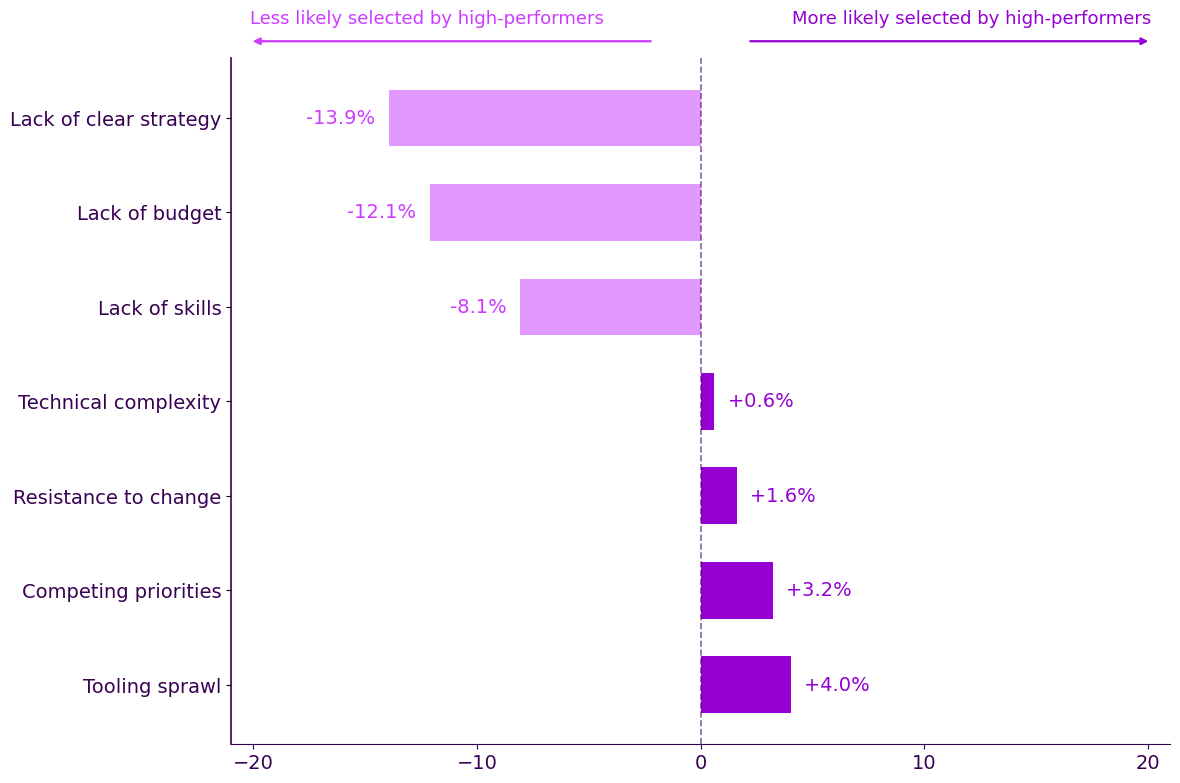
One set of obstacles met my original expectation. A lack of clear strategy, budget, and skills stops platforms from meeting their goals. If you don’t tackle these, particularly the strategy problem, you’re choosing to fail at Platform Engineering. If you need somewhere to start, a lack of clear strategy was a particularly strong failure signal.
The second kind, which we’ll call “challenges” rather than “obstacles”, tells us another story entirely. Tooling sprawl, competing priorities, resistance to change, and technical complexity were all more common in high-performance platforms. Successful teams were more likely to have these challenges and less likely to encounter the obstacles.
The obstacles
Obstacles are less likely to be reported by high-performing teams. That makes it likely they are one of the factors preventing platforms from meeting their goals. Platform goals vary by organization, but we take into account each organization’s definition of success when we rate a platform’s performance.
The top obstacle is a lack of clear strategy. Platform teams that lack strategy are frustrated with their leaders, and team members report lower job satisfaction. They tend to build more platform components from scratch rather than building on top of best-in-class commercial and open-source tools. This has an up-front cost (and delay) and also creates an ongoing maintenance burden that can consume most of the platform team’s time.
Platforms should solve the problems unique to your organization, but common to many teams. A lack of a clear strategy results in a platform that doesn’t capture the task of tailoring and instead offers poor imitations of very general features that any organization could use.
Platforms should be competing with internal DIY solutions, not open source or commercial products. Don’t write your own version of things like build servers or deployment tools, as it will be undifferentiated. The only justification for doing so would be spotting an incredible competitive advantage in doing something in a completely different way, and an understanding that these tools require millions of dollars in time and effort to maintain.
The challenges
Challenges are more likely to be reported by high-performing platform teams. The teams experiencing them are doing the work of Platform Engineering, which is a good indicator that they are providing real value to the business. The top challenge for high-performing teams is tooling sprawl.
When a platform team begins building out golden paths, much of the initial work will be establishing stronger connections between the tools. This work is largely front-loaded, with improvements following along with updates whenever underlying APIs change.
An organization may have made many local decisions before the platform initiative, so there may be some rationalization work to reduce the number of options. You might want to reduce the number of different build servers from the free-for-all of ten different tools to just two or three options for teams to choose from. This is a sociotechnical problem, as along with the technical work, you’re asking people to change how they work, and may bring some resistance to change, which is another challenge reported by high-performing teams.
Completing the mission
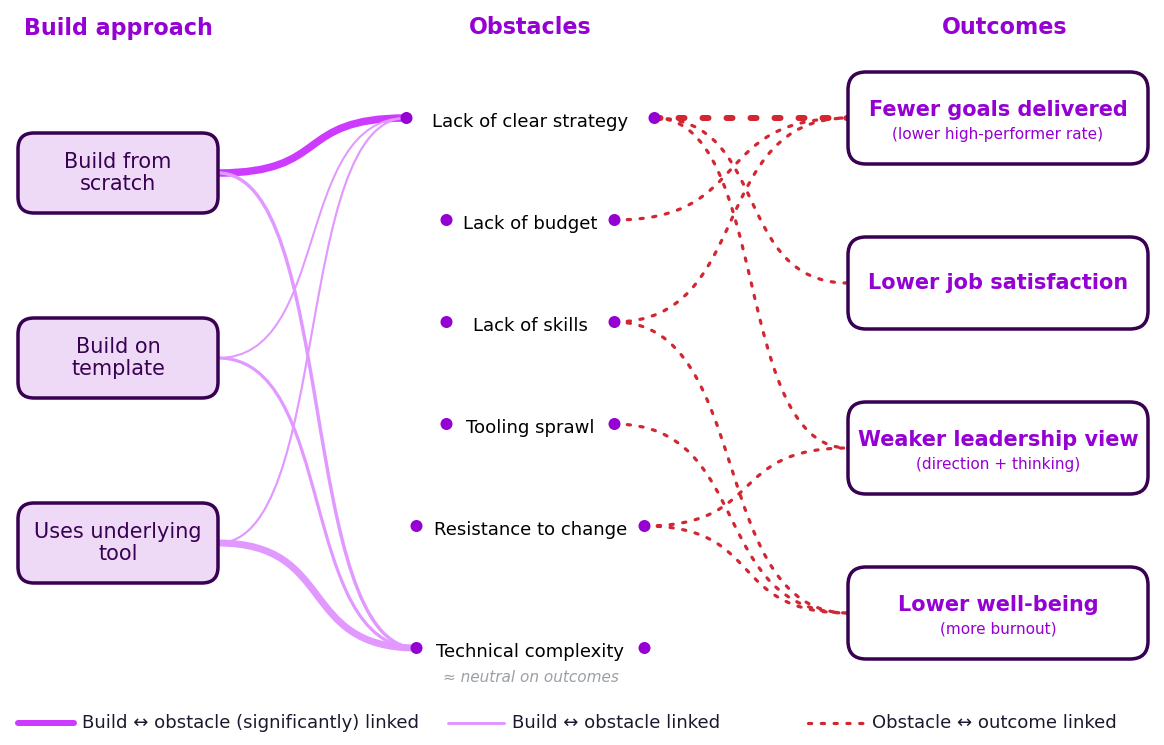
If you’re not getting the results you want from your platform, you should tackle the obstacles first. If you don’t have a clear strategy, budget, and skills, you’re inviting failure. Fixing the strategy is the first step to resolving other obstacles and will help you make better decisions at every other stage of your platform’s evolution.
The obstacles and challenges insight tells us that the challenges reflect the valuable work of Platform Engineering, while the obstacles block the path to success. High-performing platform teams have a clear strategy, budget, and the skills to focus on the challenges that platforms are built to solve.
The smooth integration of best-in-class tools, gaining adoption, and deciding what to build next is the work. These are some of the reasons we build platforms. Teams without obstacles can focus on challenges and deliver a return on their platform investment.
Remove the obstacles and embrace the challenges.
Happy deployments!
Tags: