
We’re excited to announce the release of the 2026 Future of Platform Engineering report. The report examines why organizations adopt platforms, what shapes their decisions along the way, and what high-performing platform teams do differently.
Platform Engineering has moved from a frontier practice to a mainstream industry standard. It’s now an established discipline with recognizable patterns and a maturing body of evidence. The report draws on primary survey data from 379 technical platform practitioners worldwide, and a review of the current literature to establish where the discipline now stands.
A consistent theme runs through the findings, separating platforms that succeed from those that struggle. The decisions and practices around the technology determine success: how adoption is managed, how clearly the strategy is set, and how engaged the leadership is.
Why teams actually build platforms
Organizations adopt platforms primarily for automation and efficiency purposes. Developer experience is still a consideration, but less of a priority for most. When they explain why the initiative was funded, automation comes first. This was a consistent finding in our previous report, the 2025 Platform Engineering Pulse report.
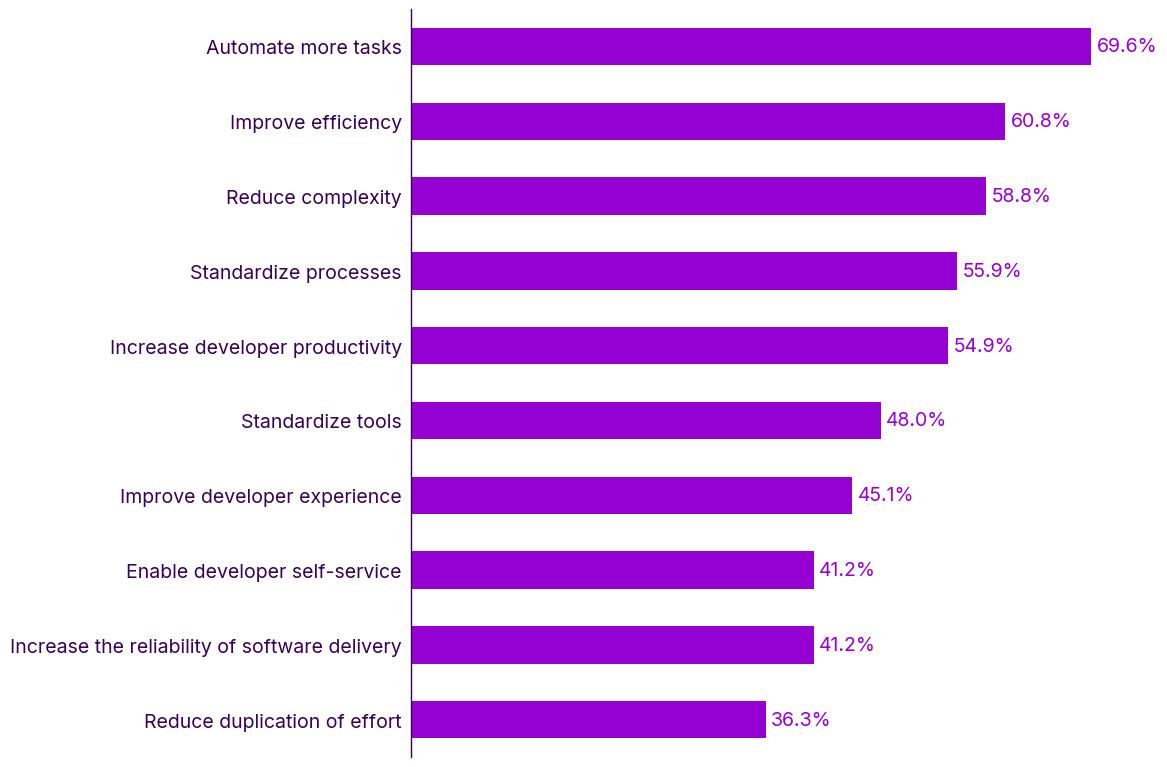
The motivation behind platform adoption is important as it shapes how success is measured. A platform funded for efficiency reasons and later judged on developer experience will look like a failure that isn’t one. Teams that name their primary motivation early have a clearer basis for knowing whether the platform worked.
The organizational constraint to success is strategy
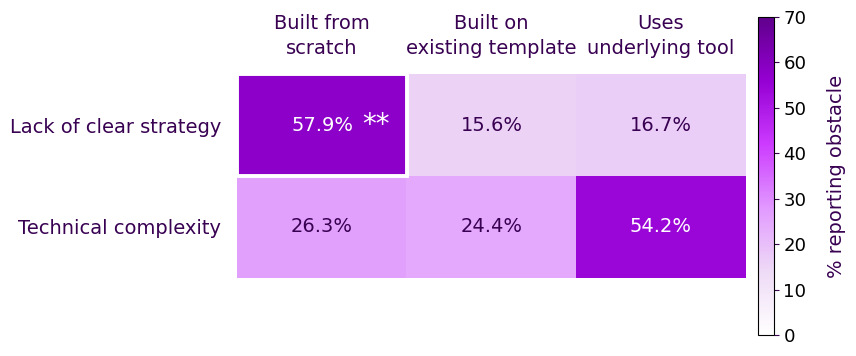
Struggling teams most often report a lack of clear strategy as their obstacle, ahead of the technical complexity of building a platform.
Organizations that predominantly build their platform features from scratch are also the most likely to report this gap. Of respondents building from scratch, 57.9% also cite a lack of a clear strategy as an obstacle. While this may suggest that teams are building without a plan, many engineers build to work out a problem, which makes the build a method rather than a problem. This would explain why these two often turn up together.
A result that caught us off guard
Among teams reporting mandatory adoption, 62.2% achieved most of their goals (high-performers). For respondents reporting optional platform adoption, this sits at roughly 27.5%.
This was an unexpected finding. Industry advice that comes up again and again in Platform Engineering is, don’t force adoption, treat the platform like a product, and let it earn its users. We assumed that optional adoption would track more with high-performing teams and strong outcomes, but we found the opposite.
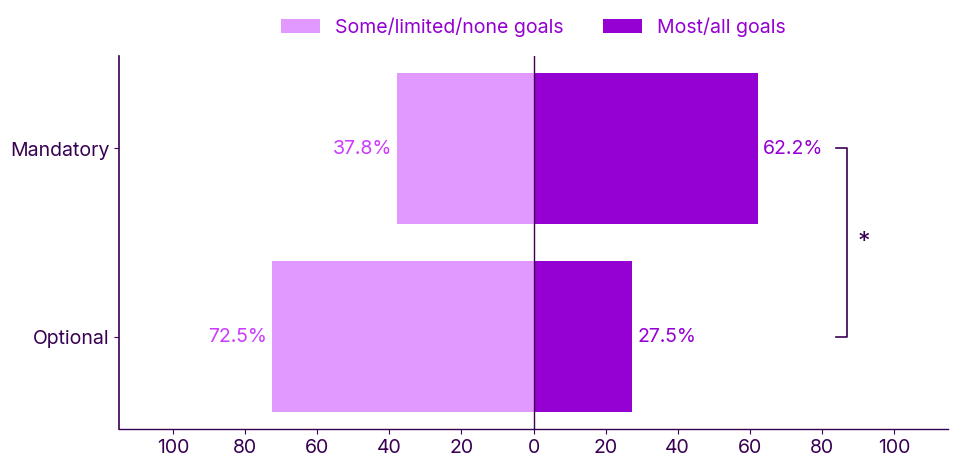
The tension here is real, but it doesn’t mean that everyone else is doing it wrong. It’s two different questions getting two different answers. Mandatory adoption is the stronger signal for whether a platform delivers on the goals it set. Optional adoption speaks to something else entirely: a platform that earns its place because developers choose it rather than because they’re asked to, which is a success worth having in its own right.
Mandatory adoption also doesn’t move on its own. In the network analysis, it clusters with stronger leadership direction, higher job satisfaction, and greater confidence in budget safety, and those measures correlate with one another about as much as each correlates with goal delivery. Mandatory adoption without the leadership engagement and budget security is unlikely to produce the same result. What appears as a decision about adoption is usually a decision about how much of the organization is behind the platform.
Who’s actually getting value from AI?
Teams reporting the most positive impacts from AI were the platforms offering features we classified as advanced, like ephemeral environments, cost control, and code coverage. Adopting these features actually shifted platforms from no AI impact to a positive AI impact on software delivery speed and stability. The difference was in which capabilities a platform had, not how many it had.
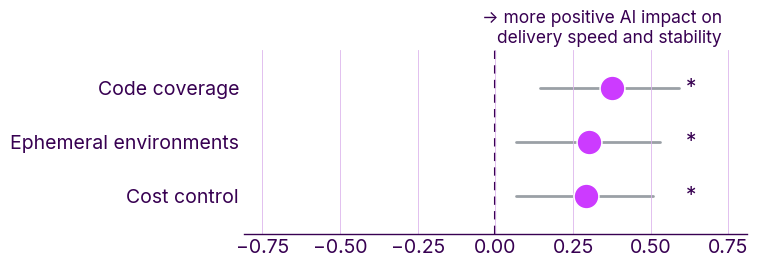
That is consistent with how DORA described AI in 2025, as an amplifier of the system it enters. Where the foundations are solid, the gains compound, and where they aren’t, the friction is amplified instead. Teams on mature, well-designed platforms get more out of AI than teams with ad hoc setups.
What this means for platforms
The patterns associated with successful platform teams emerged in organizational decisions: how clearly the strategy is set, how engaged the leadership is, and how adoption is handled. This is an encouraging result. The platforms that deliver well are the ones where people agreed what the platform was for and committed to it.
Platform Engineering is maturing, and the patterns are becoming clear enough to learn from. Read the report for the full analysis, including how teams measure success and what high-performing teams do differently.
Happy deployments!
Tags: