
Continuous Delivery promotes low-risk releases, faster time-to-market, higher quality, lower costs, better products, and happier teams. Software is at the core of everything a business does today, so organizations must be able to respond to customer needs more quickly than ever.
Taking a quarter or a month to deliver new functionality puts companies behind their competition and prevents them from serving their customers. Few practices offer as much return on investment as Continuous Delivery, but many organizations continue to resist it, often making their deployment problems worse in the process.
Understanding why Continuous Delivery matters and how to implement it effectively can transform not only your deployment process but also your entire software development approach.
Watch the episode
You can watch the episode below, or read on to find some of the key discussion points.
Watch Continuous Delivery Office Hours Ep.1
What is Continuous Delivery?
At its core, Continuous Delivery means you can deploy your software at any time. A good indication of whether a team practices Continuous Delivery is whether they prioritize work that keeps software deployable. Other development styles usually continue working on features and return to deployability issues later.
That means teams must have fast, automated feedback for every change, highlighting when the software has an issue that would prevent its deployment. Deployments to all environments must be automated, with artifacts and deployment processes pinned to avoid unexpected changes between deployments.
The big three: Time, risk, and money
The longer the intervals between deployments, the more you accumulate risk, and the more you delay the value the changes will realize. If you wait six months between deployments, you’re more likely to get caught in a firefighting loop, spending more time pinpointing bug sources because of the volume of changes.
Crucially, until you place new features in users’ hands, you accumulate market risk that the changes won’t solve the underlying problem in a way users accept.
The deployment paradox
Human psychology works against us when deployments go wrong. Having waited six months to deploy, the pain of the firefighting stage and the increased risk of deploying large batches of changes mean people develop an aversion to deployments.
When a process is stressful and goes wrong, we naturally want to do it less often. You might think: “If we do fewer deployments, we’ll have less pain.” But this is precisely backwards.
Decreasing deployment frequency increases batch size, making the next deployment more likely to go wrong and cause pain. This is like avoiding the dentist after a painful checkup; the longer you leave it, the worse the next visit will be.
Risk-averse organizations have instincts that work against their goal of safety. The solution isn’t to deploy less often; it’s to deploy more frequently with smaller batches of changes.
Keeping software deployable during feature development
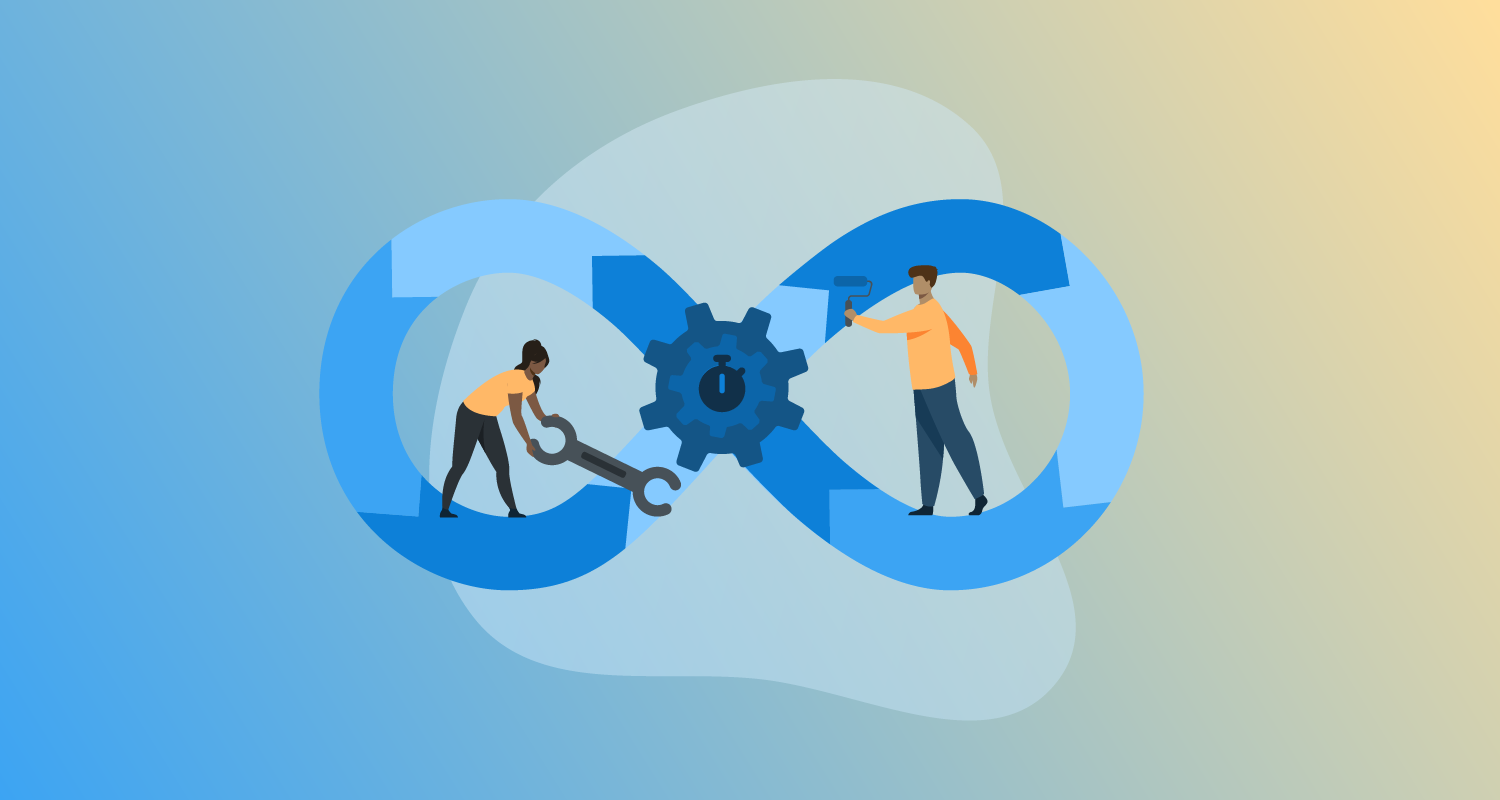
Another objection to Continuous Integration and Delivery is that features take time to build, so you can’t deploy while a feature is in flight. With an infinity of overlapping feature development, this would result in never deploying (or, more likely, work taking place in long-lived branches).
The solution is to separate deployments from feature release. Trunk-based development (integrating changes into the main branch every day, often many times each day) and feature toggles make it possible to work from a shared code base without making in-flight features visible to users.
There are many benefits to feature toggles beyond supporting Continuous Delivery. They also let you share features early with specific user segments or roll them out progressively rather than all at once.
Changing what deployment success means
When you separate deployment from release, you also transform how you measure deployment success. You’re no longer testing whether new functionality works during deployment. You’re only verifying that the application is running and healthy. This focus makes deployments faster and less stressful.
Feature toggles reduce the stress and burden of deployments because you’ll no longer miss deployment issues while checking functionality or miss functionality problems while monitoring deployments. Separating these concerns means each gets proper attention.
Solving dependency challenges
Feature toggles also address one of the most complex problems in microservices: deployment dependencies. Despite the promise of independently deployable services, teams often create elaborate deployment choreographies to ensure services are deployed in a specific order. Sometimes they give up entirely and deploy everything simultaneously. They accept unpredictable behavior during deployment or direct users to a holding page until it’s complete.
When deployments form a chain of dependencies, the architecture isn’t truly microservices but a distributed monolith. Real microservices should deploy independently. Feature toggles make this possible. Deploy all services when ready, then switch on functionality once dependencies are in place.
Conclusion
Continuous Delivery isn’t just about deploying more often. It’s about reducing risk through smaller changes, separating deployment from release, maintaining deployable code at all times, and giving teams the confidence to move quickly and safely.
The instinct to slow down after problems is natural, but it’s counterproductive. The path to safer deployments runs through more frequent deployments, not fewer. Organizations that embrace this counterintuitive truth gain a competitive advantage through faster feedback, lower risk, and ultimately, better software.
Happy deployments!
Continuous Delivery Office Hours is a series of conversations about software delivery, with Tony Kelly, Bob Walker, and Steve Fenton.
You can find more episodes on YouTube, Apple Podcasts, and Pocket Casts.