Why deployment teams choose Octopus over Harness
Learn why 3,500+ customers have chosen Octopus since 2012.
Over 3,500 organizations use Octopus Deploy




Comparing Octopus to Harness
Let's start by comparing some of the fundamentals across both platforms
|
| |
|---|---|---|
Works with your existing stack | Integrates with your tools | Often requires full replacement |
CD depth and maturity | 13+ years focused on CD functionality | Varies across modules |
Self-service onboarding | Most customers self-serve | Often requires consultants |
Support | Service uptime SLO of 99.99% | Service uptime SLO of 99.8% |
Published pricing | Fully transparent and available online | Not published |
 Octopus
 Harness
Things worth knowing before you commit to Harness
Harness works for some teams. But there are some considerations worth keeping in mind.
Unclear pricing model
Harness doesn't publish its prices publicly. Heavy year 1 discounts are common, so year 2 pricing can differ.
Implementation costs
Implementing Harness often involves third-party consultants, which is an additional cost.
Total stack replacement required
To justify Harness's cost model, teams often need to replace their entire toolchain.
Split focus across modules
Harness tries to cover the entire software delivery lifecycle (SDLC). Some modules are more mature than others.
Template and versioning limitations
Pipeline updates in Harness can break active workflows, forcing teams to adopt changes at inconvenient times.
Demos don't reflect reality
You should see a proof of concept built for your actual workflows and stack, not a generic demo.
How Octopus is different
Octopus has spent 13+ years doing one thing exceptionally well: helping engineering teams ship software safely, repeatably, and at scale. No bloated modules and no hidden costs.
You can keep using your tech stack
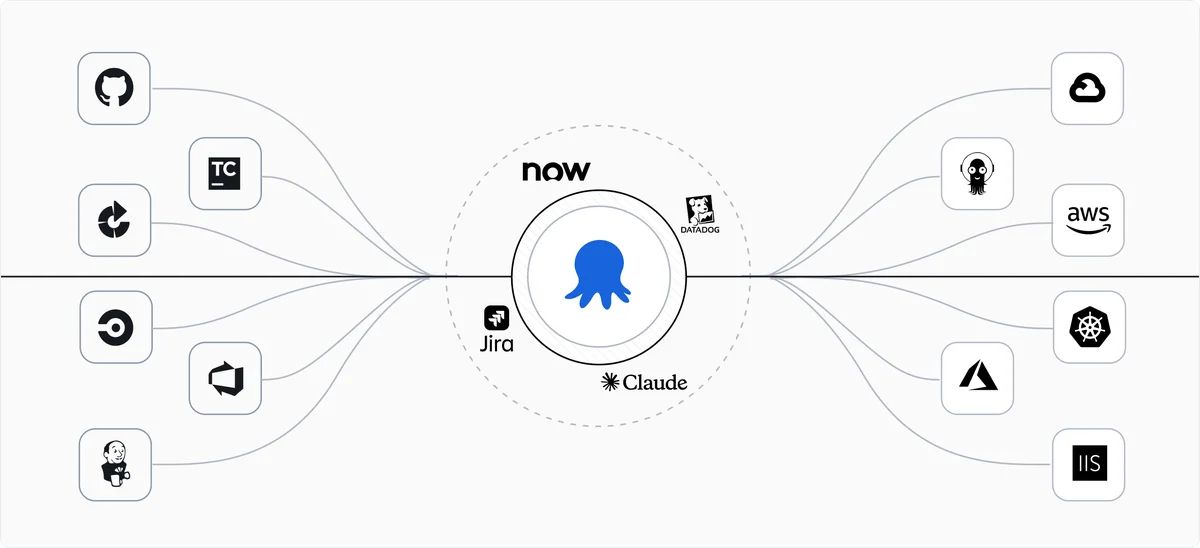
Octopus is a dedicated CD tool that automates your complex deployments at scale, and easily integrates with other tools, like GitHub, GitLab, Docker, and hundreds more. Pull code from your build server or CI platform of choice and deploy anywhere, like the cloud, data centers, Kubernetes, or on-premises servers.
We're focused on solving your CD problems at scale
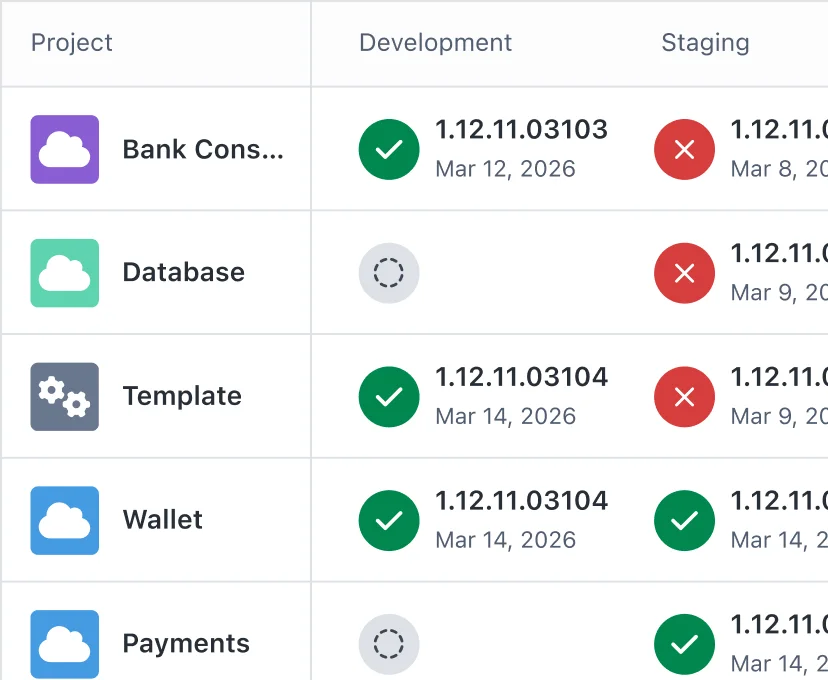
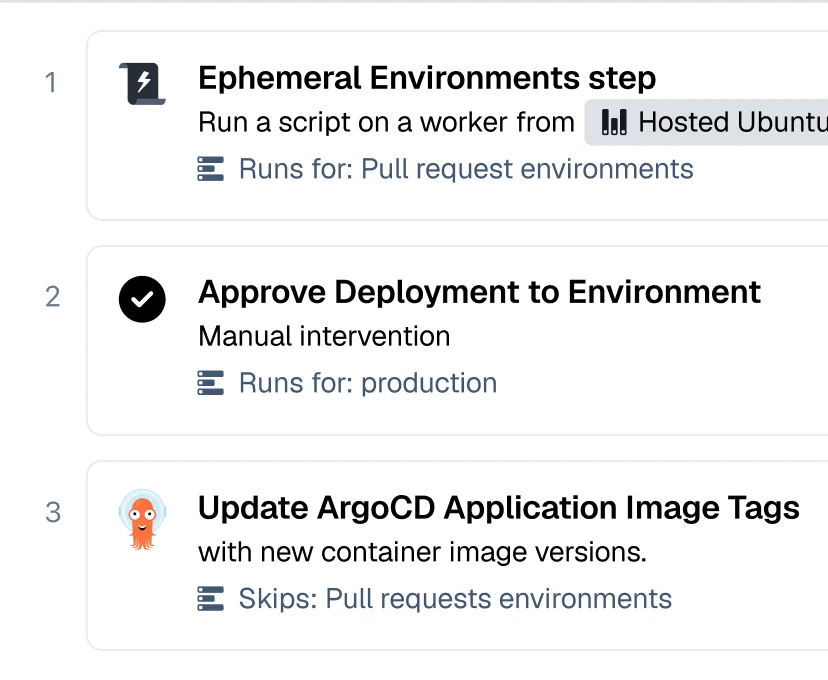
Process Templates let you build reusable sets of deployment steps to reduce drift and scale best practices. Tenants let you reuse the same deployment process for all customers, instances, and edge locations, saving time and improving reliability.
Standardization from day one to day 1,000 and beyond
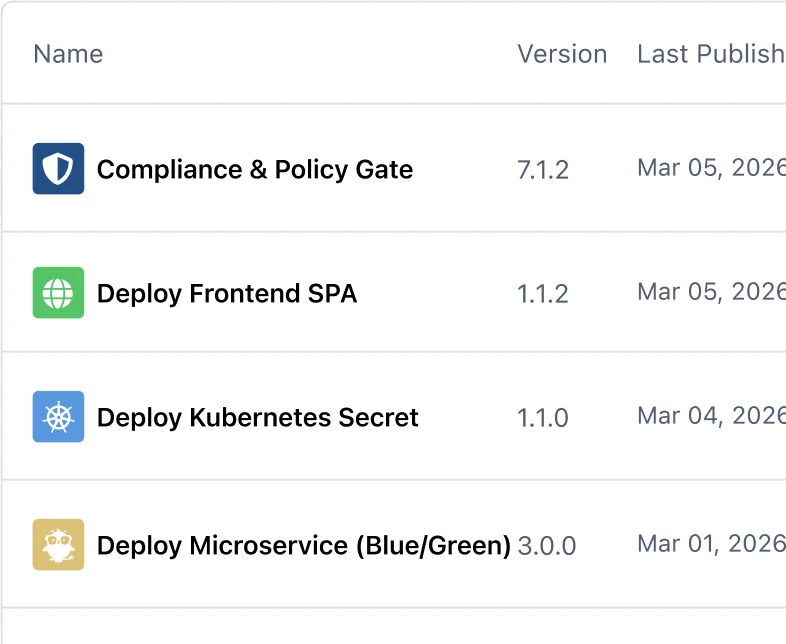
Platform Hub lets you standardize software delivery across teams using connected templates and enforceable policies. As tools and processes evolve, Octopus handles changes of any size. Distinct workflows for updates let you automatically push bug fixes to thousands of applications, while letting app teams bring in breaking changes when it suits their timeline.
Onboarding that doesn't require a consultant
Most customers implement and scale their use of Octopus via self-service. You can start deploying from day one, and we have teams focused on making sure Octopus is intuitive to use.
World-class support for better risk management
Most tools offer support, but Octopus has a world-renowned support team. You get access to world-class support, with our friendly team spread across North America, Australia, the UK, and Europe, ensuring reliable, always-on coverage.
Whenever you need us, a smart, technical person is ready to help. That includes support for Argo from the leading Argo maintainers and #1 security contributors. Octopus actively contributes to the developer community with open-source projects, including Argo in the CNCF and other communities dedicated to advancing software delivery and operational performance.
Every Octopus feature is available in our free tier
No consultants needed, no hidden fees, and no commitment required.