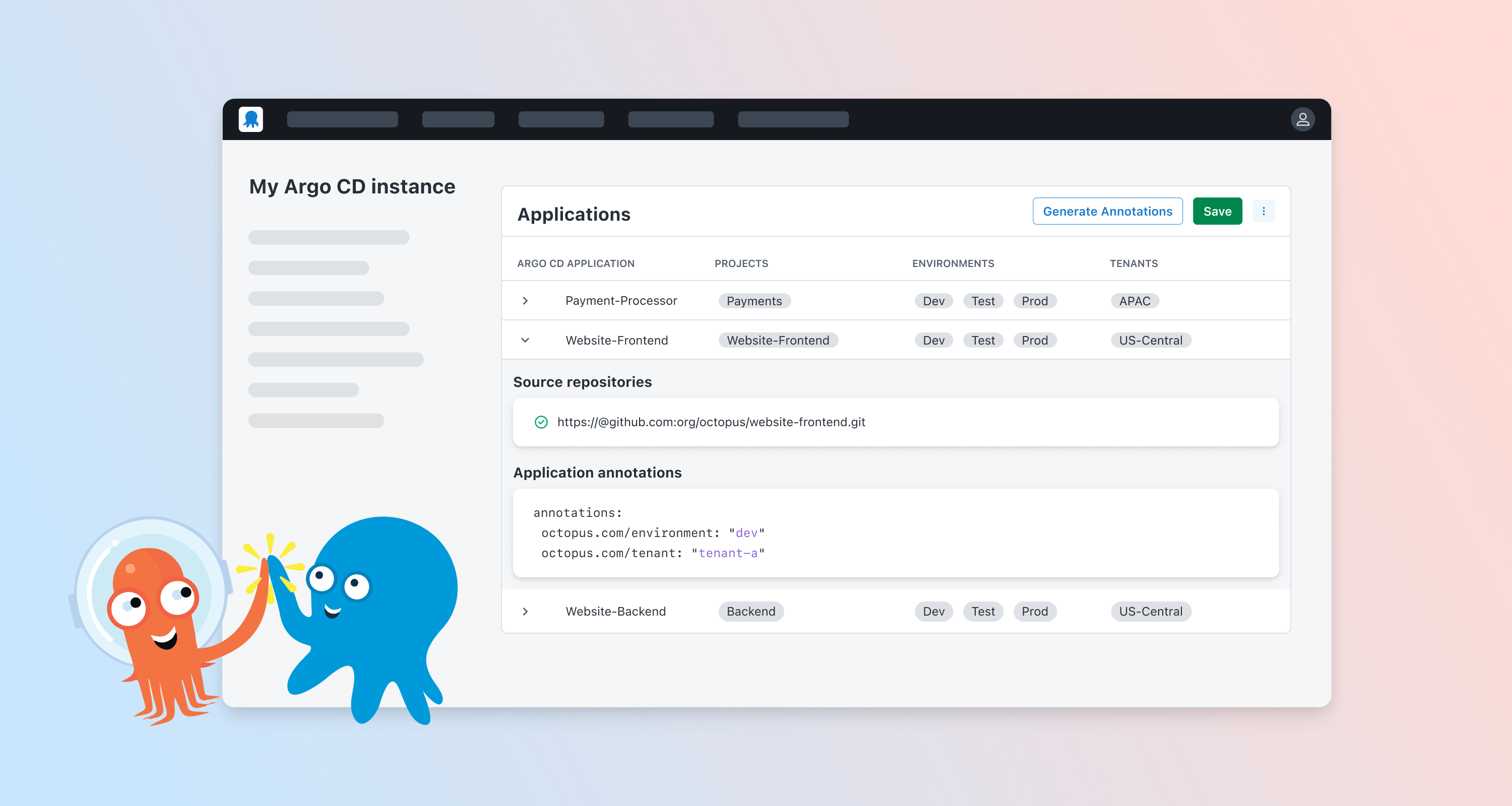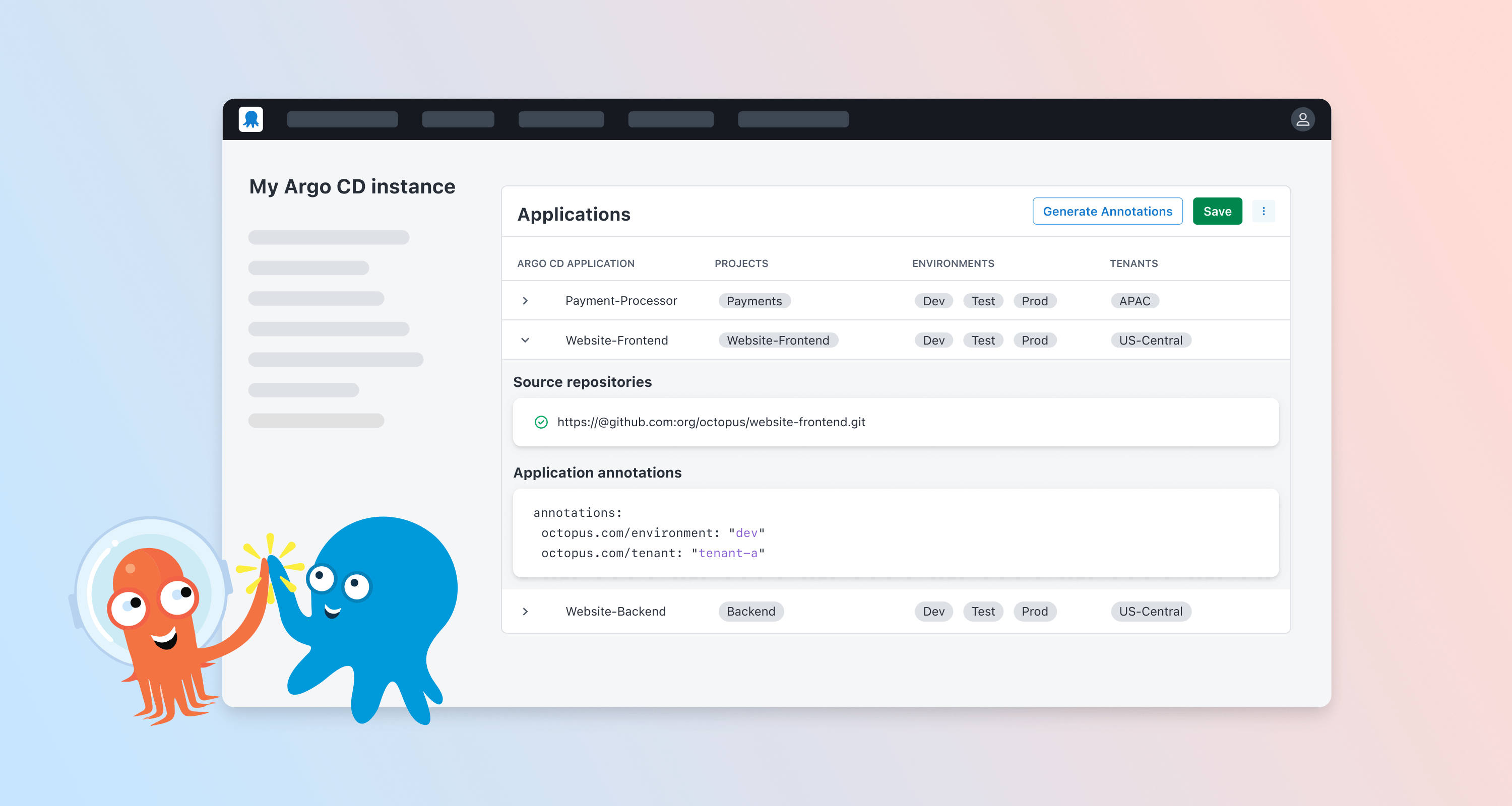

CLI improvements, Application Set scaling, and lots of integrations across custom resources and even Microsoft Teams
We’re excited to share that Argo CD 3.3 is now generally available! This release continues the project’s focus on expanding capability, improving usability, and making GitOps even more effective at scale.
The official RC blog post by Peter Jiang provides an excellent overview of several key enhancements — if you haven’t read it yet, it’s a great foundation https://blog.argoproj.io/argo-cd-3-3-release-candidate-00e99f7b7daa.
This post provides an overview of some of the features from the Argo CD v3.3 GA release. Each section includes links to the relevant merged GitHub PRs so you can dive deeper into the implementation details.
This short video adds additional context to the overall impact of the 3.3 release, the problems it improves compared to earlier versions, which features are likely to resonate most with the community, and the notable contributions that helped shape this release.
https://www.youtube.com/watch?v=g6vA3xUpXrc
Microsoft Teams support in notifications
Before diving into what’s new in 3.3, it’s worth highlighting an important improvement introduced in Argo CD 3.2 that is now broadly part of the v3 stream: Microsoft Teams support in notifications.
We’ve merged support for Teams Workflows, replacing Office 365 Connectors ahead of their March 31, 2026 retirement. This improves notification flexibility and makes migration significantly easier for teams relying on Teams for alerts and incident response. While not part of the core 3.3 changes, this integration has already seen strong adoption and continues to add value across delivery workflows.
Better health and UI feedback
Visibility into how your applications are doing has always been critical in GitOps workflows:
- Adds health checks for third-party operators (e.g., Grafana Operator), making resource status more accurate.
- AppSet UI abstraction layer for future UI integration - This change is part of the broader effort to bring ApplicationSets into the Argo CD UI as first-class citizens. This change introduces an abstraction layer in the UI codebase to handle both
ApplicationandApplicationSettypes in a unified way. This change prepares the UI to support upcoming ApplicationSet features without duplicating logic or introducing parallel code paths. There is no functional impact to the current UI yet. All existing Application behavior remains unchanged, no user-facing features are added.
Expanded action support
A collection of new Actions extend what you can do from both UI and CLI workflows, such as:
- CloudNativePG resource controls - Adds dedicated CloudNativePG actions that trigger operational tasks outside GitOps control — such as Reload (verify cluster child resources), Restart (rollout restart for the Cluster CRD), Promote (promote a standby replica to primary), and Suspend/Resume (pause or resume operator reconciliation).
- KEDA resources now gain pause and resume actions and improved support for ScaledObjects and ScaledJobs. This change adds pause and resume actions for KEDA ScaledObject and ScaledJob resources, enabling users to temporarily pause autoscaling behavior directly from Argo CD without modifying the underlying manifests. The Pause action applies the
autoscaling.keda.sh/paused=trueannotation to a resource, while Resume removes it — giving teams quick operational control over KEDA scaling behavior from the Argo CD UI or CLI. - Read more on adding custom actions for different resources.
CLI and developer improvements
The Argo CD CLI continues to get attention:
- More examples and project filters in commands like
proj list. This change improves theargocd proj listcommand documentation and usability. The examples section was updated to reflect the different supported output formats, ensuring the command reference accurately represents available options.It also introducesprojectas an alias forproj, allowing users to use either form. - PowerShell completion support - The Argo CD CLI is also available on Windows, for most users there Powershell is the natural shell these days.
- Filtering by **group in
app get-resource- This change enhances theargocd app get-resourcecommand by introducing a new--groupflag, allowing users to filter results by API group.Previously, it wasn’t possible to distinguish between resources with the same name that exist across multiple API groups, which could lead to multiple results. With this addition, users can now precisely target the desired resource type, and get accurate results
Internal and platform improvements
Under the hood, this release includes:
- ApplicationSet pprof endpoints (profiling) - the ApplicationSet controller did not previously expose any
pprofendpoints, making it difficult to profile and troubleshoot performance issues. This change introduces dynamicpprofsupport, following the same pattern used by the Argo CD server and application controller. - Reduce function copies in ApplicationSet templates - Profiling of the ApplicationSet controller revealed significant time spent in template functions, due to repeated
template.New("").Funcs(sprigFuncMap)calls that copy the entire function map on each invocation. Switching toClone()allows the function map reference to be shared instead of copied, reducing overhead and improving performance.
Argo CD v3.3 continues the momentum with meaningful improvements for developers, SREs, and platform teams — enhancing usability, performance, automation, and operational visibility across GitOps workflows.
You can review the full GA release notes on GitHub https://github.com/argoproj/argo-cd/releases
Happy Deployments!
Tags: