
Practical Platform Engineering in 5 Lunches is a series of blog posts that takes you through the process of building a hands-on Internal Developer Platform (IDP) using Octopus Deploy.
This is part 5 of the series. In the previous post, you created a project structure that supports a shared responsibility model, with multiple teams owning different stages of the deployment process.
In this post, you’ll learn about policies, which provide guardrails for projects to ensure they are compliant with organizational standards.
Prerequisites
Sign up for a free trial of Octopus Cloud at https://octopus.com/start. The cloud-hosted version of Octopus is the easiest way to get started, as it doesn’t require any additional configuration to work with the Octopus AI Assistant.
Then install the Octopus AI Assistant Chrome extension from the Chrome Web Store.
Exploring the sample policy
The mock Git repo shares sample policies that you can apply to your projects. Open Platform Hub, click Policies, and click the Manual Intervention Required policy:
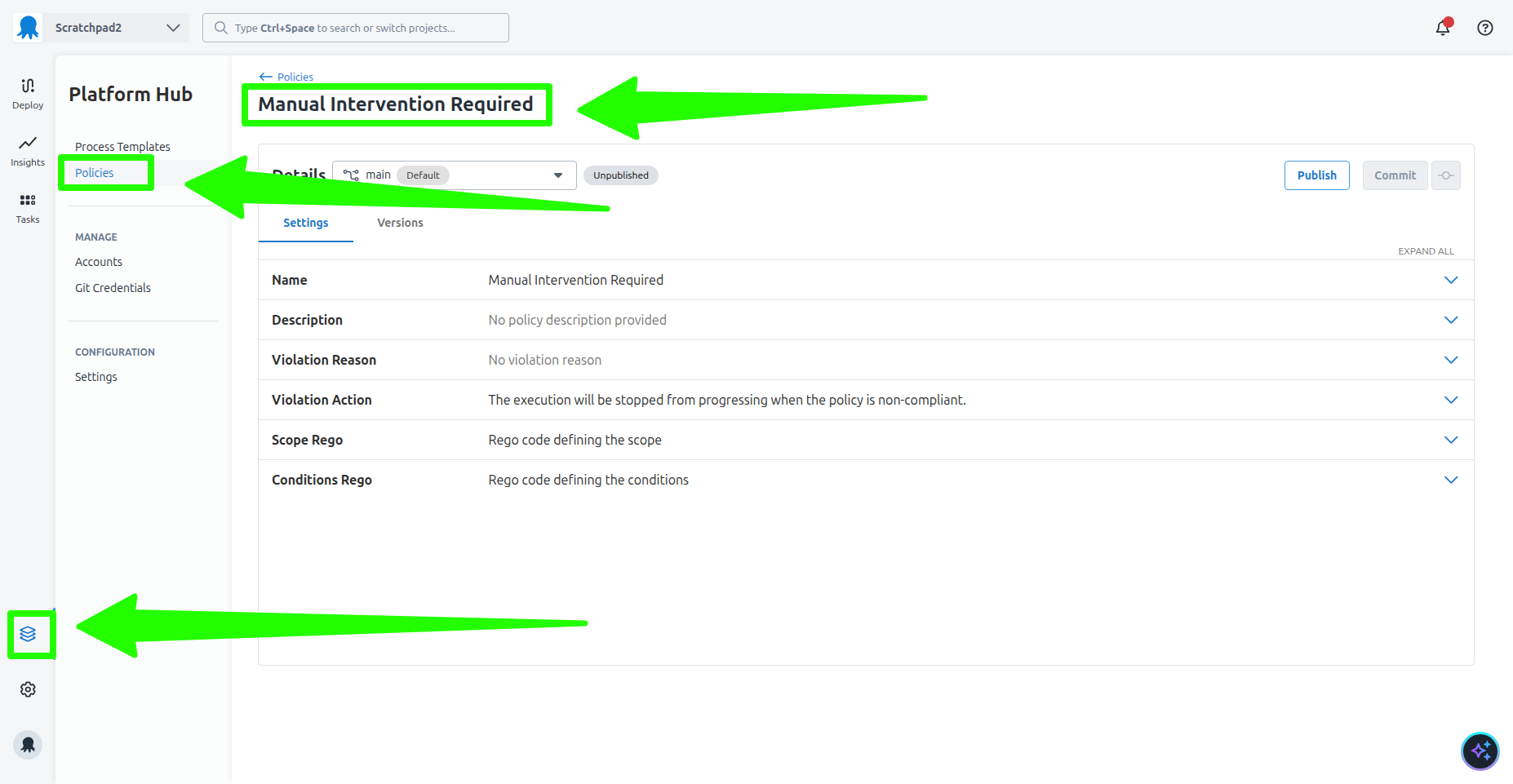
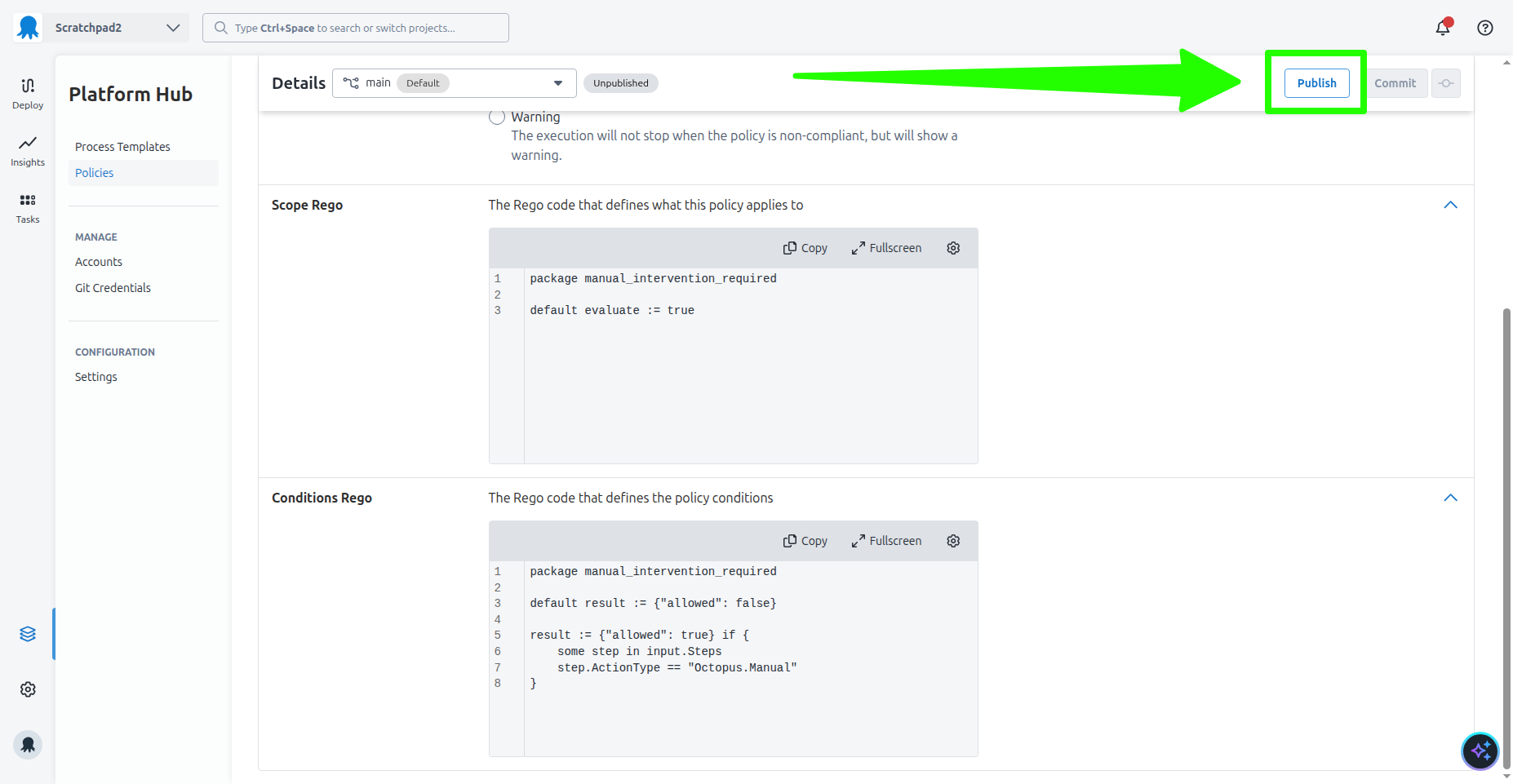
This sample policy requires that any deployment include a manual intervention step. To activate the policy, it must be published and set to active:
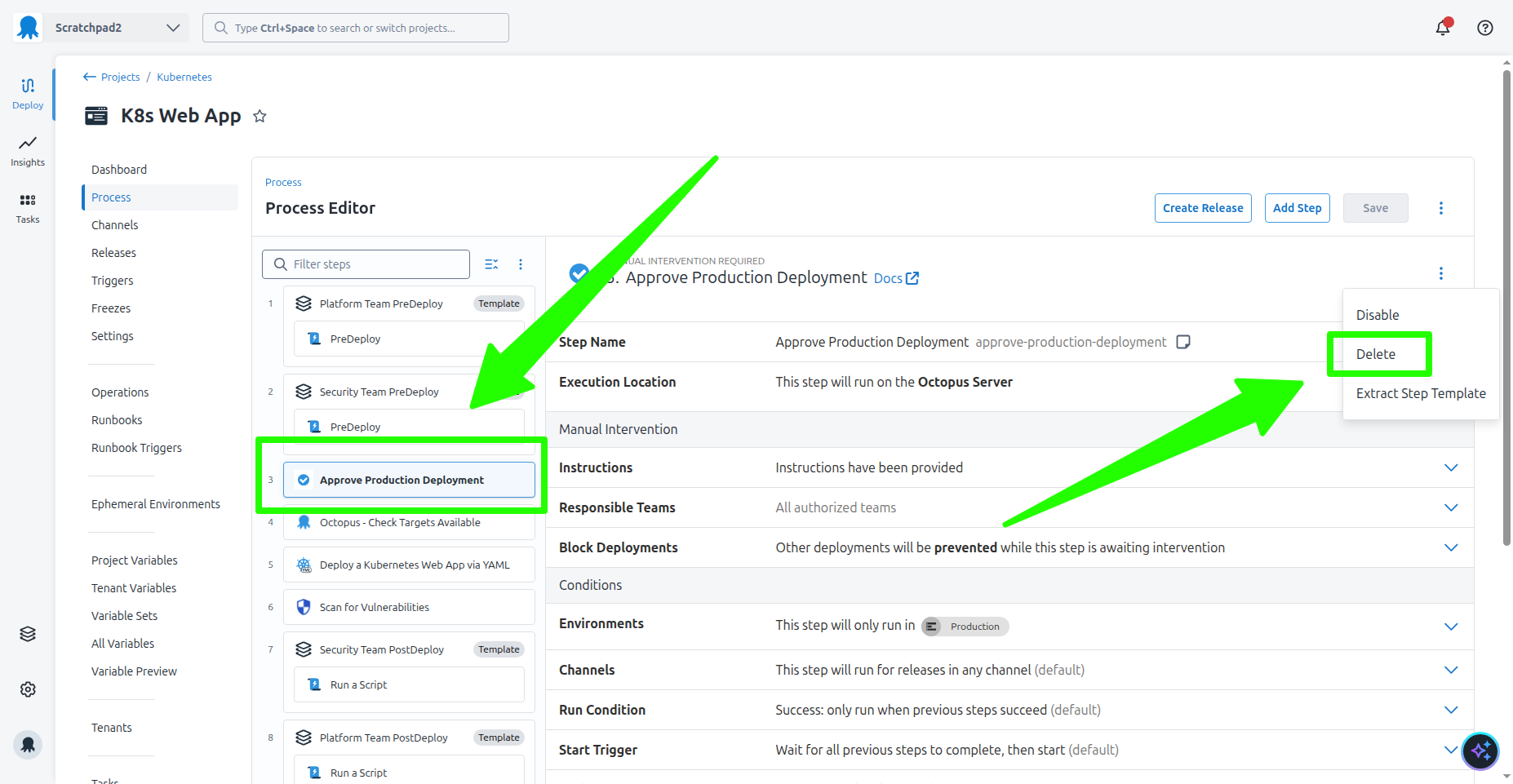
To trigger a policy violation, you must delete the manual intervention step from the deployment process. Open the process for the K8s Web App project, delete the Manual Intervention step, and save the project:
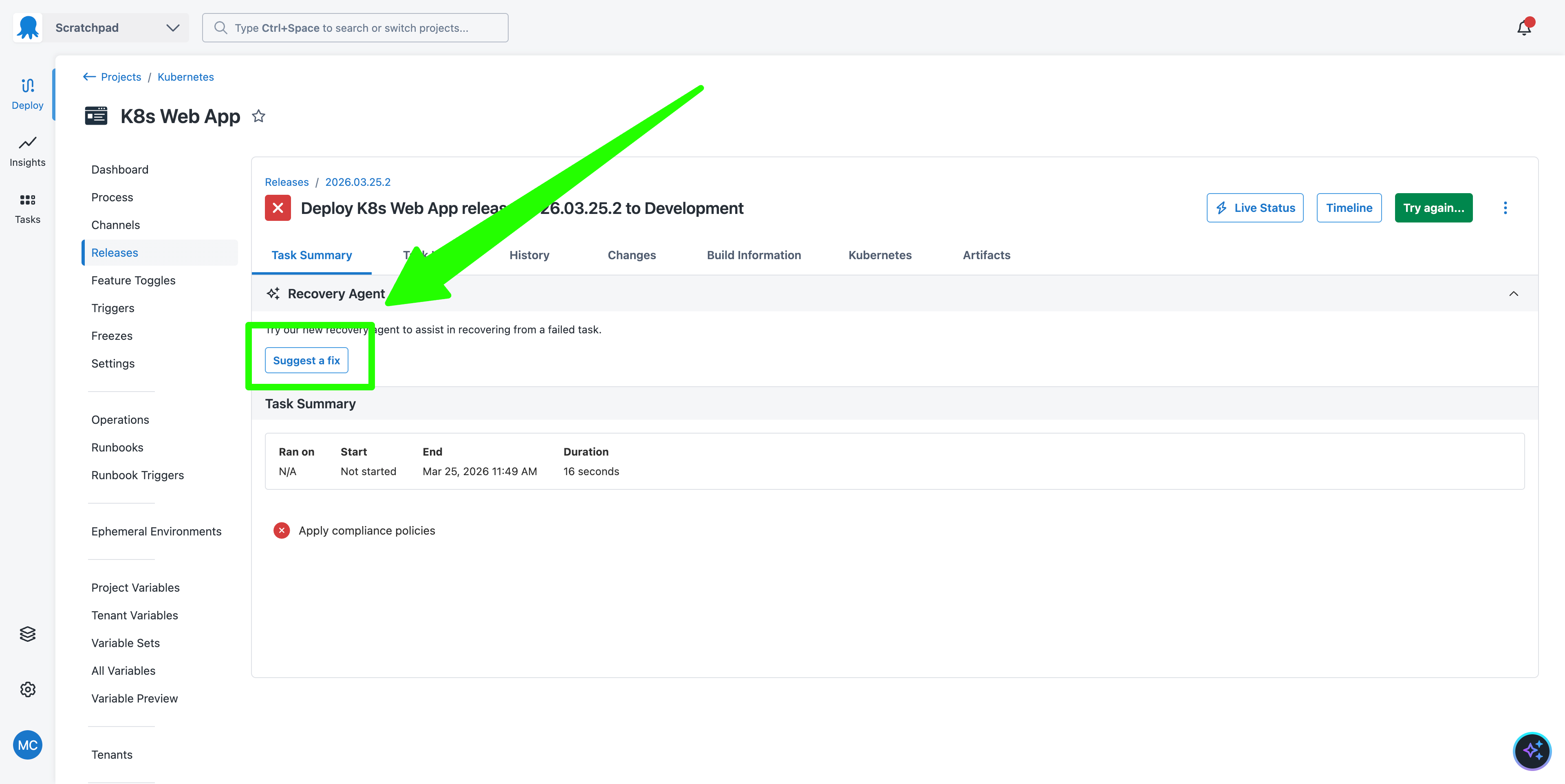
Save the changes and deploy a release. The deployment will fail because the process doesn’t include a manual intervention step, which violates the policy you just published:
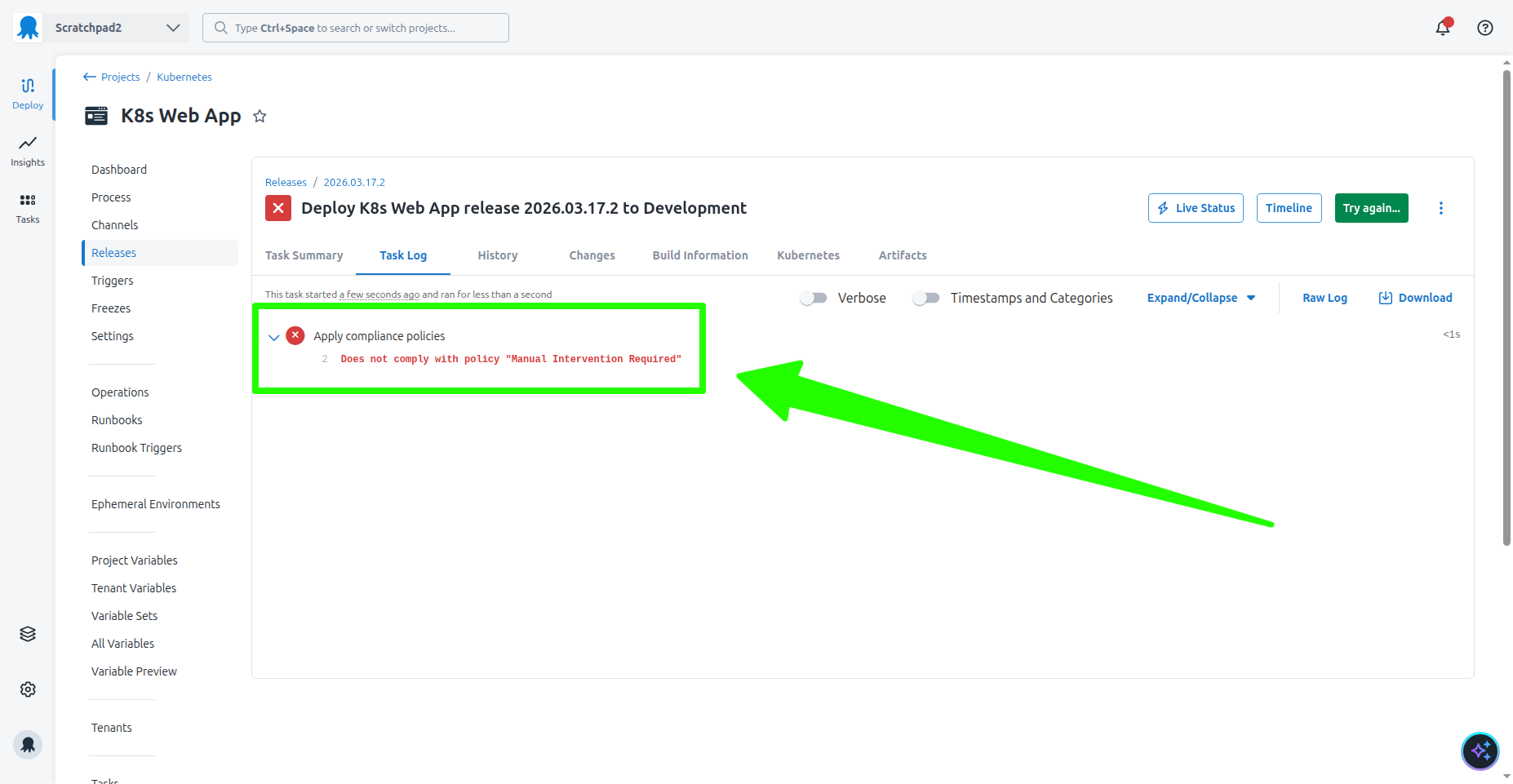
This demonstrates how platform teams can enforce organizational standards and provide guardrails for projects using policies. Policies are another example of architectural decisions shared and maintained at scale through Platform Hub to support DevOps teams.
The Suggest a fix button can be used by teams that may have encountered an error due to a policy violation. This feature scans the deployment logs, passes the content to an LLM, and provides guidance on resolving the issue:
What just happened?
At the end of this post, you have:
- Published a policy that requires all deployment processes to include a manual intervention step.
- Modified the deployment process for the
K8s Web Appproject to intentionally violate the policy. - Attempted to deploy a release, which failed because the deployment process violated the policy.
- Used the
Suggest a fixbutton to resolve the policy violation.
What’s next?
Congratulations! You have completed the blog series.
By following along with the series, you have built a hands-on Internal Developer Platform (IDP) using Octopus Deploy. You have also experienced how the strong opinions baked into Platform Hub complement the traditional role of CI servers, enabling platform teams to share and maintain architectural decisions at scale.
Tags: