What are Argo CD services?
Argo CD services are managed solutions or platforms built around Argo CD, a popular Continuous Delivery tool for Kubernetes. These services enable organizations to manage application deployments declaratively, using Git as the source of truth. By integrating automation, multi-tenancy, and operational controls, Argo CD services improve how teams handle application updates and rollbacks across their Kubernetes clusters.
These solutions reduce operational overhead by handling tool installation, configuration, security, monitoring, and upgrades. They can be delivered as fully managed SaaS offerings, on-premises solutions with vendor support, or hybrid approaches. The goal is to simplify deployment workflows, ensure reliability, and maintain security practices while abstracting operational complexity from end users.
Key capabilities of Argo CD services
Provisioning / setup
Provisioning Argo CD involves installing the controller onto a Kubernetes cluster, configuring initial access, and establishing connectivity with source control systems. Argo CD services simplify these steps, often providing automated setup wizards, preconfigured templates, and integration with identity providers. This reduces friction for new users and ensures alignment with best practices from the start, such as enforcing least-privilege access and secure handling of secrets during initial setup.
For organizations operating at scale, managed Argo CD services can handle installing multiple instances, configuring multi-cluster environments, and setting up role-based access control for different user groups. Automation during the provisioning phase helps prevent common misconfigurations and accelerates time to value.
Ongoing operations and maintenance
Maintenance of Argo CD involves upgrades, monitoring, managing resource usage, and troubleshooting issues related to the deployment pipeline or the Argo CD instance itself. Managed services provide simplified upgrade processes along with dashboards, alerting, and log aggregation out of the box. This frees operators from routine operations and minimizes risk associated with manual upgrades and patching.
Additionally, ongoing health checks and performance optimizations are typical features of mature Argo CD service providers. Automatic backup and disaster recovery routines protect user data and configurations. Centralized documentation and guided remediation for common issues further reduce mean time to resolution.
Support and response
Dedicated support is a key differentiator in Argo CD services compared to self-hosted solutions. Managed providers offer various tiers of support, from community forums to 24/7 direct access to Kubernetes and Argo CD experts. This rapid response capability is crucial for mission-critical environments, ensuring issues are resolved quickly and accurately.
Response services also often include runbooks, incident escalation processes, and proactive monitoring for anomalies. Some providers assign customer success engineers for onboarding, periodic health reviews, and roadmap alignment.
Lifecycle management
Lifecycle management includes onboarding new projects, managing environment lifecycles (dev, staging, prod), sunsetting old applications, and evolving governance policies. Argo CD services provide tooling and automation for creating, duplicating, and retiring application deployments. Versioning of environment configurations and integration with GitOps principles ensures changes are tracked and auditable.
Managed lifecycle features frequently extend to multi-cluster orchestration and synchronization, supporting teams as they scale their environments. Automated policy enforcement, such as retiring unused resources or enforcing template standards, reduces manual oversight and eliminates configuration drift.
Security
Security in Argo CD services incorporates role-based access controls, audit trails, encryption, and compliance enforcement as core features. Managed solutions tighten access by using standards such as OIDC, SAML, or LDAP for authentication and fine-grained permissions within Argo CD components. Audit logs and event streaming provide visibility into changes and access patterns, enabling teams to meet regulatory and organizational compliance requirements.
Providers often implement additional measures such as automated vulnerability patching, regular security assessments, and secured communication paths between managed components and user clusters. Integrations with external secrets managers, key rotation policies, and no-touch upgrade processes further harden the security posture.
Notable Argo CD services
1. Octopus Enterprise Support for Argo
[Please add product details]

2. Harness
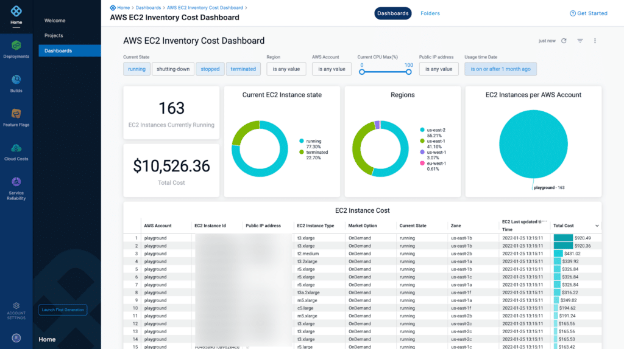
Harness GitOps provides a structured, Git-based approach to managing Argo CD configurations declaratively, allowing users to treat Argo CD components like applications, clusters, and projects as version-controlled infrastructure. It abstracts much of the complexity involved in syncing configurations to Kubernetes by offering a simplified UI and automated handling of backend resources.
Key features include:
- Declarative management of Argo CD resources using Kubernetes manifests
- Git integration for applications, projects, clusters, and secrets
- Automated agent-based synchronization with destination clusters
- Support for multi-cluster management and scoped access via Harness projects
- UI-driven configuration with support for recursive directories and namespace targeting

3. PSNS
PSNS delivers consulting, implementation, and managed support for Argo CD, helping organizations adopt GitOps workflows and improve Kubernetes application delivery. Through customized onboarding, infrastructure automation, and operational hardening, PSNS accelerates time-to-value for teams adopting Argo CD.
Key features include:
- End-to-end Argo CD consulting and implementation tailored to enterprise environments
- Setup of GitOps patterns with best-practice configuration of repositories, sync policies, and drift remediation
- Multi-tenancy enablement via RBAC, namespace isolation, and CRD scoping for secure, team-based access
- Security hardening, including SSO setup (OIDC, SAML, LDAP) and compliance-aligned configurations
- Hands-on training and enablement to build in-house Argo CD expertise post-deployment

4. Akuity
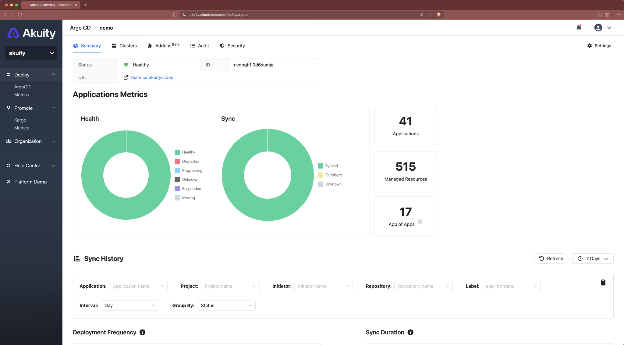
Akuity offers enterprise-grade support and consulting for Argo CD, delivered by the original creators and maintainers of the Argo project. Designed for organizations running mission-critical Kubernetes workloads, Akuity’s services focus on performance, stability, and scalability. With deep technical expertise and direct access to core Argo engineers, Akuity helps teams confidently scale and secure their Argo CD deployments while adhering to GitOps best practices.
Key features include:
- 24/7 enterprise support from the original creators and maintainers of Argo CD
- Fast incident response (within 1 hour for critical issues) for production environments
- Expert-led architecture and scalability reviews tailored to enterprise use cases
- Ongoing security patching and proactive CVE resolution to minimize risk
- Guidance on GitOps workflows based on real-world implementations and best practices

5. InfraCloud
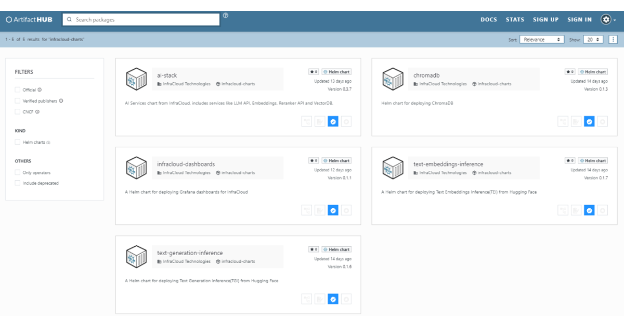
InfraCloud delivers commercial support and professional services for Argo CD, helping organizations maintain production-grade GitOps workflows across Kubernetes environments. As a Kubernetes Certified Service Provider (KCSP) and early adopter of Argo CD in enterprise contexts, InfraCloud offers 24/7 support, continuous monitoring, and secure operational management to ensure high uptime, scalability, and deployment reliability for mission-critical systems.
Key features include:
- 24/7/365 commercial support with unlimited incident handling for priority issues (P1 & P2)
- Continuous monitoring of application health and performance to proactively resolve issues
- Regular updates and security patches for Argo CD to minimize vulnerabilities
- Consistent application delivery through management of complex workflows and dependencies
- Scalable deployment practices using declarative Kubernetes manifests and GitOps principles

Considerations for choosing Argo CD services
Selecting the right Argo CD service requires weighing technical, operational, and organizational factors. Each provider offers different levels of abstraction, support, and flexibility, so the best choice depends on your workload requirements, scale, and compliance needs.
Key considerations include:
- Deployment model: Decide whether you need a fully managed SaaS, on-premises managed service, or hybrid approach. SaaS reduces operational burden but may limit control, while on-premises options allow tighter integration and customization.
- Multi-cluster and multi-tenancy support: Evaluate how well the service supports multiple clusters, namespaces, and team-based isolation. Strong RBAC and namespace-level controls are essential for enterprises with many teams.
- Upgrade and patch management: Check how the provider handles upgrades, patching, and CVE remediation. Automated, zero-downtime upgrades and proactive vulnerability management reduce operational risk.
- Security and compliance: Confirm support for enterprise authentication methods (OIDC, SAML, LDAP), encryption, audit logs, and compliance certifications relevant to your industry. Integration with secrets managers is also important.
- Integration ecosystem: Assess how the service integrates with CI/CD pipelines, monitoring tools, service meshes, and policy enforcement systems. Native GitOps integrations with existing workflows minimize rework.
- Support quality and SLAs: Review support tiers, response times, and availability of expert guidance. For mission-critical systems, ensure that SLAs meet your uptime and response requirements.
- Scalability and performance: Consider how the service performs with large numbers of applications and clusters. Some providers offer architecture reviews and scaling guidance to avoid bottlenecks.
- Cost and licensing: Compare pricing models, including per-cluster, per-application, or usage-based fees. Ensure the cost structure aligns with your projected scale and doesn’t create hidden expenses.
Related content: Read our guide to Argo CD support (coming soon)
Conclusion
Argo CD services simplify the adoption and management of GitOps workflows by abstracting the operational complexities of running Argo CD at scale. These services provide automation, security, and expert support across the entire application lifecycle, allowing teams to focus on building and delivering software rather than managing infrastructure.
Help us continuously improve
Please let us know if you have any feedback about this page.