What are Argo CD automation tools?
Argo CD is a declarative, GitOps Continuous Delivery tool for Kubernetes. It automates the deployment and synchronization of applications to Kubernetes clusters by continuously monitoring Git repositories for changes and applying them to the target environment.
Argo CD automation tools manage the deployment lifecycle and operations of Kubernetes applications using Argo CD, a GitOps Continuous Delivery controller. These tools extend Argo CD’s capabilities with features like configuration management, policy enforcement, monitoring, and multi-cluster management, enabling teams to enforce best practices.
By providing integrations with other DevOps tools and better automation capabilities, these solutions reduce manual intervention, eliminate configuration drift, and enhance reliability in cloud-native environments.
Many organizations use Argo CD automation tools to handle complex deployment scenarios, such as orchestrating deployments across multiple clusters, automating rollbacks, and scaling resources based on workload demands. These tools also improve security and compliance through integration with secret management systems and automated policy enforcement.
Key features of Argo CD automation tools
CI integration
CI integration in Argo CD automation tools connects Continuous Integration (CI) pipelines with GitOps workflows, allowing teams to automate the process of building, testing, and deploying code changes. With CI integration, when a developer pushes code to a repository, the CI system triggers builds and tests before updating manifests in Git. Argo CD then automatically detects these changes and deploys the updated application into the cluster. This minimizes manual steps and ensures consistency between development and production environments.
CI integration also enables traceability and rollback capabilities, as every deployment corresponds to a specific Git commit. By automating the code-to-deployment cycle, teams accelerate release frequency while maintaining high quality and security. Integration with popular CI tools like Jenkins, GitHub Actions, and GitLab CI allows organizations to adopt Argo CD without disrupting their existing DevOps workflows.
Secret management integration
Secret management integration is crucial for securely handling credentials, tokens, and other sensitive information within Argo CD pipelines. Automation tools in this space typically offer connections to secret stores such as HashiCorp Vault, AWS Secrets Manager, or Kubernetes secrets. This ensures that sensitive data is never hardcoded in version-controlled manifests, reducing security risks and maintaining compliance with best practices in credential management.
Through integrated secret management, Argo CD automation tools enable dynamic injection of secrets at deployment time. This feature supports automatic rotation and revocation of secrets, thereby improving security. These integrations also make it easier to audit who accessed or modified particular secrets. By removing manual secret handling, organizations reduce error rates and improve the reliability of their deployment processes.
Policy enforcement
Policy enforcement within Argo CD automation tools ensures that application deployments adhere to organizational, security, and compliance standards. These tools integrate with policy engines like Open Policy Agent (OPA) or Kyverno to review application manifests before deployment. Policies may cover resource quotas, required labels, image provenance, or network restrictions. By enforcing policies at deployment time, organizations can block risky changes and maintain consistency across environments.
Automated policy enforcement increases operational confidence and reduces the likelihood of misconfigurations making their way into production. It also enables auditing and compliance reporting by ensuring all deployments are validated against predefined rules. For organizations operating at scale or in regulated industries, policy enforcement is critical for minimizing risk while maintaining agility in their deployment workflows.
Monitoring and alerting
Monitoring and alerting are pivotal for gaining visibility into application deployments and cluster health when using Argo CD. Automation tools in this area typically integrate with monitoring systems like Prometheus, Grafana, or external alerting platforms. They provide real-time dashboards and alerts for deployment status, synchronization issues, drift detection, and resource usage. This immediate feedback is essential for quickly identifying and addressing incidents before they affect end users.
Effective monitoring and alerting also support post-mortem and continuous improvement efforts. With detailed logs, metrics, and notifications, DevOps teams can correlate deployment events with system behavior and performance. This level of observability empowers teams to refine their CI/CD pipelines, detect anomalies, and accelerate incident response times.
Backup and disaster recovery of Git and cluster state
Backup and disaster recovery features in Argo CD automation tools focus on preserving the desired and current state of both Git repositories and Kubernetes clusters. Automated tools regularly snapshot configuration and application state, enabling quick restoration in case of data corruption, accidental deletion, or security breaches. This approach minimizes downtime and data loss, ensuring business continuity for critical services managed through Argo CD.
Automation tools may offer scheduled or event-driven backups, storing state in remote or cloud-based storage solutions. They often include mechanisms for validating backup integrity and ensuring compatibility with cluster upgrades or migrations. By simplifying disaster recovery, these tools reduce the operational burden on teams and help meet recovery point objectives (RPOs) and recovery time objectives (RTOs) defined by business requirements.
Scaling and multi-cluster operations
Scaling and multi-cluster operations are key capabilities in Argo CD automation tools, allowing teams to orchestrate deployments across hundreds of Kubernetes clusters from a single control plane. These tools automate deployment propagation, cluster registration, and workload placement, making it easier to manage infrastructure at scale. They handle complexities like cluster-specific overrides, resource allocation, and geographical targeting, ensuring consistent delivery across diverse environments.
Multi-cluster support also enhances reliability and fault tolerance by enabling canary deployments, blue/green rollouts, and cross-cluster failover. This approach makes it possible to both scale applications elastically and adhere to compliance requirements, such as data residency. Automation tools for Argo CD simplify these complex operations, reducing error rates and allowing organizations to adapt quickly to changing business needs.
Related content: read our guide to Argo CD support (coming soon)
Notable Argo CD automation tools
1. Argo CD in Octopus Deploy
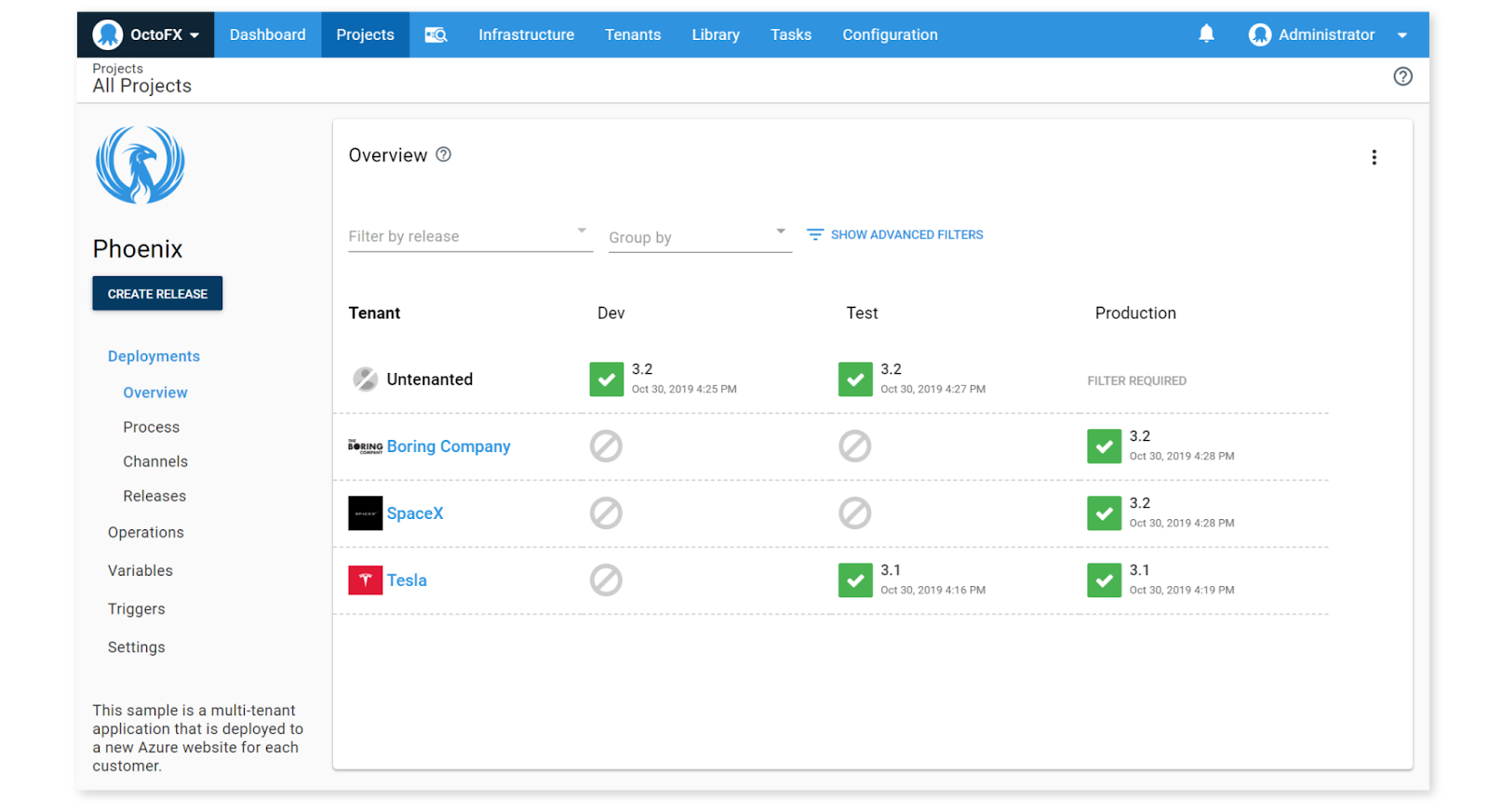
Octopus Deploy is a sophisticated, best-of-breed Continuous Delivery (CD) platform for modern software teams. It offers powerful release orchestration, deployment automation, and runbook automation while handling the scale, complexity, and governance expectations of even the largest organizations with the most complex deployment challenges.
General features of Octopus:
- Reliable risk-free deployments: Octopus lets you use the same deployment process across all environments. This means you can deploy to production with the same confidence you deploy to everywhere else. Built-in rollback support also makes it easy to revert to previous versions.
- Deployments at scale: Octopus is the only CD tool with built-in multi-tenancy support. Deploy to two, ten, or thousands of customers without duplicating the deployment process.
- One platform for DevOps automation: Runbooks automate routine and emergency operations tasks to free teams for more crucial work. They can also be used to provide safe self-service operations to other teams.
- Streamlined compliance: Full auditing, role-based access control, and single sign-on (SSO) as standard to make audits a breeze and to provide accountability, peace of mind, and trust.

2. argocd-agent
argocd-agent is a distributed automation tool that extends Argo CD’s GitOps capabilities to large-scale, multi-cluster, and remote environments. It addresses the scaling challenges of traditional Argo CD setups by introducing a pull-based architecture, where lightweight agents installed in remote clusters initiate connections to a central control plane. This enables deployment management across clusters in air-gapped, edge, or intermittent network conditions.
Key features include:
- Distributed architecture: Hub-and-spoke model with agents pulling configuration from a central control plane
- Massive scalability: Supports managing thousands of applications across hundreds of clusters
- Network resilience: Designed for environments with high latency, limited connectivity, or air-gapped networks
- Cloud and edge compatibility: Works across AWS, GCP, Azure, on-premises, and edge locations
- Security first: Enforces mutual TLS, zero-trust design, and certificate-based authentication for all communications

3. Red Hat OpenShift GitOps
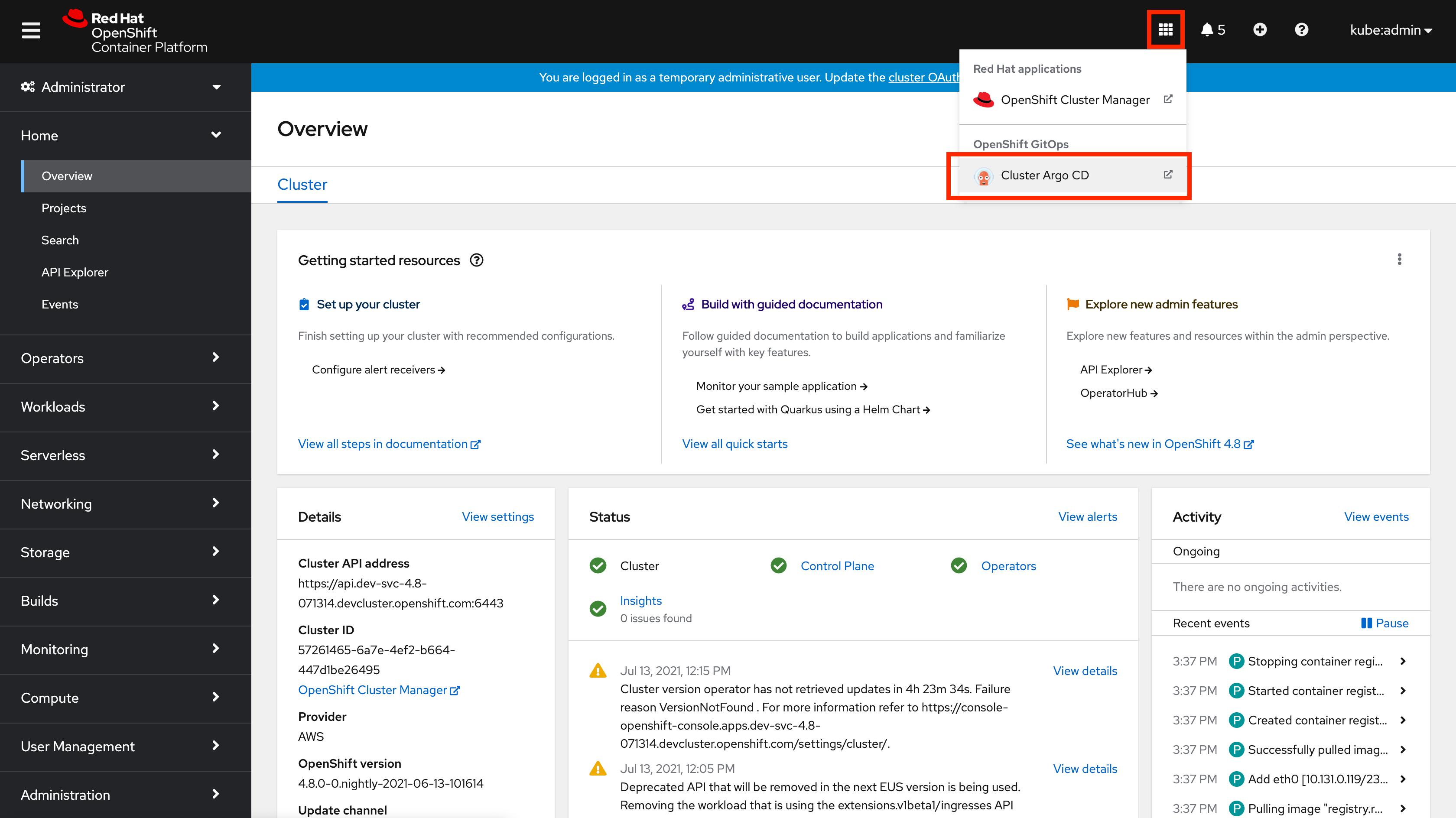
Red Hat OpenShift GitOps is an enterprise GitOps operator built on Argo CD that integrates tightly with the Red Hat OpenShift platform. It uses Git as the source of truth for declarative application and infrastructure configurations, enabling consistent, automated deployments across single or multiple Kubernetes clusters.
Key features include:
- Declarative configuration management: Define and store infrastructure and app state in Git for traceability and version control
- Multi-cluster delivery: Manage and sync resources consistently across multiple OpenShift clusters
- Automated rollouts and testing: Use Argo Rollouts for blue/green and canary deployments with automated promotion or rollback
- Centralized management: Maintain a unified control plane for deploying and monitoring applications across environments
- Security and compliance: Detect configuration drift, preview changes, and integrate with OpenShift security features
4. OpsMx
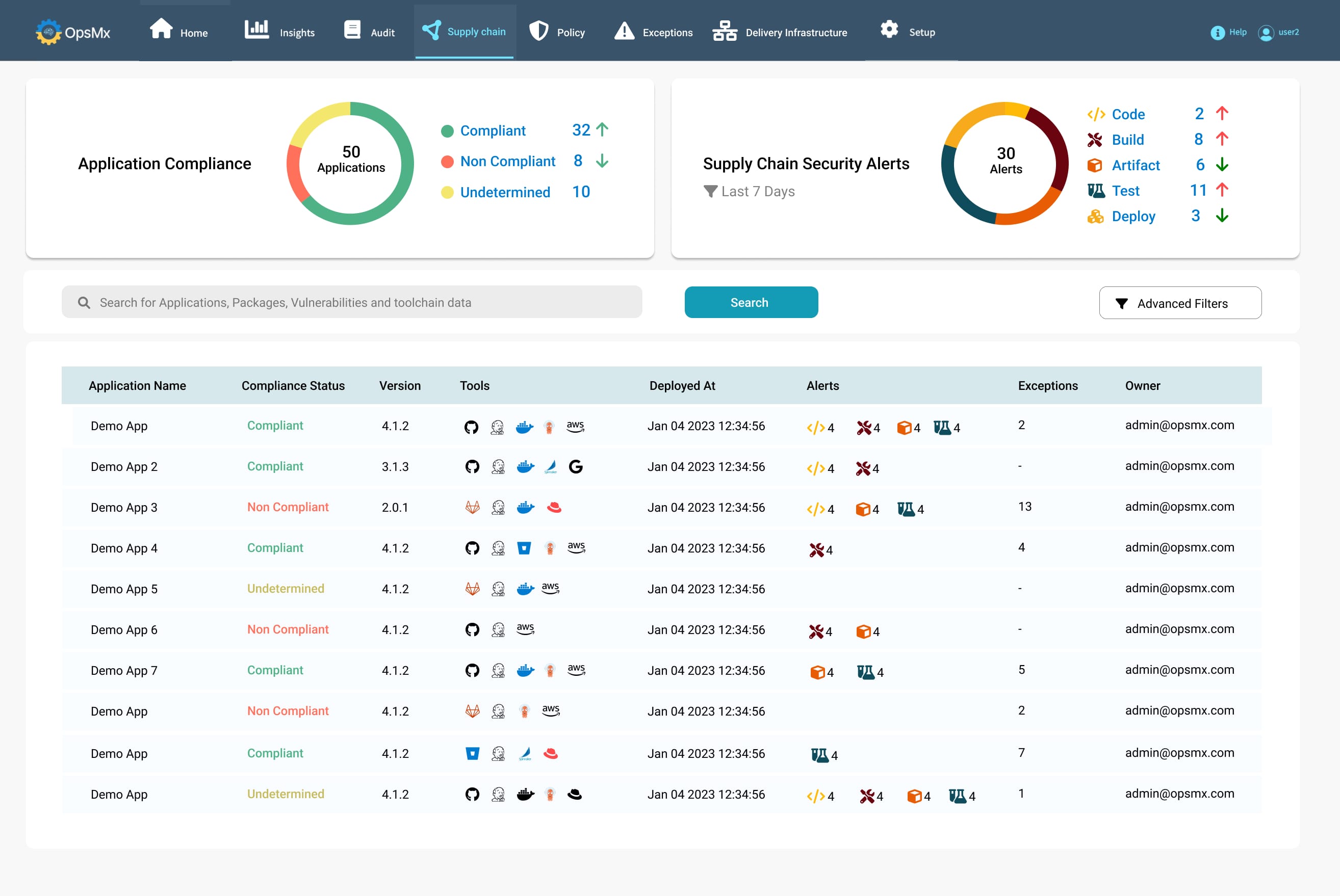
OpsMx delivers an enterprise-grade GitOps automation solution built around Argo CD, intended to simplify, scale, and secure Kubernetes application deployments. Its platform, Delivery Flow, augments Argo CD with centralized management, multi-cluster deployment capabilities, and security integrations. OpsMx helps organizations enforce DevSecOps best practices, automate compliance, and gain observability across multiple Argo CD instances.
Key features include:
- Declarative GitOps delivery: Deploy infrastructure, applications, and Kubernetes packages (Helm, Kustomize) directly from Git using version-controlled pipelines
- Multi-cluster deployments: Manage deployments across multiple target clusters and sources
- Centralized control plane: Enforce security policies, RBAC, SSO, and secret management from a unified interface for Argo CD instances
- DevSecOps integration: Embed vulnerability scanning and policy enforcement into GitOps pipelines to ensure compliant and secure deployments
- Advanced deployment strategies: Use Argo Rollouts to perform canary, blue/green, and progressive deliveries based on live telemetry

5. Akuity
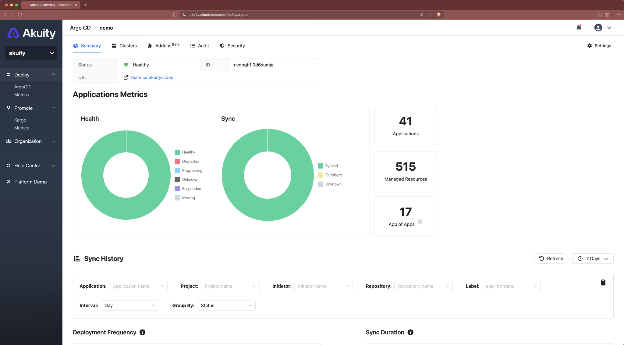
Akuity offers support for Argo, backed by the original creators and active maintainers of the Argo project. Their support services help organizations scale and stabilize Argo CD deployments across complex, mission-critical Kubernetes environments. With expert assistance, proactive security measures, and architecture consultations, Akuity ensures that Argo operates reliably and securely in production.
Key features include:
- 24x7 expert support: Always-on help from Argo CD maintainers with guaranteed fast response times for high-priority incidents
- Mission-critical SLA: One-hour response time for P1 issues, ensuring minimal disruption for business-critical systems
- Direct access to core contributors: Engage with the engineers who built and maintain Argo for accurate, in-depth solutions
- Architecture and scalability reviews: Expert guidance on scaling Argo deployments efficiently and securely across large environments
- Tailored GitOps best practices: Get implementation support aligned with Argo CD’s latest features and roadmap.

Conclusion
Argo CD automation tools enhance GitOps workflows by providing greater control, scalability, and reliability for Kubernetes-based application delivery. These tools simplify deployments, integrate essential security and compliance functions, and simplify operations across complex environments. By automating key aspects of the Continuous Delivery lifecycle, they help teams deliver faster with greater consistency and reduced operational overhead.
Help us continuously improve
Please let us know if you have any feedback about this page.