What is multi-cloud Kubernetes?
Multi-cloud Kubernetes involves deploying and managing containers across multiple cloud environments. By using multiple clouds, organizations can distribute their workloads to use different features offered by various providers. This deployment strategy ensures flexibility and allows organizations to make use of different capabilities and price points of different cloud providers for different workloads.
In a multi-cloud setup, Kubernetes serves as the control plane, standardizing workloads and simplifying operations. By decoupling the application layer from the underlying infrastructure, it can reduce dependency on any single vendor. This strategy supports application migration and scaling. Additionally, it can reduce downtime and disaster recovery risks. Through automation and resource management tools, multi-cloud Kubernetes provides a unified view and control of applications distributed across diverse cloud infrastructures.
This is part of a series of articles about Kubernetes management.
Multi-cloud deployment vs. hybrid cloud deployment
While both multi-cloud and hybrid cloud approaches involve using multiple cloud environments, they differ in their architecture and goals.
Multi-cloud deployment refers to the use of services from more than one cloud provider (e.g., AWS, Google Cloud, Microsoft Azure). Organizations choose different providers to take advantage of unique offerings from each, such as cost efficiencies, geographic availability, or specialized services. This setup does not necessarily require integration between different clouds but instead uses them independently, based on workload requirements. It allows for flexibility and avoids vendor lock-in by spreading workloads across multiple cloud platforms.
Hybrid cloud deployment, on the other hand, involves a combination of public and private cloud resources. Organizations use both on-premises infrastructure and public cloud services in an integrated manner. This model is typically employed for security, compliance, or regulatory reasons, where sensitive data or workloads remain on a private cloud, while other applications are hosted on public cloud platforms. The hybrid cloud approach often requires tighter integration between the public and private cloud layers, ensuring seamless data movement and resource management.
Related content: Read our guide to Kubernetes blue-green deployment (coming soon)
Advantages of multi-cloud Kubernetes deployments
Multi-cloud Kubernetes offers several key advantages, making it an attractive option for enterprises looking to optimize performance, resilience, and cost-effectiveness. By distributing workloads across multiple cloud providers, organizations can improve flexibility, mitigate risks, and improve efficiency.
- Avoid vendor lock-in – By running Kubernetes clusters on multiple clouds, organizations can prevent reliance on a single cloud provider. This ensures greater negotiating power and flexibility when selecting cloud services.
- Enhanced resilience and high availability – Deploying workloads across multiple cloud environments reduces the impact of outages. If one provider experiences downtime, workloads can shift to another cloud, ensuring continuous availability.
- Optimized performance and latency – Multi-cloud Kubernetes allows workloads to be placed closer to users by using different data centers worldwide, reducing latency and improving application performance.
- Cost optimization – Organizations can take advantage of competitive pricing models by dynamically shifting workloads to cloud providers offering the best cost-performance ratio at any given time.
- Regulatory and compliance flexibility – Certain regions have data residency and compliance requirements. Multi-cloud Kubernetes enables organizations to deploy workloads in specific locations to meet legal and regulatory obligations.

Tony Kelly is a DevOps marketing leader who drives innovation and awareness of the latest trends in Continuous Delivery.
Challenges of multi-cloud Kubernetes
Consistent security and access control
Security and access control become complex in multi-cloud Kubernetes environments. Each cloud provider has distinct security protocols, making unified policy enforcement challenging. Consistent security requires deploying standardized tools and practices to manage authentication and authorization efficiently across platforms.
Kubernetes offers mechanisms like role-based access control (RBAC) and namespaces, but integrating these with multiple clouds’ native services requires meticulous planning. Security teams must establish strategies that span identity management, encryption, and compliance monitoring. Effective cross-cloud security promotes data protection while ensuring unauthorized access remains stringently controlled, presenting a non-trivial task for administrators.
Networking and connectivity across clouds
Networking across clouds presents challenges due to disparate architectures and protocols. Ensuring communication between Kubernetes clusters in different clouds requires sophisticated networking solutions. Factors such as latency, bandwidth, and routing protocols need careful consideration to maintain performance standards.
The complexity of managing connections increases with multi-cloud deployments. Solutions such as virtual private networks (VPNs) and software-defined networking (SDN) help bridge communication gaps. Kubernetes’ native networking capabilities can be extended to support cross-cloud connectivity, yet demand precise configuration and monitoring to avoid inconsistencies.
Managing data storage and persistence
Data storage and persistence across clouds present challenges regarding consistency and access. Kubernetes typically employs persistent volumes to manage data, but synchronization across diverse platforms requires additional solutions. Deploying databases and stateful applications in a multi-cloud environment requires robust storage strategies.
Ensuring data integrity involves using cloud-native storage services but often involves trade-offs. Consistent backups, replication, and data governance are crucial in maintaining seamless access. Kubernetes offers StatefulSets for managing stateful applications, yet multi-cloud complexities require additional orchestration layers and management techniques to handle data across different storage solutions effectively.
Monitoring and observability across clusters
Monitoring and observability are vital for maintaining Kubernetes clusters spread across multiple clouds. Different platforms may have specific monitoring tools, complicating centralized observations. Achieving visibility into all clusters requires cohesive tooling that integrates cloud-native features and third-party solutions.
Consistent logging, metrics collection, and analytics are crucial for real-time monitoring and diagnosing issues. Kubernetes offers Prometheus and Grafana as effective tools, but extending these across clouds demands careful orchestration and management. Maintaining observability ensures smooth operations and service health, identifying issues before they impact users, yet requires meticulous integration and strategic planning.
Cost management and optimization
Cost management is challenging in multi-cloud environments, where disparate billing models and resource pricing complicate budgeting. Kubernetes offers resource efficiency but requires careful monitoring and scaling to optimize expenses effectively. Multi-cloud strategies require tools that provide insights into usage and costs across platforms.
Organizations need to employ cost management strategies focusing on allocating resources appropriately and analyzing spending patterns. Kubernetes supports autoscaling features to manage demand cost-effectively, but integrating these with cost management tools ensures resources are used efficiently. Effective cost optimization balances performance and expenditure while maximizing the value derived from multi-cloud strategies.
Approaches to managing multi-cloud Kubernetes
1. Infrastructure as Code (IaC)
Infrastructure as Code (IaC) simplifies managing resources across multiple clouds in Kubernetes deployments. Tools like Terraform and Ansible enable declarative configurations, ensuring consistent infrastructure provisioning. IaC accelerates deployment through automation, reducing manual errors and ensuring repeatability.
These tools enable version control, allowing infrastructure configurations to be treated like code, improving collaboration and traceability. Kubernetes deployments benefit from IaC by standardizing environment setups, thus promoting efficient multi-cloud management. Embracing IaC leads to faster deployments and more reliable environments while improving team coordination and operational transparency.
2. Deployment automation and GitOps solutions
Deployment automation streamlines multi-cloud Kubernetes operations by enabling consistent and repeatable workflows. GitOps, a practice that uses Git repositories as the source of truth for cluster configurations, improves automation by synchronizing changes declaratively. Tools like Argo CD and Flux enable teams to automatically deploy updates across clusters, reducing manual intervention and configuration drift.
By adopting GitOps, organizations ensure faster rollouts, improved rollback capabilities, and better collaboration between development and operations teams. Automation reduces errors and accelerates delivery pipelines, making it critical for maintaining agility in complex multi-cloud environments.
3. Kubernetes-based management platforms
Kubernetes-based platforms, such as OpenShift and Rancher, simplify multi-cloud management by providing unified interfaces for cluster administration. These tools simplify operations by abstracting differences between clouds, enabling workloads deployment, and managing applications consistently.
By using such platforms, teams can use Kubernetes’ capabilities without being constrained by provider-specific limitations. These tools offer integrated monitoring, scaling, and security features tailored for multi-cloud environments, ensuring smoother operations. Choosing the right platform improves manageability and can significantly reduce overhead, consolidating resources under a single management framework.
4. Multi-cluster management solutions
Managing multiple clusters across clouds requires dedicated solutions that provide centralized control. Tools like Kubernetes Federation and Anthos enable multi-cluster operations, granting visibility and consistency across deployments. These solutions centralize policy enforcement, resource allocation, and workload distribution.
Multi-cluster management solutions improve efficiency by reducing repetitive tasks and coordinating cluster configurations. Using these tools supports business agility, enabling organizations to react to changes swiftly. They ensure consistent application behavior, optimal resource use, and simplified operations throughout diverse multi-cloud environments.
5. Service mesh implementations
Service meshes improve communication within Kubernetes-based multi-cloud deployments by managing microservices interactions. Tools like Istio and Linkerd provide traffic management, security, and observability functions. They abstract complex networking tasks, ensuring reliable and secure service-to-service communication.
Implementing a service mesh supports cross-cloud networking by integrating load balancing, traffic steering, and failure recovery. These features improve application performance and resilience, crucial for distributed environments. By defining service interactions at a granular level, service meshes maintain high availability and performance in complex multi-cloud setups, providing holistic application management.
Common tools for managing multi-cloud Kubernetes
Several tools are widely used to simplify and improve multi-cloud Kubernetes operations. These platforms help manage the complexities of provisioning, monitoring, scaling, and securing Kubernetes clusters across different cloud providers.
1. Octopus Deploy
Octopus Deploy helps software teams deploy freely – when and where they need, in a routine way. With Octopus, you can orchestrate deployments from modern containers and microservices to trusted legacy applications. We support deployments in data centers, multiple cloud environments, and hybrid IT infrastructure.
Features of Octopus Deploy:
- Deployment and runbooks automation: Automates complex deployments and operations runbooks with hundreds of ready-made step templates, so you can avoid rolling your own scripts.
- All your deployments in one place: See all of your deployments in one place, including Kubernetes, cloud, data-center, and on-premises targets.
- Intuitive UI plus GitOps: Use the intuitive user interface to configure and run deployments, and store the deployment process as code in declarative version-controlled files.
- Configuration management: Easily handle complex configuration management and variable substitution to make sure every environment and instance has the correct configuration.
- Scalable, repeatable, reliable deployments: Removes the stress from deployments with robust automation options.

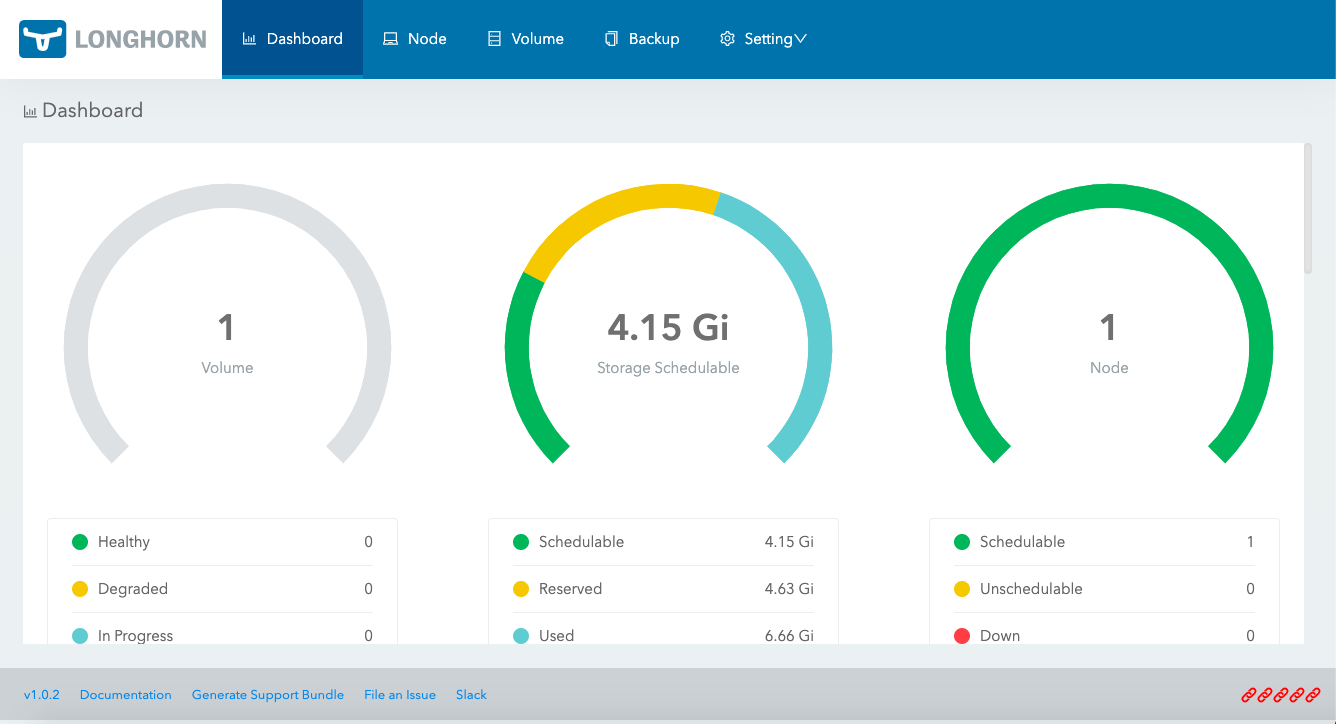
2. Rancher
Rancher is an open-source Kubernetes management platform that supports the deployment and operation of multiple clusters across on-premises, public cloud, or hybrid infrastructure. It provides a centralized control plane to manage authentication, access control, security policies, and observability.
Key features include:
- Infrastructure orchestration – Provides networking, storage, load balancing, DNS, and security services for containerized applications across any cloud or on-premises environment
- Multi-orchestrator support – Includes Kubernetes, Docker Swarm, and Mesos for container orchestration and scheduling
- Application catalog – Enables one-click deployment of multi-container applications and supports automated upgrades
- Enterprise-grade authentication – Integrates with Active Directory, LDAP, and GitHub for user access management
- Role-based access control (RBAC) – Manages user and group permissions at the environment level for improved security

Source: Rancher
3. OpenShift
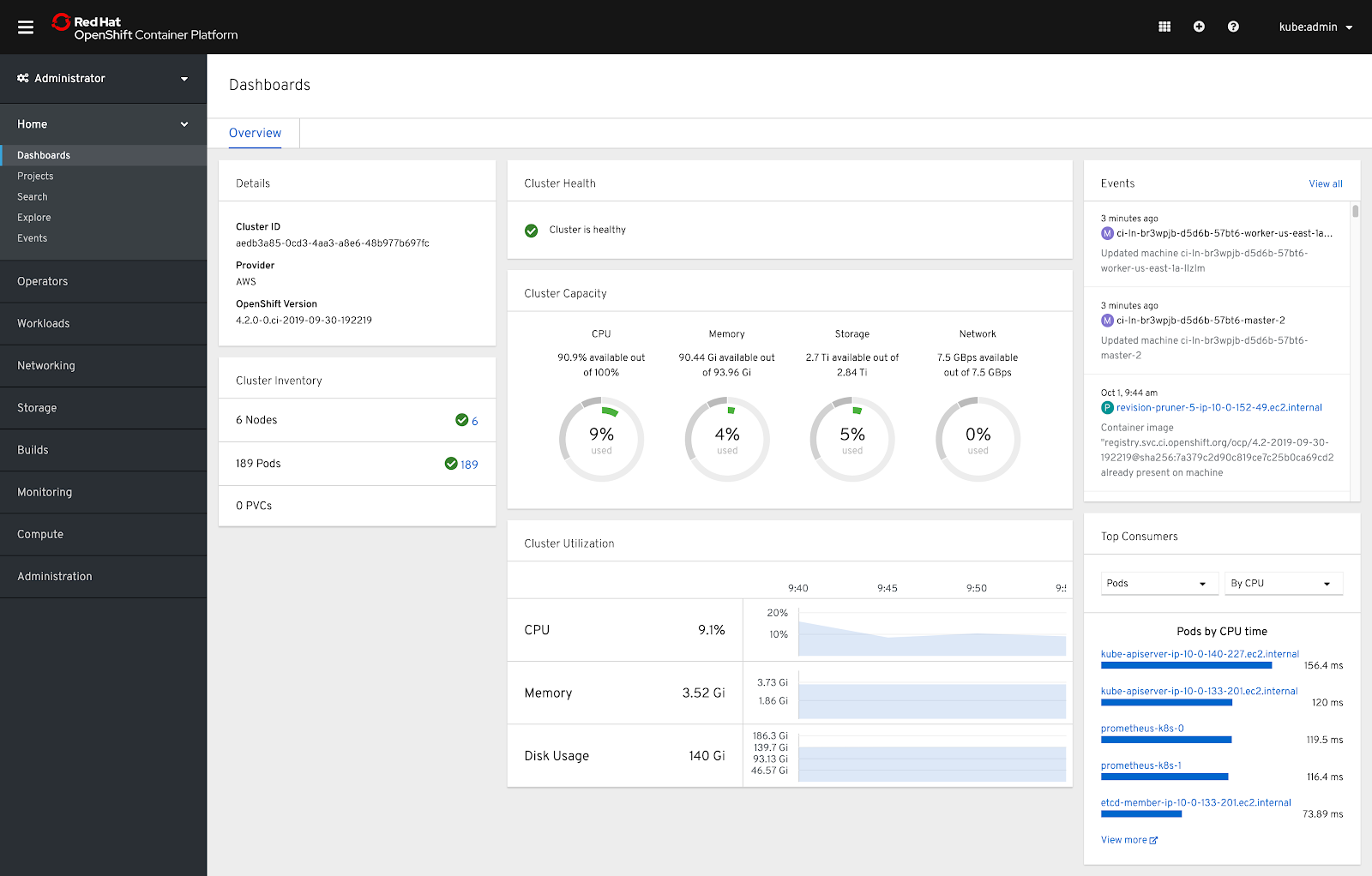
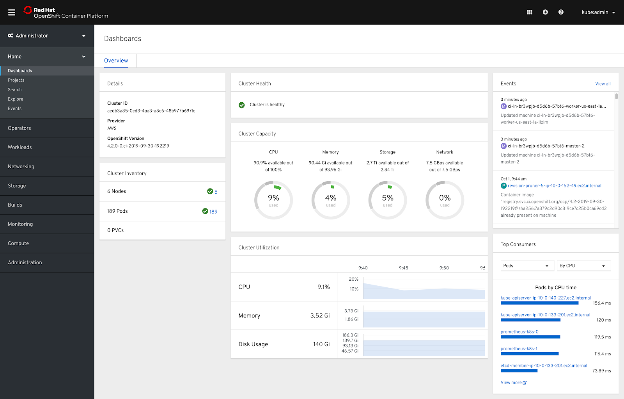
OpenShift, developed by Red Hat, is an enterprise Kubernetes platform built on Kubernetes and Docker. It adds developer and operational tools, a web console, and integrated CI/CD capabilities. OpenShift supports hybrid and multi-cloud deployments with features like automated installation, upgrades, and scaling.
Key features include:
- Deployment flexibility – Offers self-managed editions and managed cloud services across AWS, Azure, Google Cloud, and IBM Cloud
- Integrated CI/CD workflows – Provides OpenShift GitOps and OpenShift Pipelines for Continuous Integration and Delivery
- Observability tools – Includes monitoring and troubleshooting features with OpenShift Observability
- Service mesh and serverless – Supports modern application patterns like microservices and event-driven architectures
- Consistent developer experience – Delivers unified tools and APIs across hybrid and multi-cloud environments

Source: Red Hat
4. kops (Kubernetes Operations)
kops is a CLI tool used for creating, upgrading, and managing Kubernetes clusters on AWS and other supported platforms. It automates the provisioning of clusters using infrastructure-as-code principles and integrates with tools like Terraform. While traditionally tied to AWS, recent versions support multiple cloud platforms.
Key features include:
- Automated provisioning – Creates highly available Kubernetes clusters with minimal manual intervention
- State-sync model – Supports dry runs and ensures changes are idempotent and predictable
- Terraform integration – Generates Terraform configurations for infrastructure-as-code workflows
- Networking support – Includes popular CNI networking providers out of the box
- Multi-architecture compatibility – Supports ARM64 and other architectures
5 best practices for multi-cloud Kubernetes deployments
1. Design loosely coupled applications
Loosely coupled applications improve robustness in multi-cloud Kubernetes deployments. By decoupling components, applications can evolve independently, reducing dependency on any single part. Such design promotes flexibility, allowing modules to be updated or replaced without affecting the whole system.
Adopting microservices architecture, where services interact through simple interfaces, supports this approach. It ensures applications scale efficiently and can be distributed across clouds, optimizing resource use. Designing applications with independence in mind leads to more resilient systems, capable of adapting to changing demands and diverse infrastructure environments.
2. Use cloud-agnostic APIs and resource definitions
Using cloud-agnostic APIs ensures applications maintain compatibility with multiple platforms. Kubernetes supports various abstraction layers that minimize reliance on specific provider services. By using standardized interfaces for resource access and management, applications maintain portability and flexibility across clouds.
Resource definitions should be generalized, avoiding vendor-specific configurations that limit adaptability. By embracing cloud-agnostic principles, organizations protect their investments, enabling quicker migrations and adaptations. Such practices support multi-cloud strategies by ensuring applications can use the best resources available without being held back by incompatible dependencies.
3. Use centralized CI/CD pipelines
Centralized Continuous Integration/Continuous Deployment (CI/CD) pipelines simplify multi-cloud application development. By automating build, test, and deployment processes, these pipelines ensure consistency and speed across environments. Kubernetes-native CI/CD tools like Jenkins or CircleCI can be configured to accommodate multi-cloud infrastructures.
Centralizing CI/CD practices consolidates efforts and resources, reducing duplication and error. It enables rapid iteration, fostering innovation across development teams. Centralized pipelines ensure seamless updates and deployments across cloud environments, maintaining application integrity while improving productivity and collaboration among cross-functional teams.
4. Automate infrastructure deployment
Automating infrastructure deployment uses the full potential of multi-cloud Kubernetes. Automation reduces manual interventions, minimizes configuration errors, and accelerates provisioning. Tools like Octopus Deploy operationalize Kubernetes deployment, ensuring repeatability and consistency.
This approach empowers organizations to quickly scale environments to meet demand, aligning resources dynamically with operational needs. By automating deployment, teams can focus on higher-value activities, driving innovation. Automated infrastructure simplifies operations, increases efficiency, and supports rapid scaling in response to market changes.
5. Ensure consistent security and compliance policies
Maintaining consistent security in multi-cloud deployments requires unified policies. Defining centralized security guidelines ensures compliance and minimizes risk across platforms. Kubernetes provides identity and access management (IAM) tools, such as RBAC, to enforce access controls and protect sensitive data.
Organizations benefit from adopting integrated security frameworks that align with cloud-native practices. Proactive monitoring, regular auditing, and compliance checks are essential to maintaining a secure posture. Consistent security underpins effective multi-cloud strategies, protecting against breaches and ensuring regulatory compliance is maintained across all environments.
Conclusion
Multi-cloud Kubernetes enables organizations to build resilient, flexible, and scalable systems that use the strengths of multiple cloud providers. While it introduces complexity in areas such as networking, security, and cost management, adopting the right strategies and practices can mitigate these challenges. A well-planned multi-cloud approach helps enterprises deliver consistent application performance and achieve operational efficiency across diverse infrastructures.
Help us continuously improve
Please let us know if you have any feedback about this page.