What are Continuous Delivery solutions?
Continuous Delivery (CD) solutions are platforms and tools that automate the process of building, testing, and deploying software. These solutions move code changes from development to production environments in a consistent, repeatable, and reliable manner.
By automating each stage of the software release pipeline, CD solutions reduce manual intervention and the risk of human error, ensuring that new features, bug fixes, and updates can be delivered to end users quickly and safely. Modern Continuous Delivery solutions integrate with existing development workflows and infrastructure, supporting everything from code commit to deployment.
They often include version control integration, automated testing, artifact management, and deployment orchestration. By providing end-to-end automation, CD solutions help organizations achieve faster release cycles, improved software quality, and closer alignment between development and operations teams.
Benefits of Continuous Delivery solutions for enterprises
Continuous Delivery solutions provide measurable advantages for enterprises that need to release software frequently while maintaining stability. By automating critical stages of the delivery pipeline, these tools reduce delays, improve consistency, and support collaboration across teams:
- Faster release cycles: Automation shortens the time between code commit and production release. Teams can deploy updates more frequently without increasing overhead.
- Improved software quality: Integrated testing ensures that code is validated at each stage. Issues are detected early, reducing defects in production.
- Reduced manual effort: Repetitive tasks such as builds, tests, and deployments are automated. This allows teams to focus on development rather than operational work.
- Lower risk of deployment failures: Standardized pipelines reduce variability in deployments. Rollbacks and version control make it easier to recover from failures.
- Better collaboration between teams: Shared pipelines and visibility align development, operations, and QA. This reduces communication gaps and improves coordination.
- Scalability across projects: CD solutions support multiple environments and services. Enterprises can apply the same processes across teams and applications.
- Consistent environments: Automated configuration ensures that development, testing, and production environments remain aligned. This reduces environment-related issues.
- Faster feedback loops: Continuous testing and monitoring provide quick feedback on changes. Teams can respond to issues before they affect users.
Learn more in our detailed guide to benefits of continuous delivery
Key features of enterprise Continuous Delivery solutions
Scalable pipeline orchestration
Scalable pipeline orchestration allows enterprises to manage workflows that involve multiple teams, services, and environments. These orchestration engines can handle a large volume of builds and deployments simultaneously, ensuring efficient resource use and minimizing bottlenecks. Enterprises can define custom workflows that meet business requirements, ensuring flexibility and consistency across projects.
As organizations grow, their software delivery processes become more intricate. Scalable orchestration ensures that pipelines can adapt to increased demand without compromising performance. This capability is important for enterprises that need to support parallel development streams, microservices architectures, and geographically distributed teams.
Multi-environment deployments
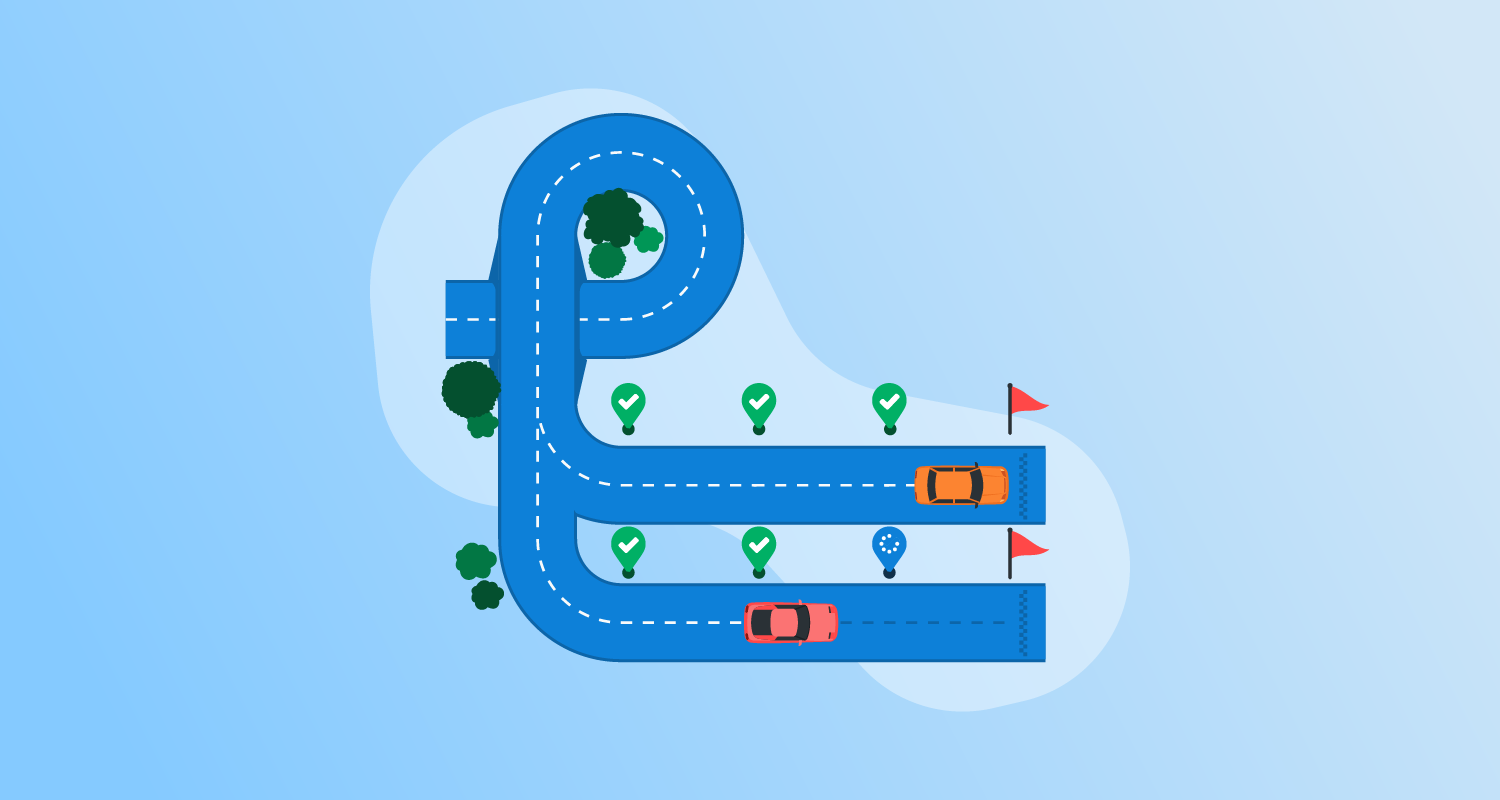
Multi-environment deployments enable enterprises to promote code changes through development, testing, staging, and production with confidence. CD solutions automate deployment to different environments, ensuring that applications behave consistently and that environment-specific configurations are managed securely and efficiently.
This feature is important for enterprises that must validate software in multiple contexts before releasing it to end users. Automated multi-environment deployments reduce manual errors, simplify approvals, and support blue/green or canary release strategies, helping enterprises reduce risk and maintain availability during updates.
Security and compliance automation
Security and compliance automation integrates security checks, policy enforcement, and audit trails into the software delivery pipeline. CD solutions can automate vulnerability scanning, static code analysis, and license compliance checks as part of the deployment process. This ensures that security and compliance requirements are met without slowing development cycles.
For enterprises operating in regulated sectors, automated compliance reporting and enforcement are critical. These capabilities help organizations maintain a consistent security posture and provide documentation for audits, reducing the risk of noncompliance and penalties.
Integration with cloud and hybrid infrastructure
Enterprise CD solutions support integration with public cloud providers, private data centers, and hybrid infrastructures. This flexibility allows organizations to deploy applications where needed, using cloud scalability while supporting legacy or on-premises systems. Integration with infrastructure services simplifies provisioning, scaling, and management of deployment environments.
Such integrations are important for enterprises managing workloads across multiple platforms. By abstracting infrastructure details, CD solutions enable consistent deployment practices regardless of the underlying environment, simplifying operations and reducing configuration drift.
Real-time monitoring and analytics
Real-time monitoring and analytics provide visibility into every stage of the delivery pipeline, including build status, deployment metrics, and failure rates. CD solutions often offer dashboards and alerting mechanisms that help teams identify and resolve issues quickly. Access to data supports continuous improvement and informed decision-making.
Enterprises use analytics to uncover bottlenecks, track key performance indicators, and ensure service level objectives are met. Real-time feedback helps teams respond to incidents, maintain system health, and improve release processes.
Rollback and recovery mechanisms
Rollback and recovery mechanisms allow enterprises to revert deployments quickly if issues are detected in production. CD solutions automate rolling back to a previous stable version, minimizing downtime and reducing the impact of failed releases. This capability is necessary for maintaining service availability and user trust.
In addition to rollback, recovery options such as automated failover and backup restoration support business continuity. Enterprises can define policies for handling deployment failures, enabling predictable and controlled responses to incidents in production environments.
Best practices for implementing Continuous Delivery in enterprises
1. Start small and scale gradually
Enterprises should begin their Continuous Delivery efforts with a pilot project or a single team, focusing on automating one application or service. This approach allows organizations to identify challenges, validate tools, and refine processes without overwhelming resources.
Lessons learned from initial implementations can inform broader rollouts and help establish practices that fit the organization’s requirements. Scaling gradually ensures that cultural and technical adjustments happen at a manageable pace. As teams gain experience, Continuous Delivery practices can expand across more projects and departments.
2. Automate everything
Automating every stage of the software delivery lifecycle, including testing, deployment, and monitoring, supports consistency and speed. Automated testing validates code changes before deployment, catching defects early and reducing manual QA efforts.
Automated deployments remove human error from release processes, enabling reliable, repeatable rollouts across environments. Automated monitoring provides real-time feedback on application health and pipeline performance.
3. Implement DevSecOps early
Embedding security into every phase of the delivery pipeline, known as DevSecOps, ensures that vulnerabilities are detected and addressed early. Enterprises should integrate automated security testing, code scanning, and policy enforcement into their Continuous Delivery workflows from the outset.
This approach reduces the risk of security issues reaching production and lowers the cost and effort of late-stage remediation. Early adoption of DevSecOps encourages collaboration between development, operations, and security teams. By shifting security left, enterprises can automate compliance checks and meet regulatory requirements without slowing delivery cycles.
4. Use Infrastructure as Code
Infrastructure as Code (IaC) enables enterprises to define and manage infrastructure resources using code, ensuring that environments are consistent, reproducible, and version-controlled. CD solutions that support IaC allow teams to automate provisioning, scaling, and configuration of infrastructure alongside application deployments.
This reduces manual setup, speeds up environment creation, and minimizes configuration drift. By treating infrastructure the same way as application code, enterprises can apply practices such as code reviews, automated testing, and Continuous Integration to infrastructure. IaC supports collaboration and simplifies rollback or disaster recovery.
5. Standardize pipelines across teams
Standardizing deployment pipelines across teams promotes consistency, reduces duplicated effort, and accelerates onboarding. Enterprises can establish shared templates, conventions, and tools for building, testing, and deploying software, ensuring that all teams follow the same practices.
This approach simplifies maintenance and troubleshooting, as common processes and terminology are used organization-wide. Standardization also supports centralized governance and compliance enforcement. By using standardized pipelines, enterprises can implement security policies, track metrics, and meet regulatory requirements across projects.
6. Invest in training and culture change
Successful adoption of Continuous Delivery requires more than technology; it requires changes in skills and mindset. Enterprises should invest in training programs to equip teams with the knowledge required to implement and maintain automated pipelines. Workshops, certifications, and hands-on learning opportunities help address skill gaps and support continuous improvement.
Culture change is also important. Leadership should encourage collaboration, experimentation, and shared responsibility for quality and security. Recognizing teams for successful automation and rapid delivery reinforces these behaviors.
Notable Continuous Delivery solutions for enterprises
Dedicated Continuous Delivery and Deployment platforms
1. Octopus Deploy
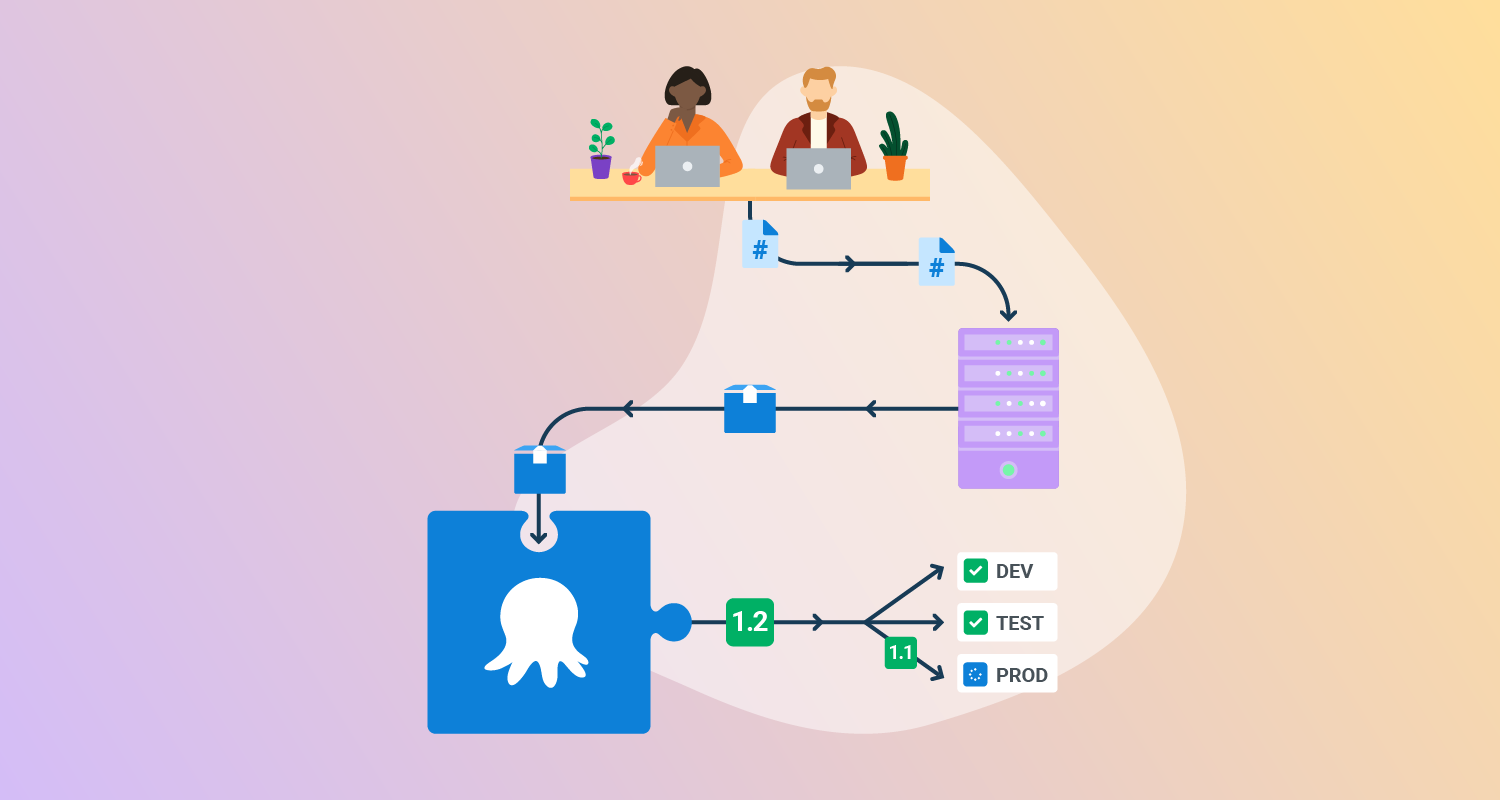
Octopus Deploy helps software teams deploy freely – when and where they need, in a routine way. With Octopus, you can orchestrate deployments from modern containers and microservices to trusted legacy applications. We support deployments in data centers, multiple cloud environments, and hybrid IT infrastructure.
Features of Octopus Deploy:
- Deployment and runbooks automation: Automates complex deployments and operations runbooks with hundreds of ready-made step templates, so you can avoid rolling your own scripts.
- All your deployments in one place: See all of your deployments in one place, including Kubernetes, cloud, data-center, and on-premises targets.
- Intuitive UI plus GitOps: Use the intuitive user interface to configure and run deployments, and store the deployment process as code in declarative version-controlled files.
- Configuration management: Easily handle complex configuration management and variable substitution to make sure every environment and instance has the correct configuration.
- Scalable, repeatable, reliable deployments: Removes the stress from deployments with robust automation options.

2. Argo CD
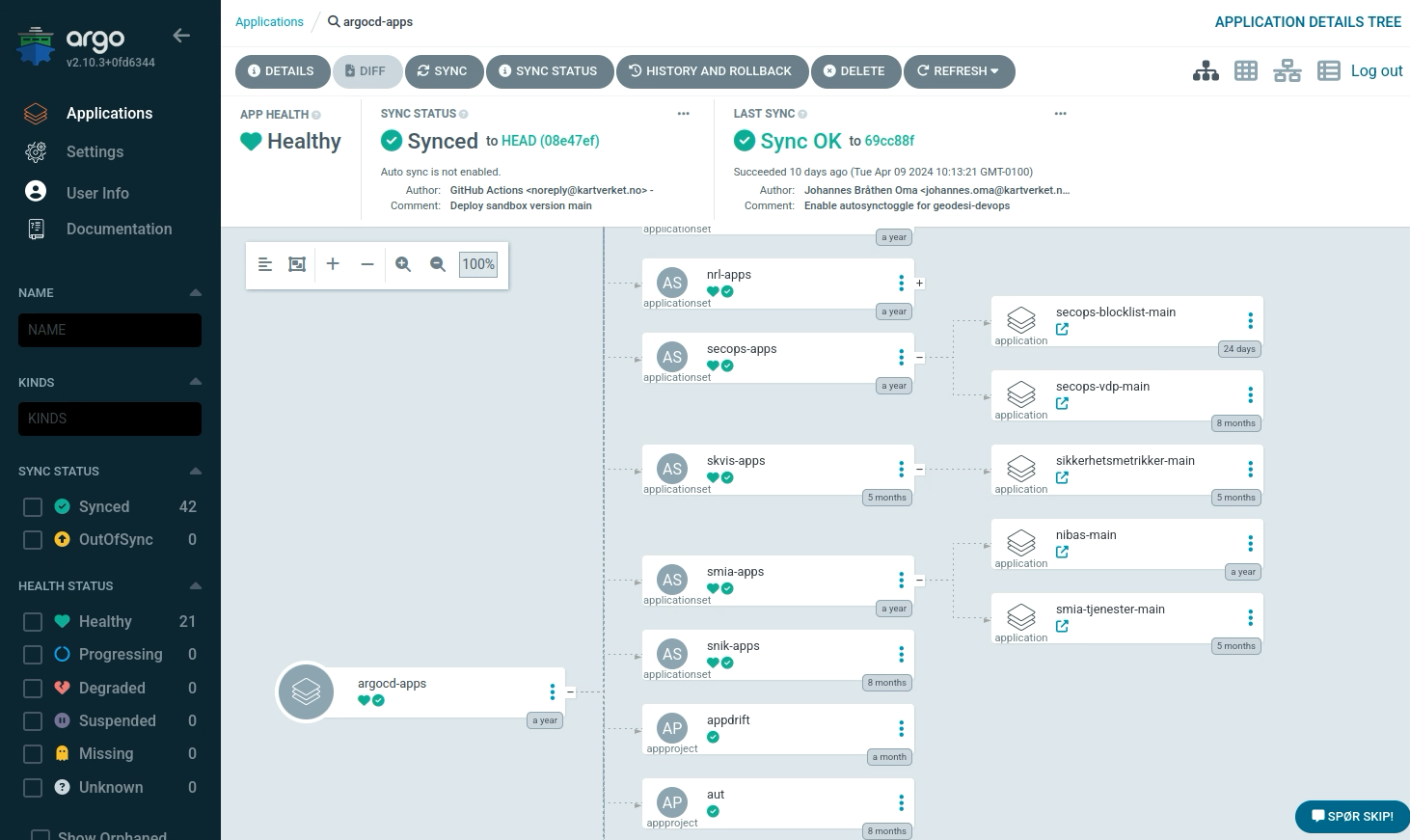
Argo CD is a Kubernetes-native Continuous Delivery tool that applies the GitOps model by treating a Git repository as the source of application configuration. It continuously checks the running state of applications against the desired state defined in Git and highlights differences. When discrepancies occur, it can automatically or manually bring the system back in sync.
Key features include:
- GitOps-based deployment model: Uses Git repositories to define application state, including configurations and environment settings.
- Continuous state monitoring and drift detection: Compares the live state in Kubernetes with the desired state in Git and flags deviations.
- Automated and manual synchronization: Automatically applies changes from Git to the cluster or allows manual approval before syncing.
- Support for multiple configuration formats: Works with Kustomize, Helm charts, Jsonnet, plain YAML/JSON, and custom configuration plugins.
- Version tracking and flexible deployment strategies: Follows Git branches, tags, or commits to control what version of an application is deployed.

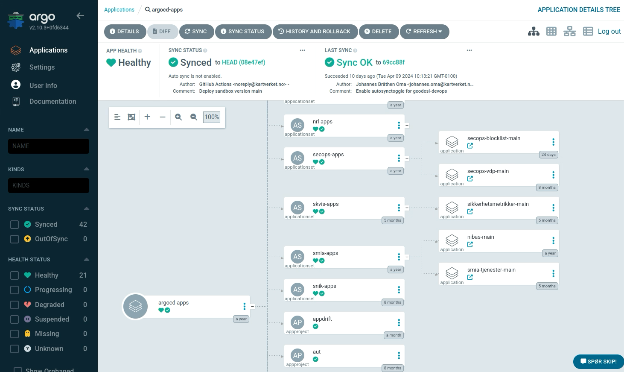
Source: Argo CD
3. GoCD
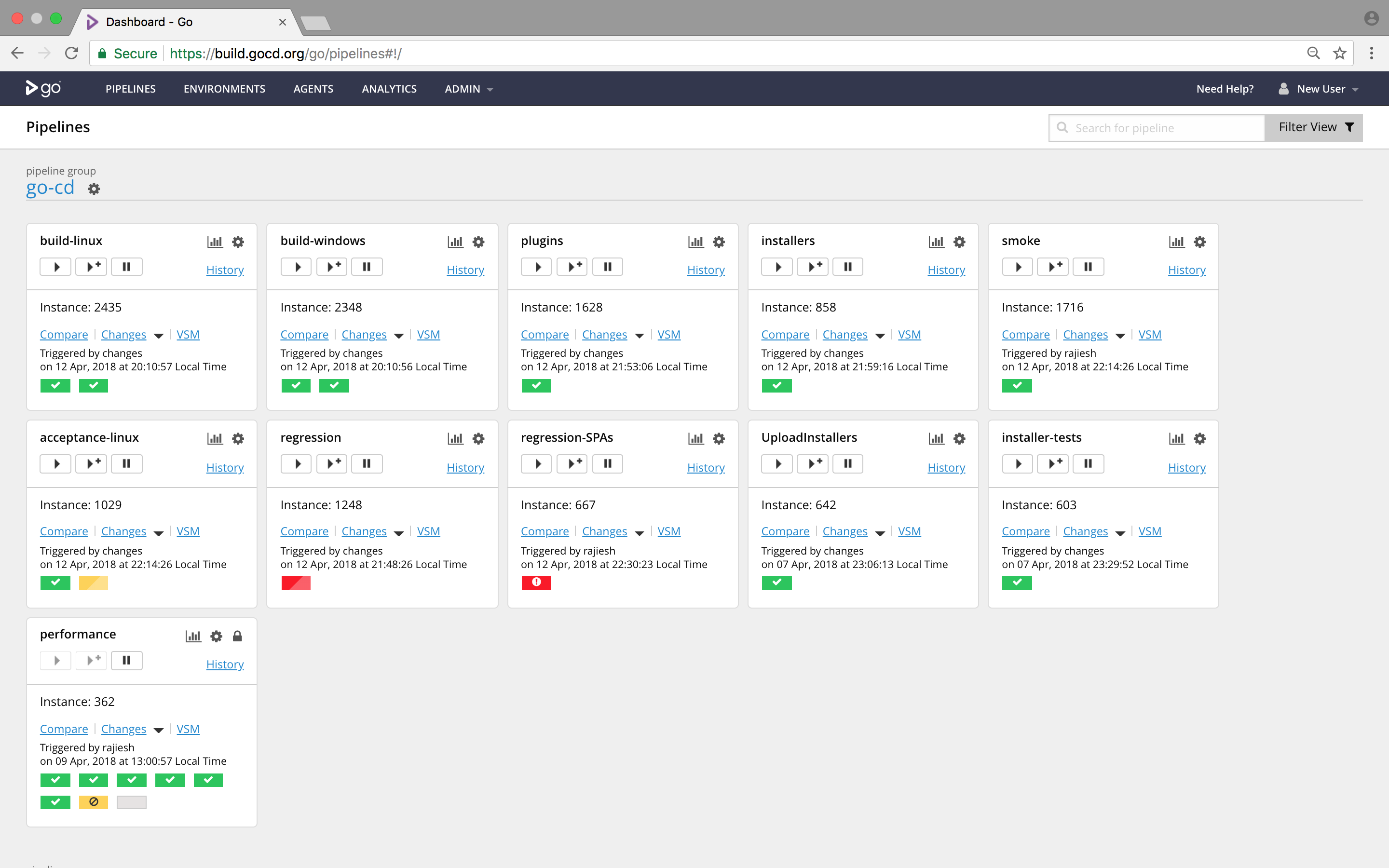
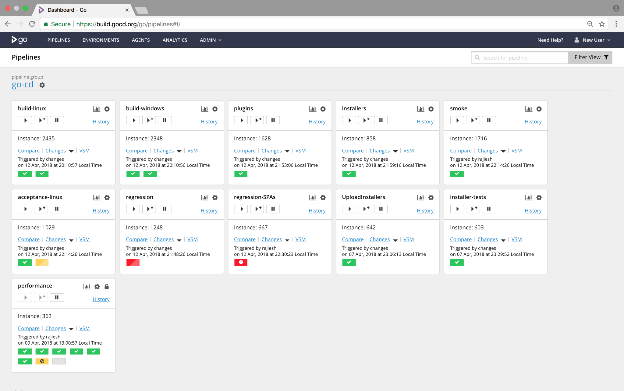
GoCD is an open-source Continuous Delivery server used to model, visualize, and manage software delivery pipelines. It provides visibility into the path from code commit to production, allowing teams to understand how changes move through the system. With support for workflow modeling, artifact management, and deployment control, GoCD helps teams automate releases.
Key features include:
- Value stream visualization: Provides a unified view of the delivery pipeline from commit to deployment.
- Workflow modeling with dependencies: Supports sequential and parallel execution of pipeline stages, including fan-in and fan-out dependencies.
- Cloud-native deployment support: Works with Kubernetes, Docker, and cloud platforms such as AWS.
- Traceability across pipelines: Tracks changes from commit to deployment.
- Artifact promotion across stages: Moves the same tested binaries through pipeline stages tied to a specified changeset.

Source: GoCD
End-to-end CI/CD platforms
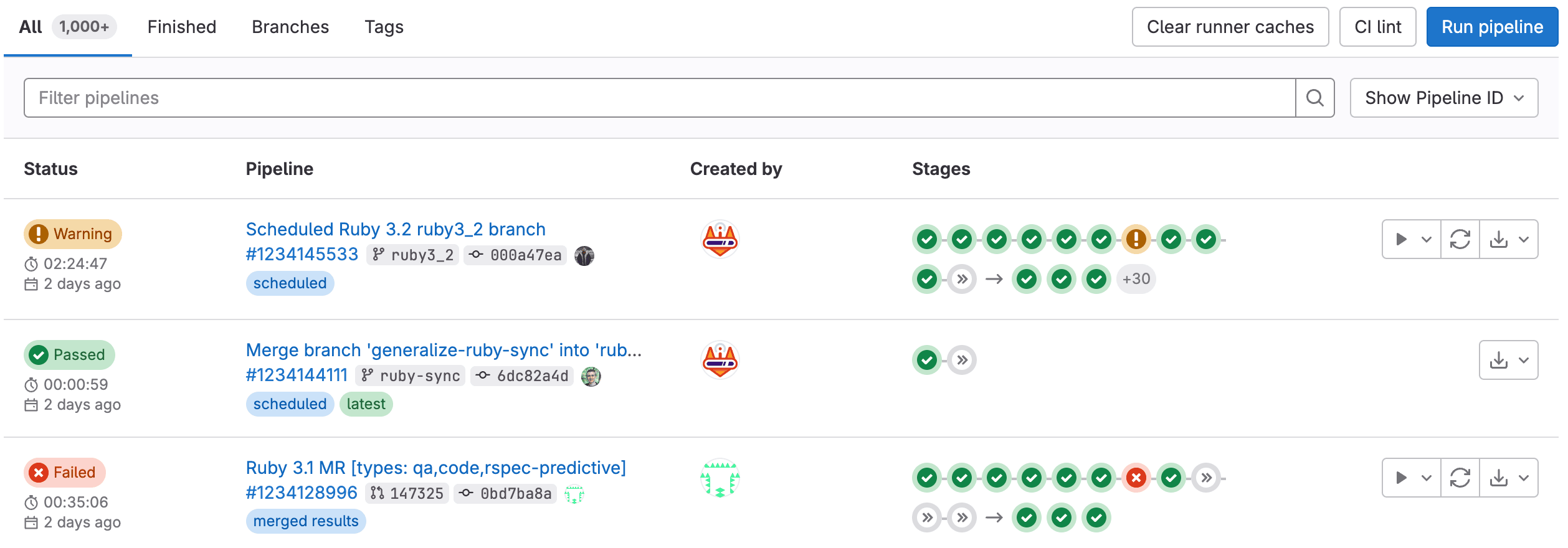
4. GitLab CI/CD
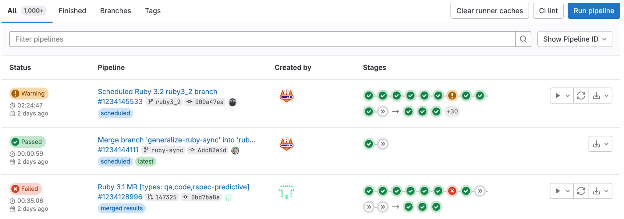
GitLab CI/CD is a Continuous Integration and Continuous Delivery platform that automates the software lifecycle from code commit to production. It provides a single system to build, test, secure, and deploy applications using orchestrated pipelines. It includes built-in templates, scalable runners, and integrated security features to standardize workflows.
Key features include:
- End-to-end CI/CD automation: Automates building, testing, packaging, and deployment within a single platform.
- Pipeline templates and CI/CD catalog: Offers reusable pipeline components and private catalogs for internal standardization.
- Parent-child pipelines for scalability: Splits large pipelines into smaller parts to manage complexity.
- Merge trains for stable main branches: Coordinates merges to help keep the main branch stable.
- Hosted and custom runners: Provides managed infrastructure for CI/CD jobs or supports self-managed runners.

Source: GitLab CI/CD
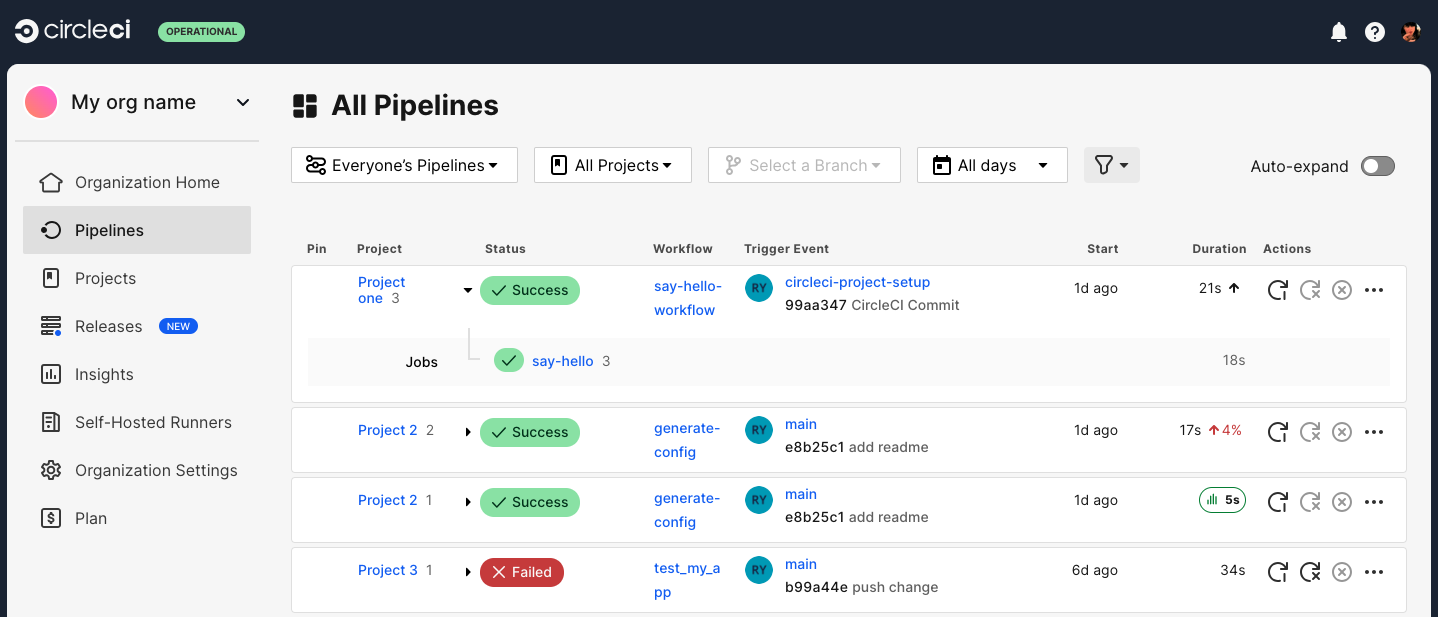
5. CircleCI
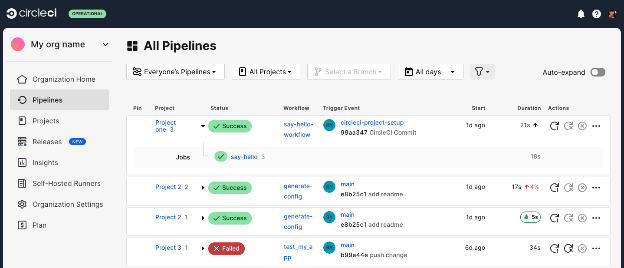
CircleCI is a Continuous Integration and Delivery platform focused on automated validation of code changes. It enables teams to build, test, and deploy software by supporting test orchestration and parallel execution. CircleCI integrates with developer tools to support rapid feedback and issue resolution while maintaining quality.
Key features include:
- Automated validation of every code change: Tests and validates changes from developers, automation tools, and AI-generated code.
- Fast feedback with intelligent test execution: Optimizes test runs and prioritizes relevant checks.
- Parallel execution at scale: Runs multiple jobs simultaneously to reduce build and test times.
- Autonomous issue detection and resolution: Identifies problems such as flaky tests and failed builds.
- Test orchestration for reliable validation: Coordinates test execution across pipelines.

Source: CircleCI
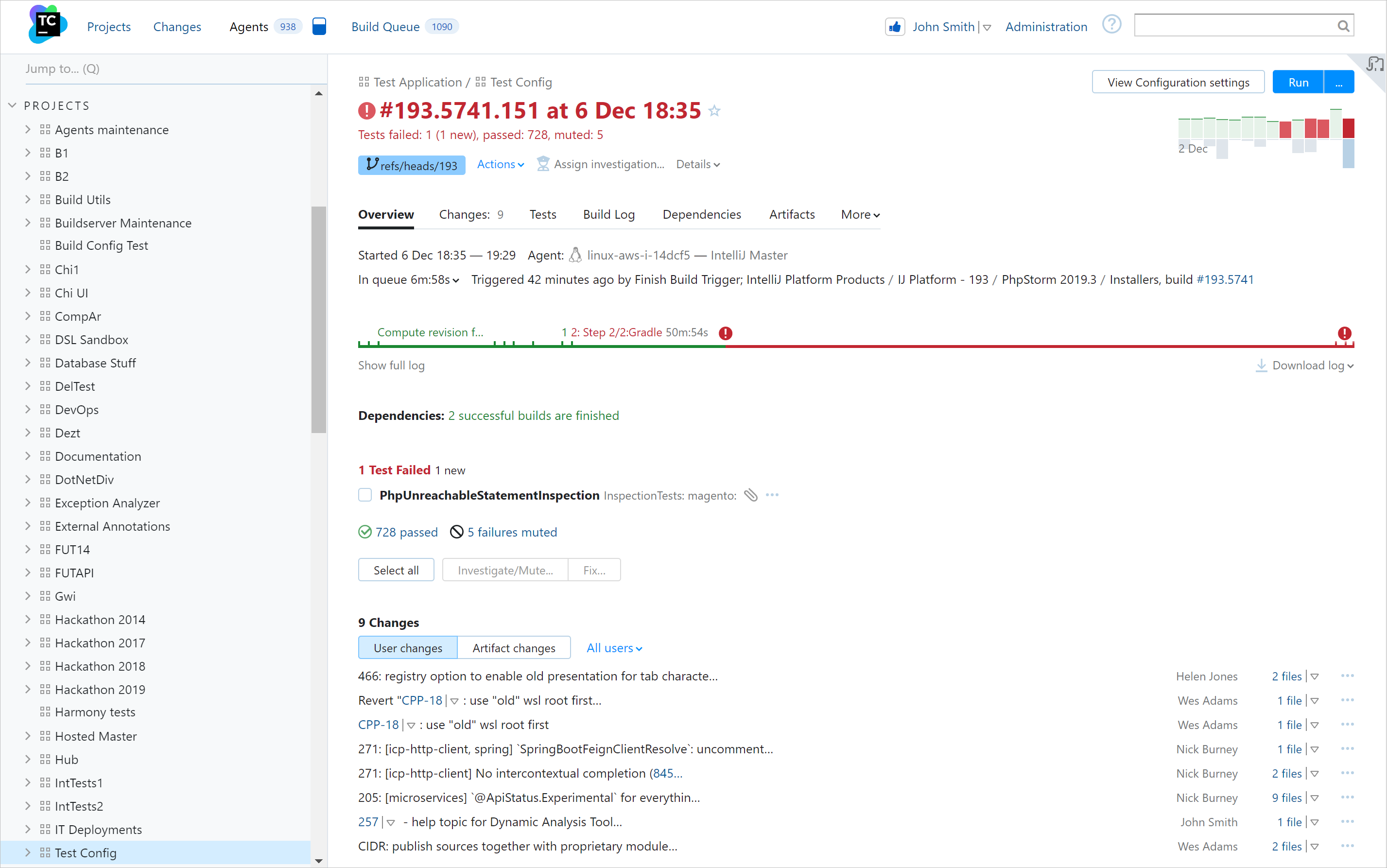
6. TeamCity
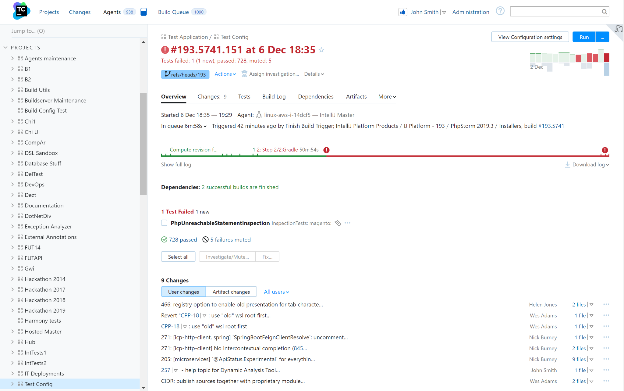
TeamCity is a CI/CD platform that supports complex development workflows with a focus on scalability, flexibility, and performance. It enables teams to build, test, and deploy software across different technology stacks while maintaining visibility and control over pipelines. Features such as build chains, test reporting, and configuration as code support delivery across small and large environments.
Key features include:
- Flexible build pipelines with build chains: Defines workflows that span multiple repositories and dependencies.
- Scalable architecture for any project size: Supports a single project or many concurrent builds with multi-node setups.
- Test intelligence and reporting: Provides insights into test execution and links issues to changes and build steps.
- Self-optimizing pipelines with caching and reuse: Reuses generated artifacts and caching mechanisms to reduce build times.
- Configuration as code: Defines and version-controls pipeline configuration as code.

Source: TeamCity
Related content: Read our guide to continuous delivery tools
Conclusion
Continuous Delivery solutions enable enterprises to standardize and automate software release processes, improving speed, reliability, and collaboration across teams. By integrating testing, deployment, and monitoring into a unified pipeline, organizations can reduce manual effort and minimize deployment risks. As systems grow in complexity, these solutions provide the structure and visibility needed to maintain consistent delivery practices while adapting to evolving application and infrastructure requirements.
Help us continuously improve
Please let us know if you have any feedback about this page.