What is a Continuous Delivery platform?
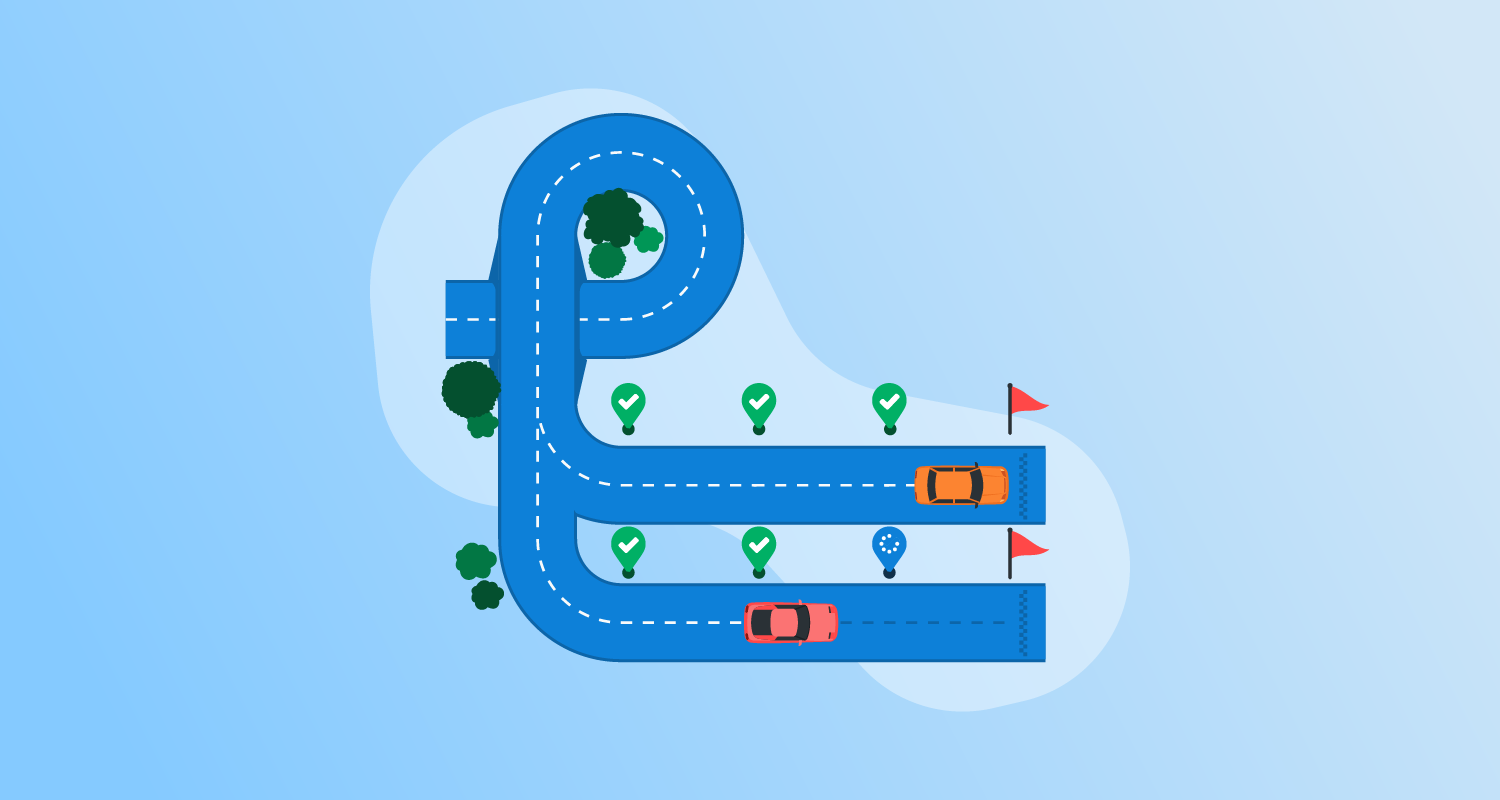
Continuous Delivery (CD) platforms automate the building, testing, and deployment of software to production or staging, enabling faster, safer releases. Key tools include Octopus Deploy, Spinnaker, and GoCD, which allow developers to automate manual tasks and ensure code consistency across environments.
By providing automation for every stage of the delivery pipeline, from code commit to production deployment, CD platforms help organizations achieve faster release cycles and maintain higher software quality.
Modern CD platforms support integration with source control, automated testing, environment management, and deployment strategies. They centralize the orchestration of workflows, ensuring that each change passes through a consistent and repeatable process before reaching end users.
Benefits of Continuous Delivery platforms
Continuous Delivery platforms improve how teams build, test, and release software by making the process consistent and automated. Instead of relying on manual steps, teams can move changes through a defined pipeline with clear checks at each stage. This reduces delays and makes releases more predictable:
- Faster release cycles: Automation removes bottlenecks in testing and deployment.
- Improved software quality: Automated tests run on every change.
- Reduced human error: Manual deployment steps are replaced with repeatable workflows.
- Consistent environments: CD platforms standardize how environments are created and managed.
- Easier rollbacks: Built-in deployment strategies allow teams to revert changes if needed.
- Better visibility and tracking: Teams can monitor pipeline progress and deployment history.
- Scalability for growing teams: CD platforms handle increased complexity as teams and projects grow.
- Support for modern practices: Supports blue-green deployments and canary releases.
Key capabilities of a modern Continuous Delivery platform
Pipeline orchestration and workflow modeling
Pipeline orchestration enables teams to define, visualize, and automate the end-to-end software delivery process. Workflow modeling allows organizations to map out each step, from code commit to deployment, specifying triggers, dependencies, and conditional logic. This centralization ensures that processes are reproducible and transparent, making it easier to manage releases across teams and projects.
An orchestration engine can support parallelization, branching, and dynamic pipeline generation based on code or environment conditions. This flexibility helps optimize pipelines for speed and resource use, reducing bottlenecks and improving throughput.
Learn more in our detailed guide to continuous delivery pipeline
Environment and release management with promotion policies
Environment and release management features allow teams to define multiple deployment environments, such as development, staging, and production, and manage the flow of releases between them. Promotion policies define the criteria for advancing builds to the next environment, ensuring that only tested and verified artifacts reach production.
Environment management can also support configuration drift detection and environment parity, reducing inconsistencies between testing and production setups. By automating environment provisioning and enforcing promotion policies, CD platforms reduce manual intervention and support compliance requirements.
Deployment strategies: Blue/green, canary, and feature flags
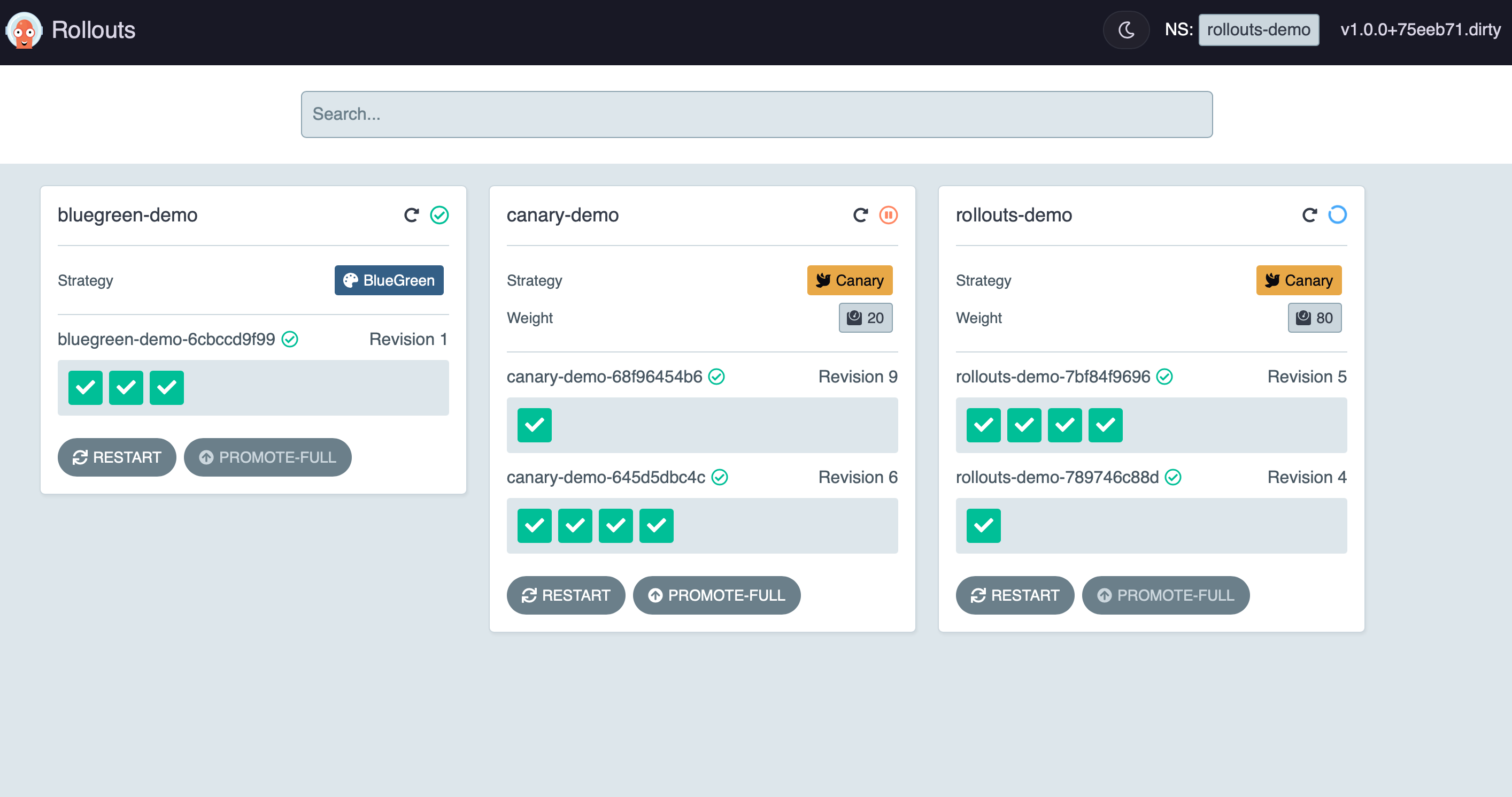
CD platforms support deployment strategies such as blue/green, canary, and feature flags to reduce risk during releases. Blue/green deployments run two identical production environments, allowing teams to switch traffic between them for updates and rollbacks.
Canary deployments release changes to a subset of users before a full rollout. Feature flags allow teams to toggle features on or off without redeploying code. This supports gradual rollouts and targeted testing.
Automated verification, observability hooks, and safe rollbacks
Automated verification helps ensure code quality throughout the delivery pipeline. CD platforms integrate with testing frameworks and monitoring tools to run tests, validate deployments, and check system health automatically. Observability hooks provide insights into application performance, error rates, and key metrics during and after deployments.
Rollback mechanisms allow reversion to previous stable versions, often through automated processes triggered by verification failures or negative observability signals. This reduces mean time to recovery (MTTR) and limits user exposure to faulty releases.
Secrets management, RBAC, and change windows/deployment freezes
Secrets management ensures sensitive data such as API keys, passwords, and certificates are handled safely during deployment. CD platforms can integrate with secrets managers, enforce encryption, and control access to secrets based on user roles.
Role-based access control (RBAC) allows organizations to define permissions so that only authorized users can modify pipelines or trigger deployments. Change windows and deployment freezes allow teams to restrict deployments during critical periods or maintenance. These features help organizations comply with operational policies and reduce the risk of disruptions.
Audit trails, compliance evidence, and separation of duties
Audit trails capture records of actions within the CD platform, including code changes, deployments, approvals, and user activity. This transparency supports incident investigations and regulatory requirements. Audit logs provide evidence for compliance audits, showing that processes and controls are enforced.
Separation of duties ensures that no single individual has unchecked control over the delivery process. CD platforms enforce approval workflows that require sign-off from multiple stakeholders before critical actions occur. This aligns with governance and compliance practices in software delivery.
Notable Continuous Delivery platforms
Enterprise-grade Continuous Delivery platforms
1. Octopus Deploy
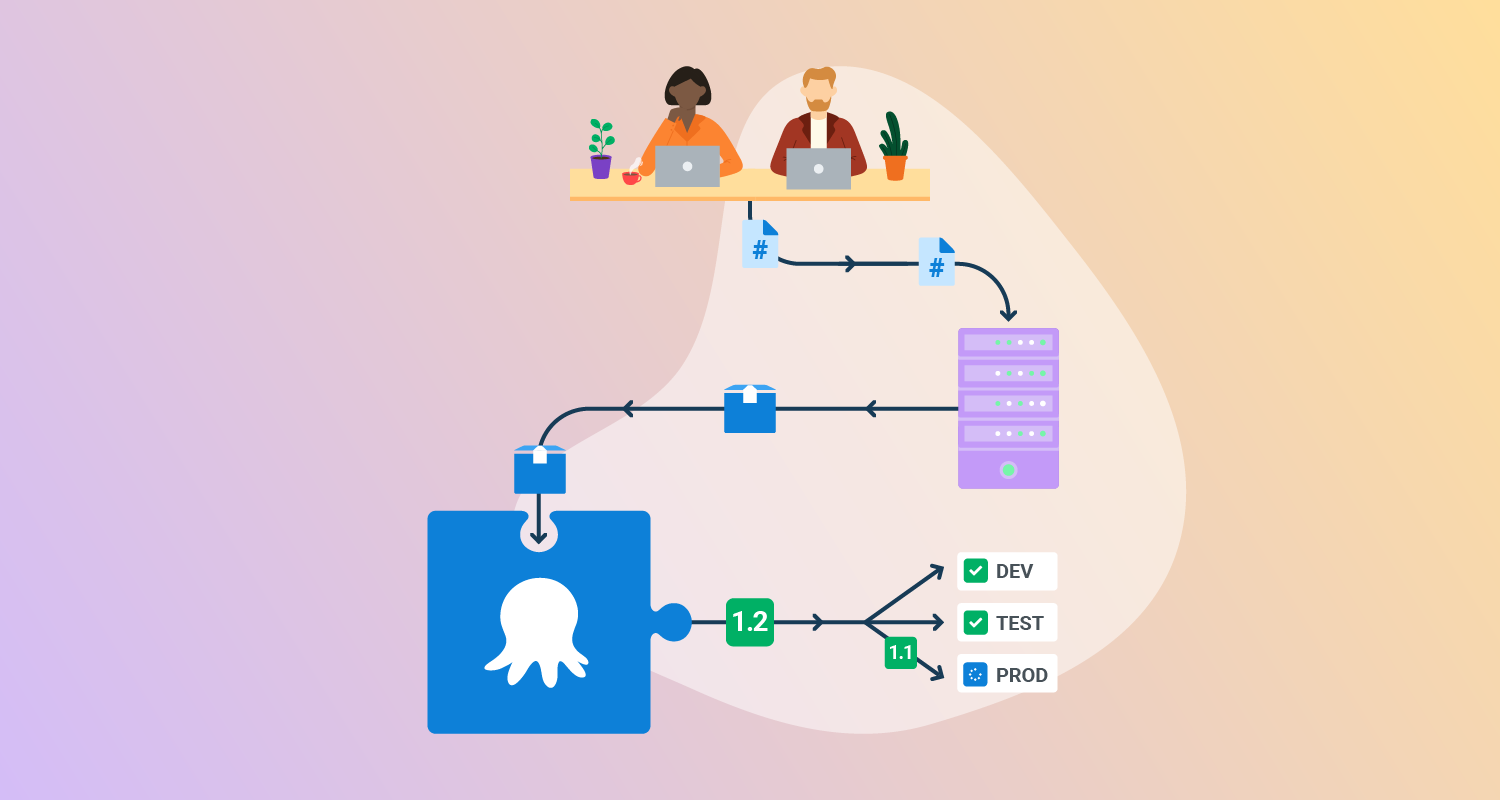
Octopus Deploy helps software teams deploy freely – when and where they need, in a routine way. With Octopus, you can orchestrate deployments from modern containers and microservices to trusted legacy applications. We support deployments in data centers, multiple cloud environments, and hybrid IT infrastructure.
Features of Octopus Deploy:
- Deployment and runbooks automation: Automates complex deployments and operations runbooks with hundreds of ready-made step templates, so you can avoid rolling your own scripts.
- All your deployments in one place: See all of your deployments in one place, including Kubernetes, cloud, data-center, and on-premises targets.
- Intuitive UI plus GitOps: Use the intuitive user interface to configure and run deployments, and store the deployment process as code in declarative version-controlled files.
- Configuration management: Easily handle complex configuration management and variable substitution to make sure every environment and instance has the correct configuration.
- Scalable, repeatable, reliable deployments: Removes the stress from deployments with robust automation options.

2. Spinnaker
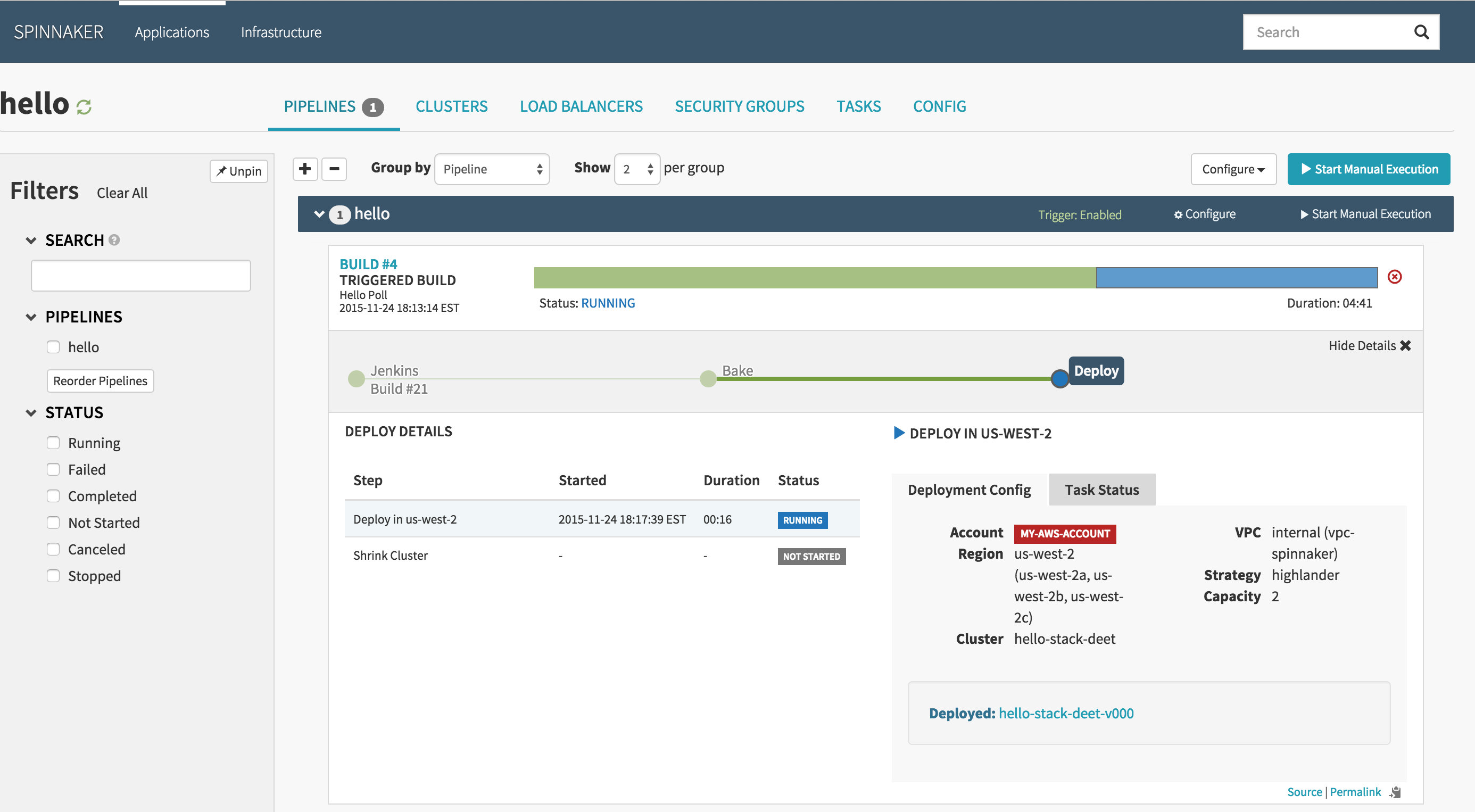
Spinnaker is an open-source Continuous Delivery platform for multi-cloud environments, focused on managing applications and automating deployment workflows. It models applications as collections of infrastructure components such as clusters, server groups, load balancers, and firewalls.
Key features include:
- Multi-cloud support: Operates across multiple cloud providers.
- Application-centric model: Organizes services as applications composed of clusters, server groups, load balancers, and firewalls.
- Cluster and server group abstractions: Clusters group related server groups, while server groups define deployable units such as VM images or containers.
- Integrated infrastructure management: Manages load balancers and firewalls, including traffic routing and health check definitions.
- Pipeline-based deployment workflows: Uses pipelines composed of stages that define actions such as deploy, resize, or manual approval.

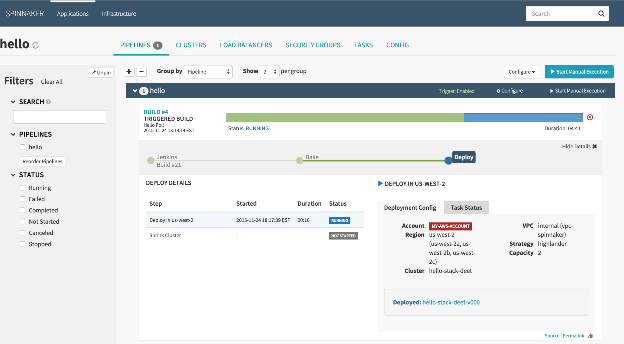
Source: Spinnaker
3. GoCD
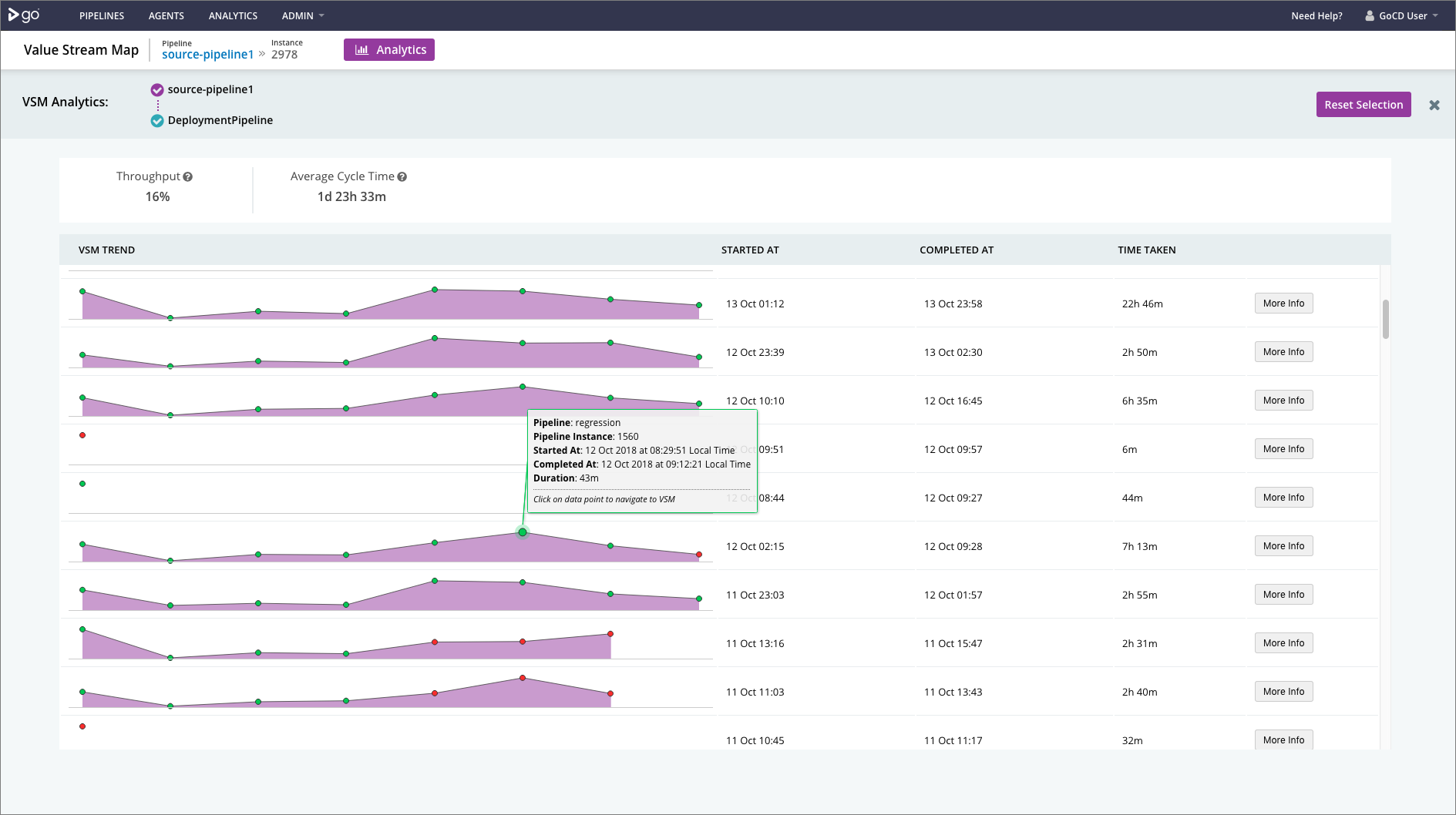
GoCD is an open-source Continuous Delivery platform used to model, visualize, and manage software delivery workflows. It provides visibility into the path from code commit to production through its value stream map and supports pipeline structures with parallel execution and dependency management.
Key features include:
- Open-source CI/CD platform: Free to use and extensible.
- Value stream map visualization: Provides a real-time view of the pipeline from commit to deployment.
- End-to-end traceability: Links commits, builds, and deployments.
- Pipeline modeling: Supports sequential and parallel execution with dependency handling.
- Cloud-native compatibility: Works with environments such as Kubernetes, Docker, and AWS.

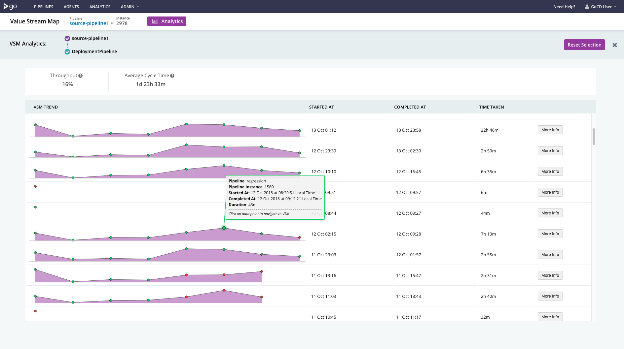
Source: GoCD
Cloud-native and developer-centric CD platforms
4. Argo CD
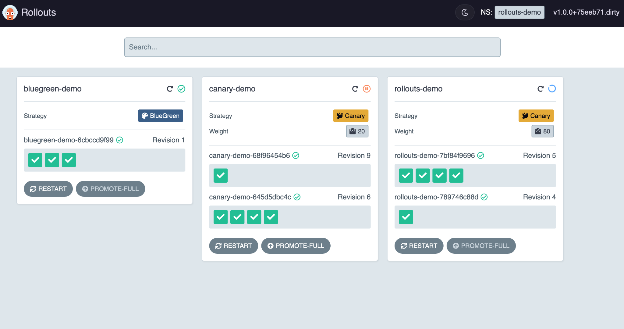
Argo CD is a declarative Continuous Delivery tool for Kubernetes that follows the GitOps model, where Git repositories define the desired state of applications. It runs as a Kubernetes controller that compares the live state of applications with the state defined in Git and synchronizes them when differences occur. By treating Git as the source of truth, Argo CD enables automated and version-controlled deployments.
Key features include:
- GitOps-based delivery model: Uses Git repositories as the source of truth for application definitions and configurations.
- Declarative application management: Defines application state declaratively.
- Kubernetes-native architecture: Runs as a Kubernetes controller that monitors and manages application state.
- Automated synchronization: Syncs applications to match the desired state in Git or allows manual synchronization.
- Configuration drift detection: Detects differences between the live system state and the desired state stored in Git.

Source: Argo CD
5. GitHub Actions
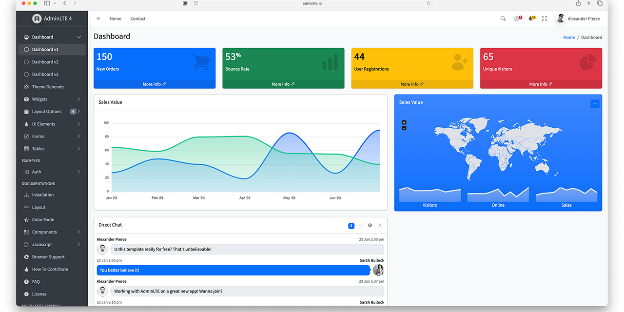
GitHub Actions is a CI/CD platform integrated into GitHub that enables teams to automate build, test, and deployment workflows within their repositories. It uses event-driven workflows defined in YAML files, allowing automation to run on code changes, pull requests, scheduled triggers, or other repository activities. Workflows are composed of jobs and steps that execute on virtual machines or containers, with support for parallelism and dependency management.
Key features include:
- Integrated CI/CD in GitHub: Built into GitHub repositories.
- Event-driven workflows: Triggers workflows based on repository events such as commits or pull requests.
- YAML-based workflow definitions: Defines automation pipelines as code using YAML files stored in the repository.
- Flexible workflow composition: Workflows consist of jobs and steps that can run sequentially or in parallel.
- Job dependency management: Allows jobs to depend on each other.

Source: GitHub Actions
6. CircleCI
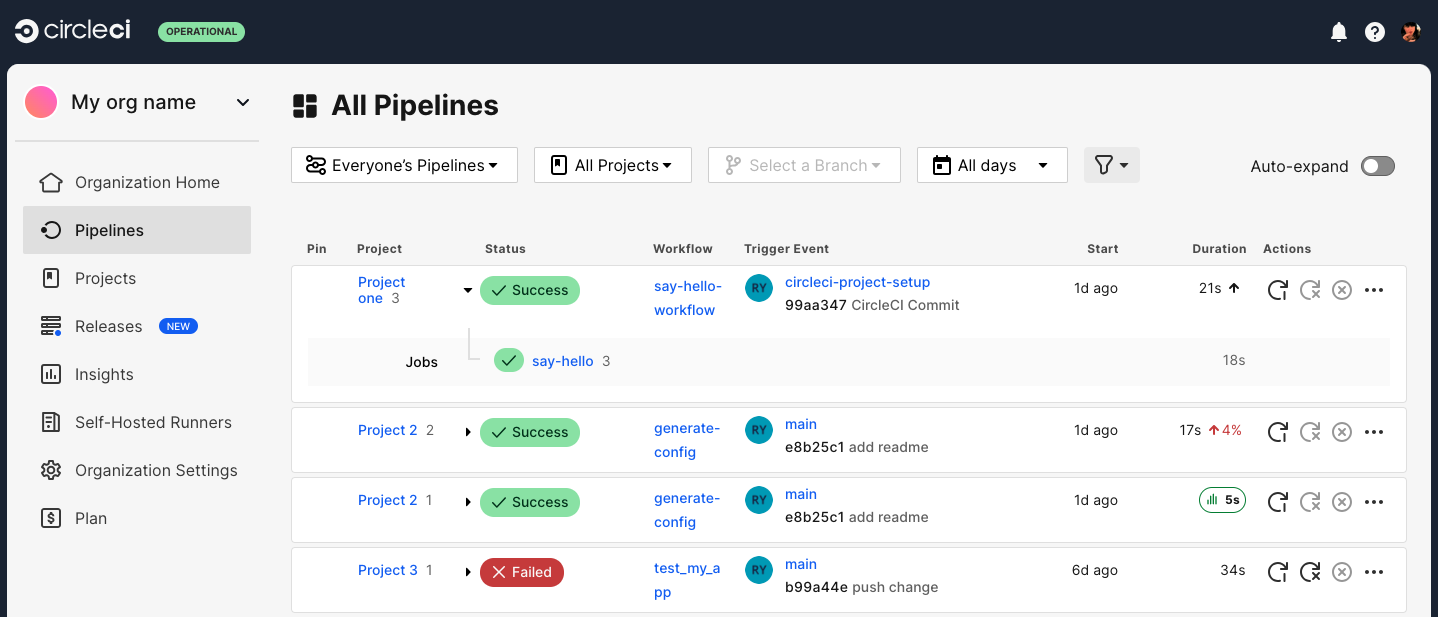
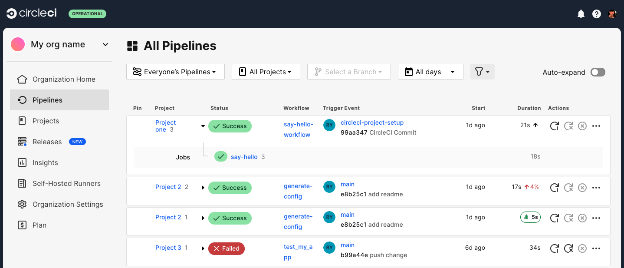
CircleCI is a Continuous Integration and Delivery platform focused on automated validation of code changes. It enables teams to test, validate, and deploy code from various sources, providing feedback before changes reach production. The platform emphasizes speed through test execution and automation, helping teams reduce bottlenecks in their pipelines.
Key features include:
- Automated change validation: Tests and validates code changes from various sources.
- Fast feedback cycles: Provides feedback on code changes.
- Support for modern development workflows: Handles changes generated by developers and automation tools.
- Intelligent test execution: Runs relevant tests.
- Test orchestration: Manages test execution across pipelines.

Source: CircleCI
Related content: Read our guide to continuous delivery tools
Conclusion
Continuous Delivery platforms provide the automation and control needed to manage modern software release processes at scale. By standardizing pipelines, enforcing policies, and integrating testing and deployment, they help organizations reduce risk while increasing release frequency. As applications and infrastructure become more complex, these platforms enable consistent, repeatable delivery practices that support both speed and reliability.
Help us continuously improve
Please let us know if you have any feedback about this page.