What is Spinnaker?
Spinnaker is an open-source, multi-cloud Continuous Delivery platform originally developed by Netflix. It enables developers to reliably and quickly release code changes. Spinnaker supports a range of deployment targets and integrates with popular CI/CD tools. It provides features for application scaling, cluster management, and deployment strategies, making it suitable for complex architectures requiring high-release velocity.
Spinnaker simplifies the deployment process by abstracting the underlying cloud infrastructure, allowing teams to focus on software development rather than operations. It supports deployment use cases, such as canary deployments and blue/green deployments, which help minimize risk and downtime. Spinnaker’s plugin system allows customization.
Why consider alternatives to Spinnaker?
Spinnaker is useful for Continuous Delivery and multi-cloud deployments, but it has limitations that may prompt teams to consider other options. Some of the notable limitations noted by users on the G2 platform include:
- Difficult setup and configuration: Setting up Spinnaker can be complex and time-consuming, often requiring specialized knowledge or purpose-built installers.
- Outdated and complex UI: Spinnaker’s interface can be challenging to navigate, especially for new users, due to its dated design and lack of intuitive organization.
- High resource consumption: Spinnaker can be slow and resource-intensive, requiring substantial infrastructure to run efficiently. This can lead to increased costs and management overhead, especially in resource-constrained environments.
- Limited monitoring and alerting: Spinnaker lacks built-in monitoring features. For example, if a pod deployed by Spinnaker goes offline, there are no automatic alerts.
- Lack of plugin flexibility: Unlike CI/CD tools such as Jenkins, Spinnaker does not offer a flexible plugin ecosystem.
- Workflow constraints: Spinnaker’s pipeline workflows are unidirectional, meaning steps cannot be reversed or repeated easily. This can be limiting when manual judgments or other conditional actions are required mid-pipeline.
- Manual pipeline creation: Spinnaker relies heavily on manually created pipelines, which can be cumbersome for teams preferring infrastructure-as-code approaches for defining pipelines programmatically.
Notable alternatives to Spinnaker
1. Octopus Deploy
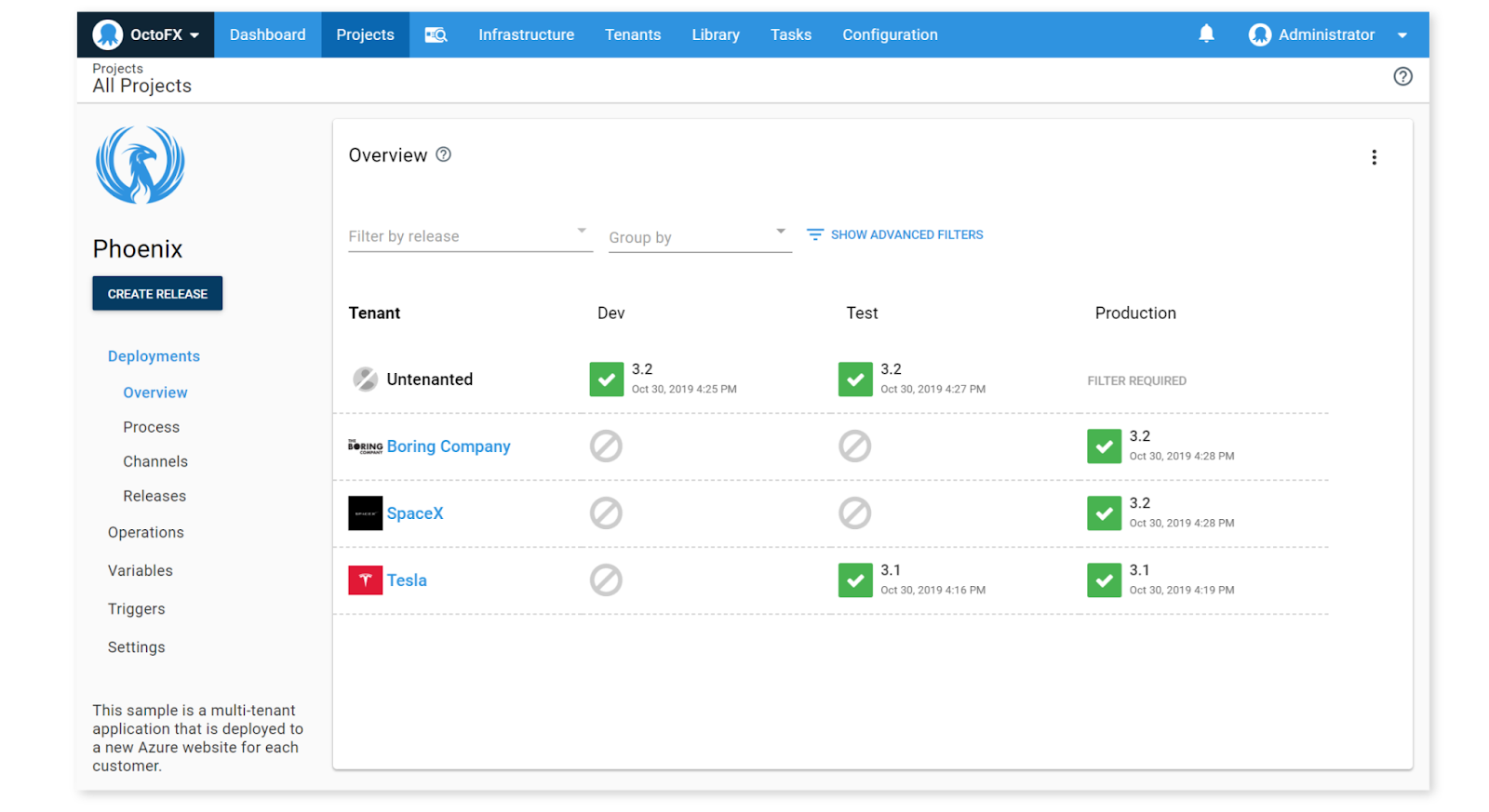
Octopus Deploy is a Continuous Deployment tool to automate deployment tasks across multi-cloud, hybrid, and on-premises environments. It allows teams to perform reliable, repeatable deployments with rollback capabilities.
Key features include:
- Consistent and reliable deployments: Ensures dependable deployments with built-in rollback functionality, allowing teams to revert to previous versions if issues arise.
- Runbook automation: Assists operations teams with runbooks to automate repetitive tasks, handling routine and emergency operations without manual intervention.
- Container support: Offers deployment to container services like Kubernetes, with an interface that requires minimal command-line interaction.
- Multi-tenancy support: Enables deployment to multiple customers or locations from a single deployment process.
- Governance and compliance: Provides auditing, role-based access control, and single sign-on (SSO).

2. Argo CD
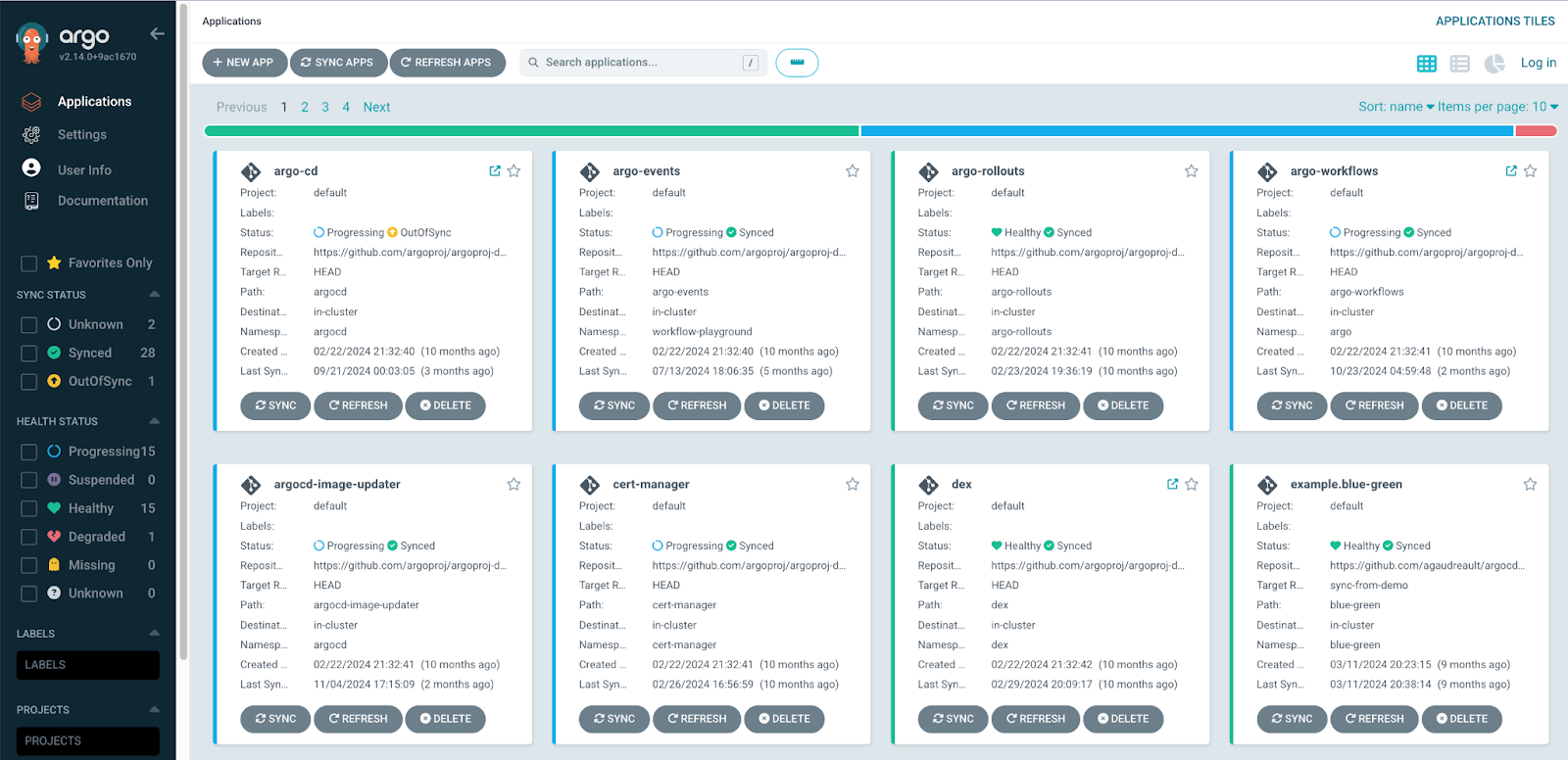
Argo CD is an open source, declarative, GitOps-based Continuous Delivery tool for managing Kubernetes clusters. By using Git repositories as a single source of truth for application states, Argo CD enables automated, auditable, and simplified application deployment and lifecycle management.
Key features include:
- GitOps-based automation: Continuously monitors and applies the desired application state from Git repositories.
- Support for multiple configuration tools: Allows the use of various config management options, including Kustomize, Helm charts, Jsonnet, and plain YAML manifests.
- Multi-cluster management: Provides management and deployment capabilities across multiple Kubernetes clusters from a single platform.
- SSO and RBAC integration: Offers security with single sign-on support (e.g., OIDC, LDAP) and role-based access control (RBAC).
- Automated drift detection: Identifies and visualizes discrepancies between live and desired states, offering auto-sync capabilities to restore the desired configuration.

3. Harness CD
Harness CD is an AI-native Continuous Delivery tool that enables automated, secure software deployments across multi-cloud, multi-region, and multi-service environments. Intended to improve engineering excellence and the developer experience, it uses artificial intelligence to simplify pipeline creation and optimize deployments.
Key features include:
- AI-powered pipeline creation: Allows users to quickly set up and optimize CI/CD pipelines using an AI assistant.
- Multi-cloud and multi-region deployments: Supports automated delivery pipelines across diverse cloud environments.
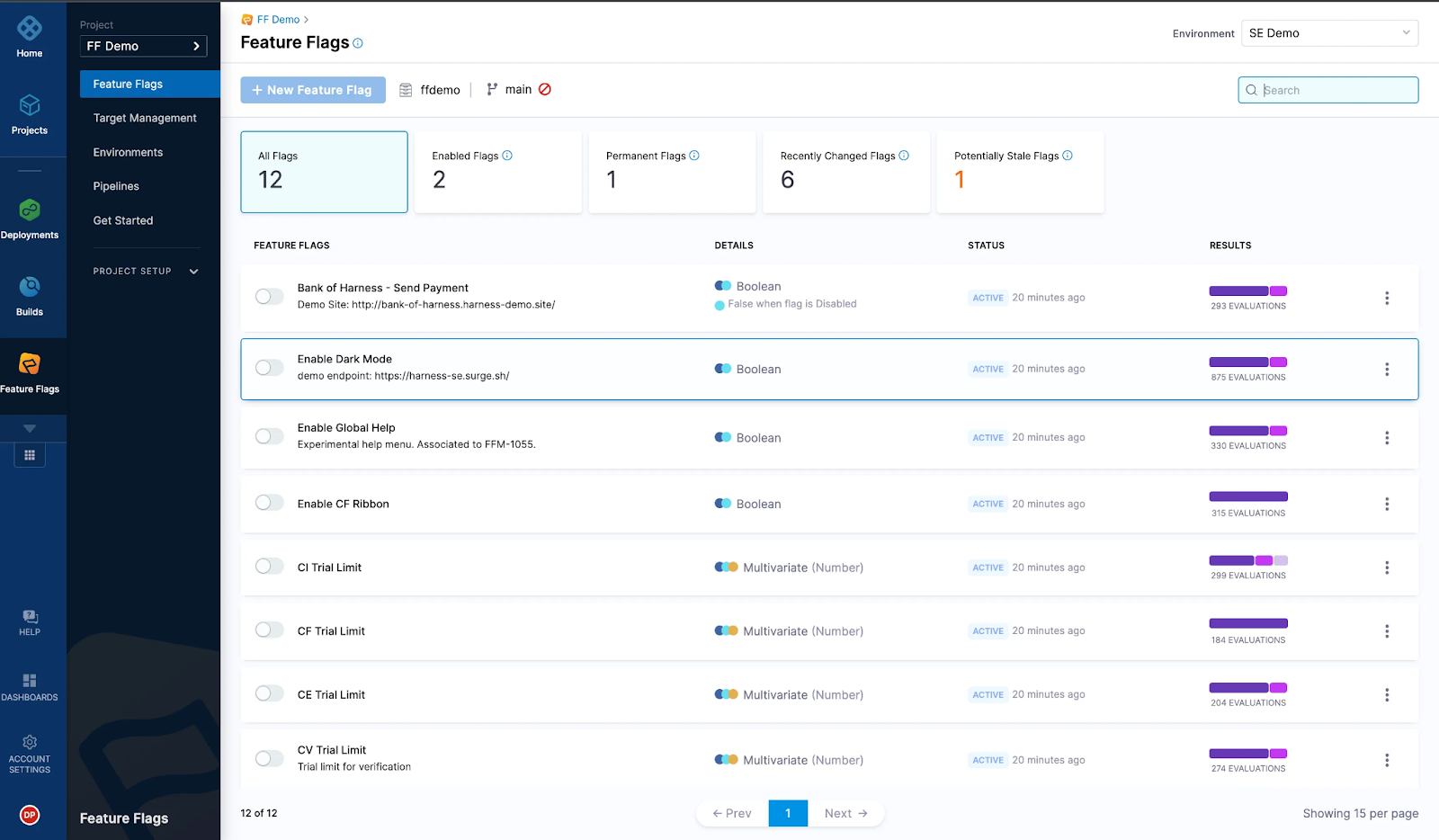
- Feature management: Incorporates feature flagging and experimentation, enabling teams to release features gradually and monitor their impact in real-time.
- Infrastructure as code management: Simplifies infrastructure management through automation, collaboration tools, and cost-control features.
- Service reliability management (SRM): Uses AI for automated service-level objective (SLO) tracking and change impact analysis.

4. Jenkins
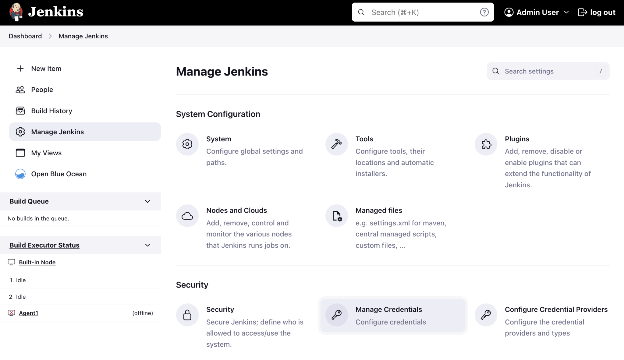
Jenkins is an open-source automation server to simplify Continuous Integration (CI) and Continuous Delivery (CD) for software projects. Emphasizing flexibility and an extensive plugin ecosystem, Jenkins supports an array of tools and workflows, enabling teams to automate building, testing, and deploying applications.
Key features include:
- Easy installation and setup: Jenkins is a standalone Java-based application, offering straightforward installation on major operating systems, including Windows, Linux, and macOS.
- Web-based configuration: Jenkins provides a web interface for easy configuration, with real-time error checks and built-in help to guide setup and troubleshooting.
- Extensive plugin ecosystem: With hundreds of plugins available, Jenkins integrates with almost any CI/CD tool.
- Highly extensible architecture: Jenkins’s plugin architecture allows it to be customized and extended.
- Distributed build capabilities: Jenkins can distribute workloads across multiple machines, optimizing build, test, and deployment processes.

Learn more in our detailed guide to Spinnaker vs Jenkins (coming soon)
5. GitLab CI/CD
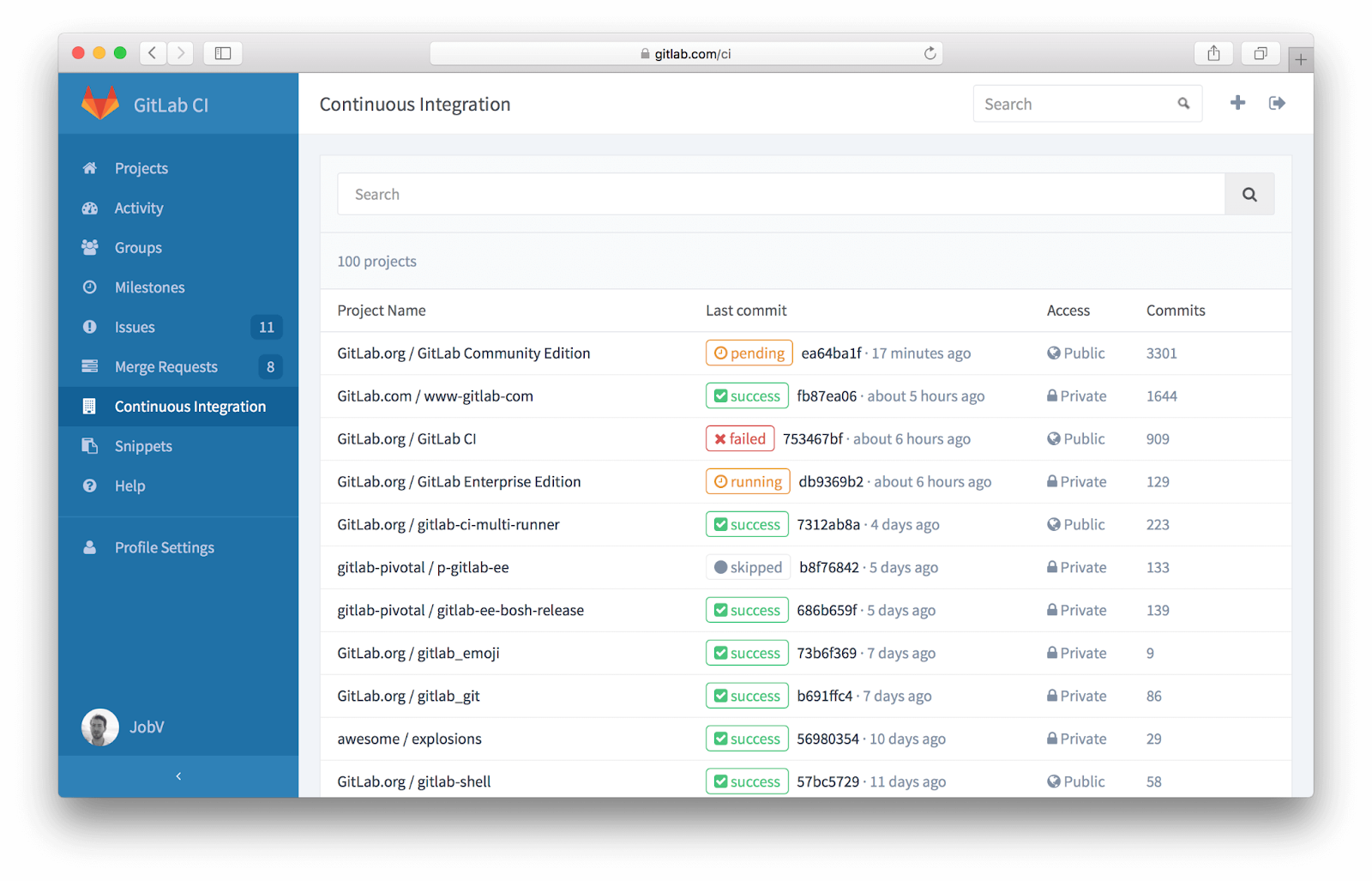
GitLab CI/CD is a Continuous Integration and Delivery solution integrated within the GitLab platform, allowing teams to automate building, testing, and deploying applications from code commit to production. It helps simplify development and reduce manual effort, with tools to accelerate release cycles, improve code quality, and improve collaboration.
Key features include:
- End-to-end automation: Automates the entire software delivery process, from code commit to production deployment.
- Built-in CI/CD pipeline templates: Provides pre-configured templates for creating pipelines that handle building, testing, packaging, and deployment.
- In-context testing: Automatically runs tests, including unit, performance, and security tests, for every code change and merge request.
- Progressive delivery options: Enables controlled deployments through strategies like feature flags, canary releases, and blue-green deployments.
- Centralized visibility and feedback: Offers a unified dashboard to monitor pipeline and environment status, with DORA metrics and value stream dashboards.
6. Azure Pipelines
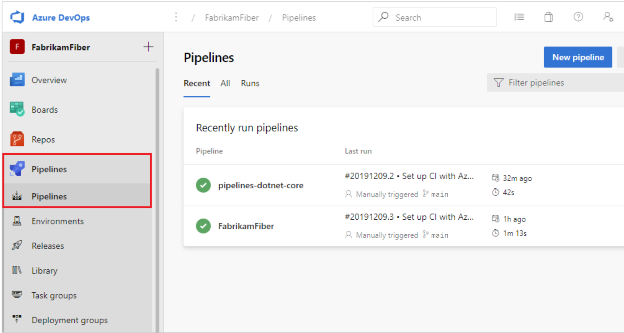
Azure Pipelines is a cloud-based CI/CD service from Microsoft, used to automate the building, testing, and deployment of applications to any platform or cloud environment. It supports various operating systems, programming languages, and cloud providers.
Key features include:
- Cross-platform support: Provides cloud-hosted pipelines for Linux, macOS, and Windows.
- Multi-language compatibility: Supports a wide range of programming languages, including Node.js, Python, Java, PHP, Ruby, .NET, Android, and iOS.
- Container and Kubernetes integration: Simplifies the creation and deployment of containerized applications with easy image building and pushing to container registries.
- Cloud-agnostic deployment: Enables Continuous Delivery to any cloud, including Azure, AWS, and Google Cloud.
- Extensibility through integrations: Offers hundreds of extensions and community-built tasks, with popular integrations like Slack and SonarCloud.

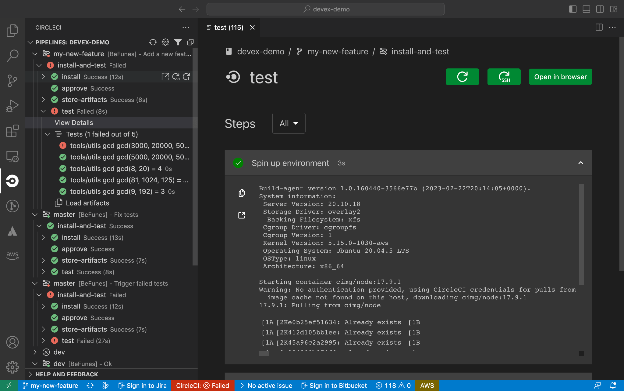
7. CircleCI
CircleCI is a CI/CD platform focused on helping teams build, test, and deploy software faster and more reliably. Known for its ease of use and fast feedback cycles, CircleCI enables development teams to automate their build processes and release high-quality code with minimal manual intervention.
Key features include:
- Easy setup and interface: CircleCI provides a straightforward setup and intuitive user experience.
- Fast feedback and test insights: Offers real-time insights into build status, test failures, and flaky tests, helping teams to detect and address issues quickly.
- Scalable compute options: Provides a variety of machine types, including Docker, Linux, macOS, and Windows environments.
- Release management: Supports safe, incremental releases with monitoring and automatic rollback features.
- Flexible and configurable workflows: Supports complex workflows with features like build parallelization, conditional workflows, and custom job orchestration.

8. CloudBees CI
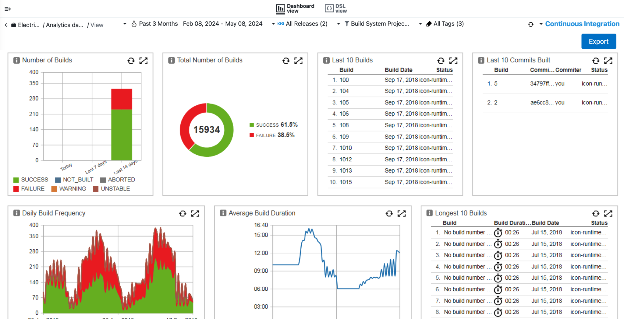
CloudBees CI is an enterprise-grade Continuous Integration platform built on Jenkins, helping to address the scalability, security, and management needs of large organizations. It provides features to simplify Jenkins administration, improve CI workflows, and optimize resource usage.
Key features include:
- Centralized Jenkins management: Enables unified monitoring and management of Jenkins controllers from a single dashboard.
- Scalability and high availability: Supports horizontal scaling and load balancing to distribute workloads efficiently across infrastructure.
- Flexible deployment options: Offers deployment flexibility to suit various environments, including on-premises, cloud, or hybrid setups.
- Security and compliance: Provides enterprise-grade security with features like role-based access control (RBAC), templated pipelines, and the CloudBees Assurance Program (CAP) for verified plugins.
- CI as code: Allows CI configurations to be managed as code, enabling reproducible setups and consistent configurations.

9. Bamboo
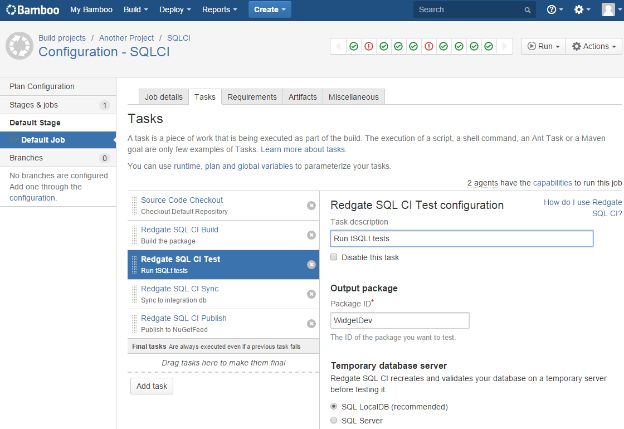
Bamboo is a CI/CD tool from Atlassian, designed to help teams automate their build, test, and deployment processes with resilience and scalability. By integrating with other Atlassian tools like Bitbucket and Jira, Bamboo provides end-to-end traceability and visibility throughout the software development lifecycle.
Key features include:
- Automated workflows for agile development: Simplifies CI/CD pipelines with automated workflows that move code from commit to deployment.
- Scalability and resilience: Supports high availability and disaster recovery.
- Integrated toolchain: Integrates natively with Bitbucket, Jira, and other Atlassian tools.
- Flexible deployment options: Enables easy deployment to various environments with support for Docker, AWS CodeDeploy, and other platforms.
- Incident investigation with Opsgenie: Connects with Opsgenie to allow quick response to incidents, helping teams identify and resolve issues in production faster.

Conclusion
Choosing the right Continuous Delivery tool depends on the team’s requirements, infrastructure, and workflow preferences. While Spinnaker offers multi-cloud capabilities, its limitations may necessitate exploring alternatives. These tools vary in features, ranging from ease of use and scalability to advanced integrations and deployment strategies. Carefully evaluating the strengths and weaknesses of each option ensures the team can adopt a solution that optimizes delivery pipelines, enhances developer productivity, and supports long-term scalability.
Help us continuously improve
Please let us know if you have any feedback about this page.