
In the previous post, you added build information to your deployment process. In this post, you’ll introduce tenants to our deployment process.
Prerequisites
- An Octopus Cloud account. If you don’t have one, you can sign up for a free trial.
- The Octopus AI Assistant Chrome extension. You can install it from the Chrome Web Store.
The Octopus AI Assistant will work with an on-premises Octopus instance, but it requires more configuration. The cloud-hosted version of Octopus doesn’t need extra configuration. This means the cloud-hosted version is the easiest way to get started.
Creating the project
Paste the following prompt into the Octopus AI Assistant and run it:
Create a Script project called "06. Script App with Tenants", and then:
* Add 5 tenants named after major capital cities in the world
* Add a tenant tag called "Region" with values "AMEA", "EMEA", and "APAC"
* Assign the appropriate tag to each tenant based on their location
* Link the tenants to the project
* Require a tenant for deployments of the project. Do not support untenanted deployments.
You can now create a release and deploy it to the first environment. Notice that you must now select a tenant when creating the deployment. In this example, the tenants allow you to manage deployments to different cities around the world individually.
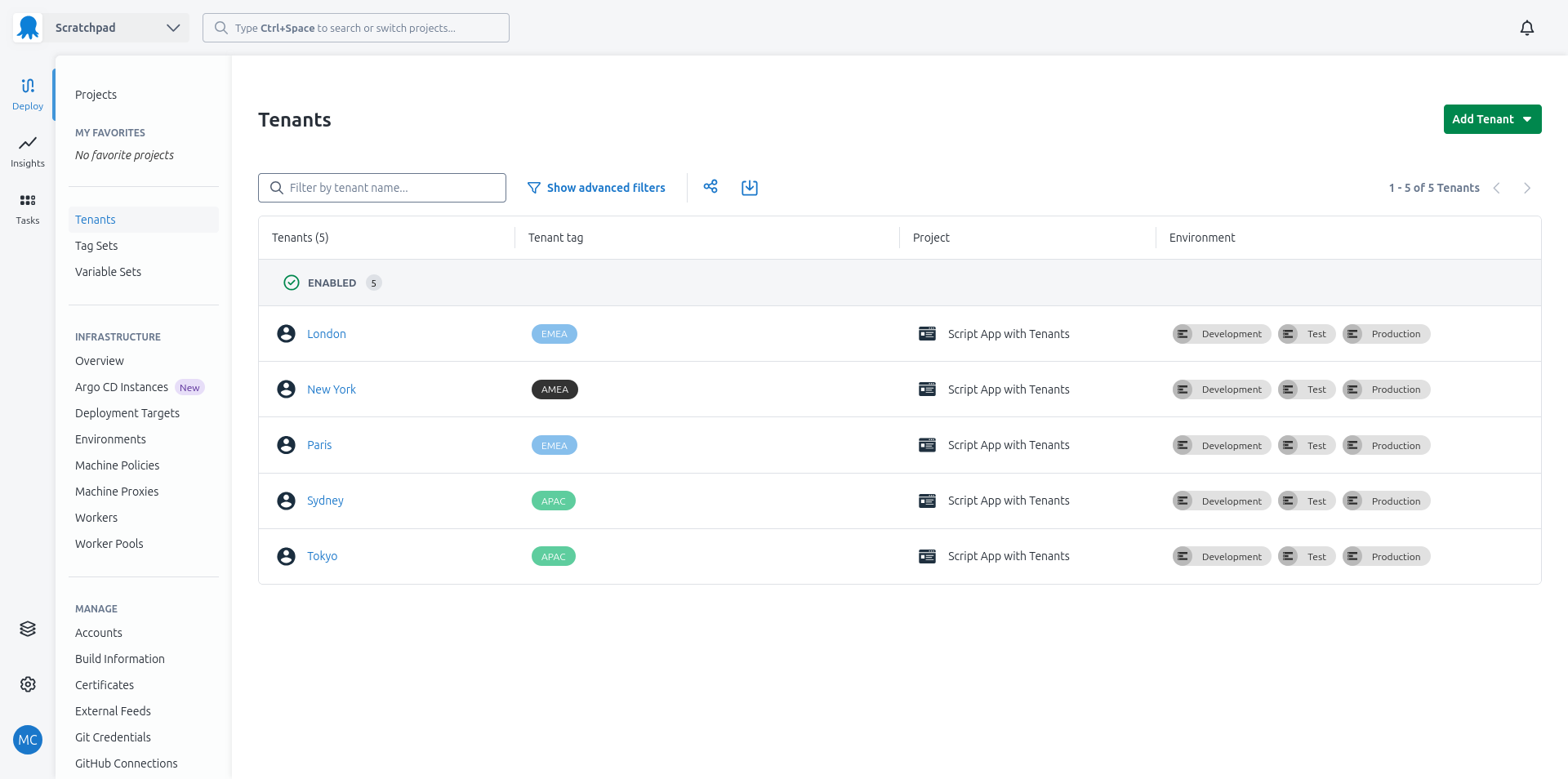
You can also view the tenants and their associated tenant tags in the Tenants section of the Octopus web portal.
What just happened?
You created a sample project with:
- 5 tenants connected to it
You also created 5 tenants and their tags.
What’s next?
The next step is to add runbooks to the projects.