What are CI/CD platforms?
Continuous Integration and Continuous Deployment (CI/CD) platforms automate and simplify the deployment pipeline for software development. They enable developers to integrate code into a shared repository with automatic testing to detect issues early.
Once integrated, Continuous Deployment ensures that validated code changes are released to production seamlessly. These processes significantly reduce manual tasks, improve code quality, and enable faster delivery to customers, making them indispensable in agile and DevOps practices.
CI/CD platforms assist in modern software development by mitigating the risks associated with manual deployments. They ensure code consistency across environments, automate error-prone processes, and enable collaboration among distributed teams. By incorporating a CI/CD platform, companies can maintain a high level of code quality, increase their release velocity, and improve the productivity of their development teams.
CI/CD tools market and trends
The market size is currently estimated at USD 4,483.72 million, and it is projected to reach USD 11,206.5 million by 2034, growing at a compound annual growth rate (CAGR) of 10.71%.
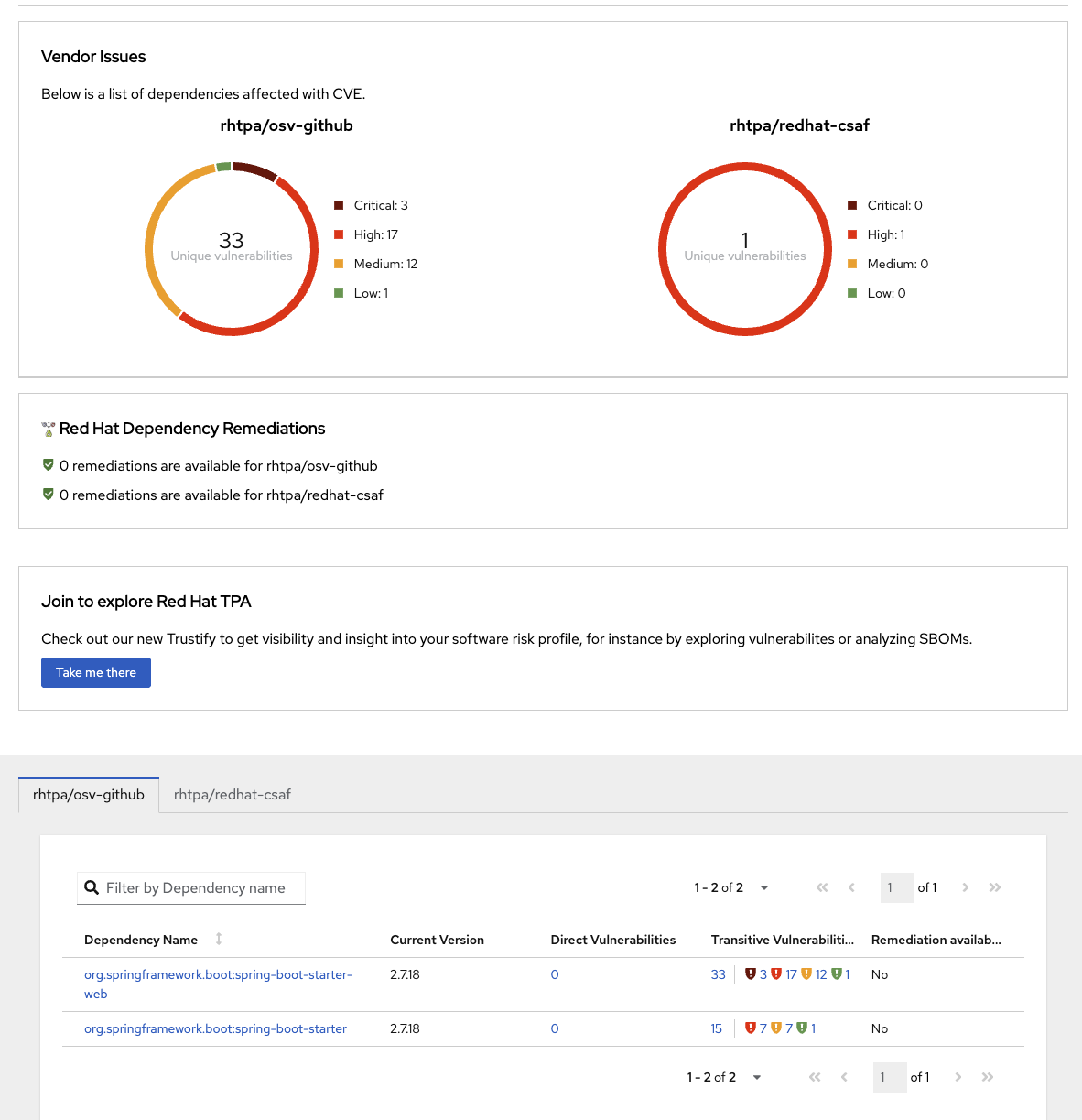
Adoption is already widespread across development teams. More than 86% of enterprise development teams use at least one CI/CD platform to automate build, test, and deployment workflows. CI/CD pipelines also support large-scale development activity, serving over 29 million developers across 182 countries.
Automation has significantly increased deployment frequency. Over 74% of software organizations deploy code multiple times per week, and CI/CD systems process more than 1.2 billion automated builds each month across both cloud-native and on-premises environments.
Adoption across DevOps and enterprise environments
CI/CD platforms are now a central component of DevOps automation. Around 79% of digital transformation programs require CI/CD automation as part of their deployment strategy. In addition, 67% of Fortune 2000 enterprises run hybrid CI/CD models, combining SaaS-based tools with self-hosted platforms.
Automation also improves reliability and development efficiency. CI/CD pipelines reduce manual deployment errors by 83% and increase release frequency by 62%. Additionally, 69% of DevOps teams report faster recovery times thanks to automated rollback capabilities.
Modern development architectures depend heavily on CI/CD pipelines. For example:
- 61% of organizations deploy microservices architectures supported by CI/CD pipelines
- 71% of enterprise pipelines include automated testing coverage
- 63% integrate infrastructure-as-code for deployment orchestration
These capabilities allow teams to manage complex application delivery across distributed environments.
Key technology trends in CI/CD platforms
Several technology trends are shaping the evolution of CI/CD platforms.
Cloud-native and container-based pipelines are becoming standard. More than 71% of pipelines are container-based, while 64% integrate Kubernetes-native deployment automation.
AI-driven automation is also expanding. Around 49% of CI/CD platforms use AI-based anomaly detection to identify pipeline failures, and 44% of DevOps teams rely on automated root cause analysis. Predictive pipeline optimization is also emerging, with 37% of organizations implementing these models.
Another major trend is the integration of DevSecOps practices. Security automation is now embedded in 73% of enterprise CI/CD pipelines, including:
- 61% using static application security testing
- 55% integrating dynamic testing
- 69% performing container image scanning
These features help teams detect vulnerabilities earlier in the development pipeline.
Key features of CI/CD platforms for enterprise
Enterprise CI/CD platforms are designed to handle the scale, complexity, and security requirements of large organizations. They offer advanced features that go beyond basic automation to support governance, faster delivery cycles, and integration across teams and tools:
- Automated build and test pipelines: CI/CD platforms automatically trigger builds and run test suites on each code commit. This ensures early detection of integration issues and helps maintain code stability.
- Scalable infrastructure integration: They integrate with scalable cloud or on-premises infrastructure to run pipelines in parallel, reducing execution time and supporting large development teams.
- Support for multiple environments: Platforms manage deployments across different environments (development, staging, production) while maintaining consistency and traceability.
- Role-based access control (RBAC): Enterprises can define permissions and access levels for users and teams, ensuring secure and compliant CI/CD workflows.
- Audit logs and compliance tracking: Comprehensive logging capabilities help track changes, monitor deployment history, and meet compliance requirements.
- Plugin and integration support: Most platforms offer integrations with version control systems, artifact repositories, security scanners, and notification tools.
- Rollback and recovery options: Built-in mechanisms allow teams to quickly revert to previous stable versions in case of deployment failures.
- Container and microservices support: CI/CD tools provide native support for containerization tools like Docker and orchestration platforms like Kubernetes, essential for microservices architectures.
Notable CI/CD tools for DevOps
CI/CD pipeline automation tools
1. Octopus
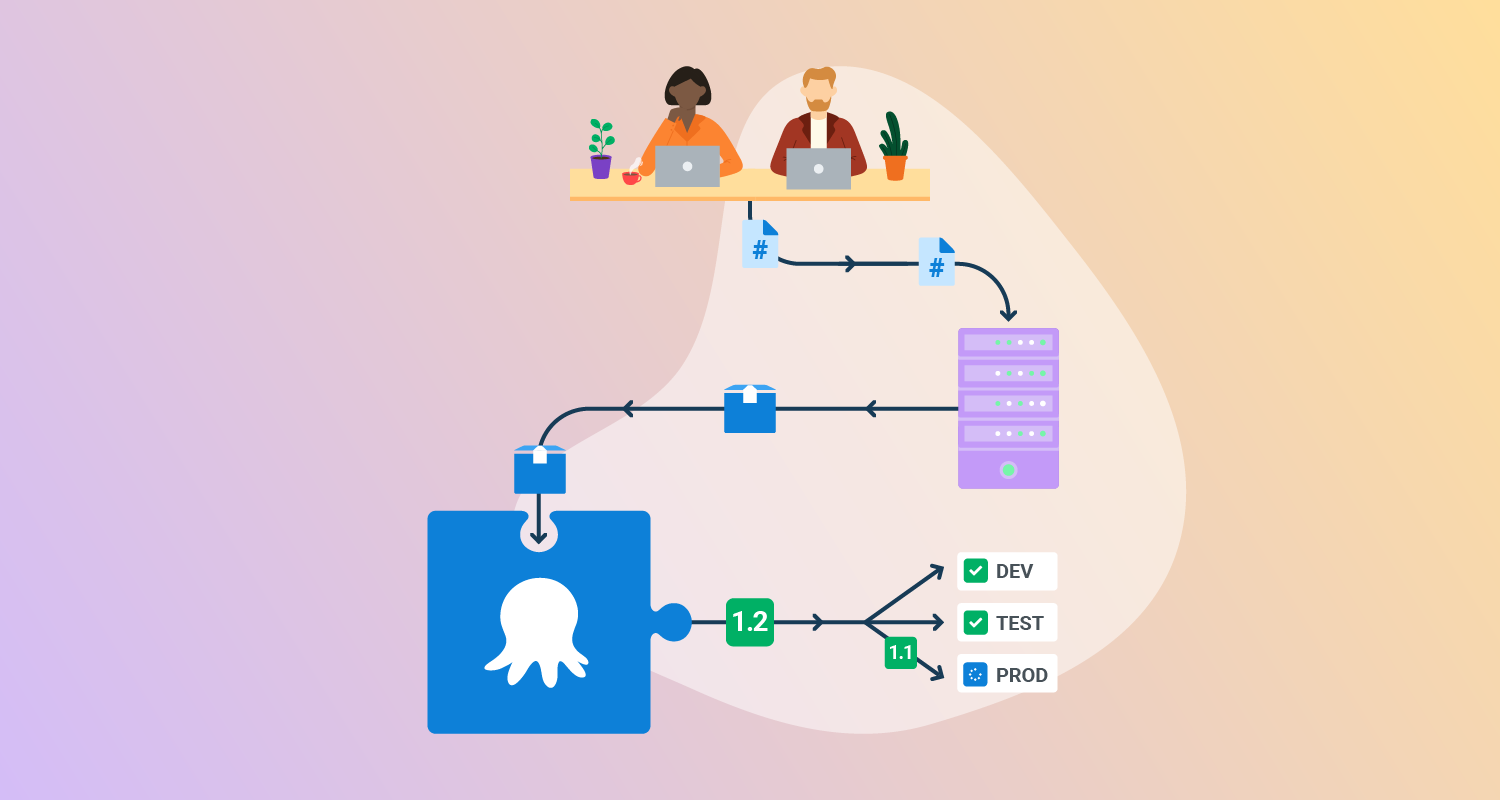
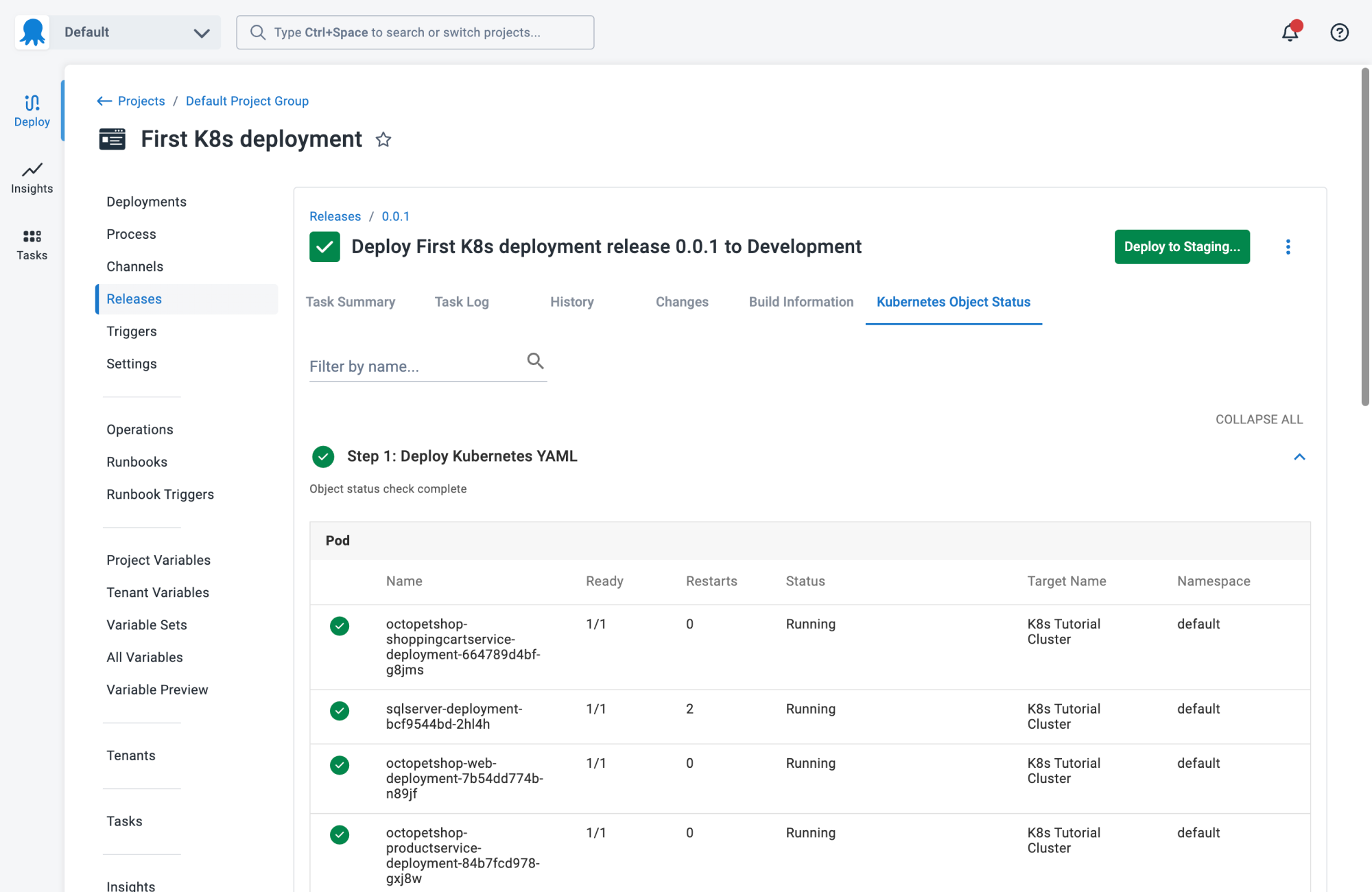
Octopus Deploy is a sophisticated, best-in-class Continuous Delivery (CD) platform for modern software teams. It offers powerful release orchestration, deployment automation, and runbook automation while handling the scale, complexity, and governance expectations of even the largest organizations with the most complex deployment challenges.
General features:
- Reliable risk-free deployments: Octopus lets you use the same deployment process across all environments. This means you can deploy to production with the same confidence you deploy to everywhere else. Built-in rollback support also makes it easy to revert to previous versions.
- Deployments at scale: Octopus is the only CD tool with built-in multi-tenancy support. Deploy to two, ten, or thousands of customers without duplicating the deployment process.
- One platform for DevOps automation: Runbooks automate routine and emergency operations tasks to free teams for more crucial work. They can also be used to provide safe self-service operations to other teams.
Enterprise features:
- Streamlined compliance: Full auditing, role-based access control, and single-sign-on (SSO) as standard to make audits a breeze and to provide accountability, peace of mind, and trust.
- ITSM integrations: Integrate with ServiceNow or Jira Service Management to streamline change approvals.
- Extensive audit trail: Detailed audit logs for all significant system events with powerful filtering to make it easy to find what you need.
Deployment insights: Captures the 4 key DORA; deployment frequency, change lead time, change failure rate, and recovery time with visualizations, with the ability to compare statistics by project, environment, and more.

2. Codefresh
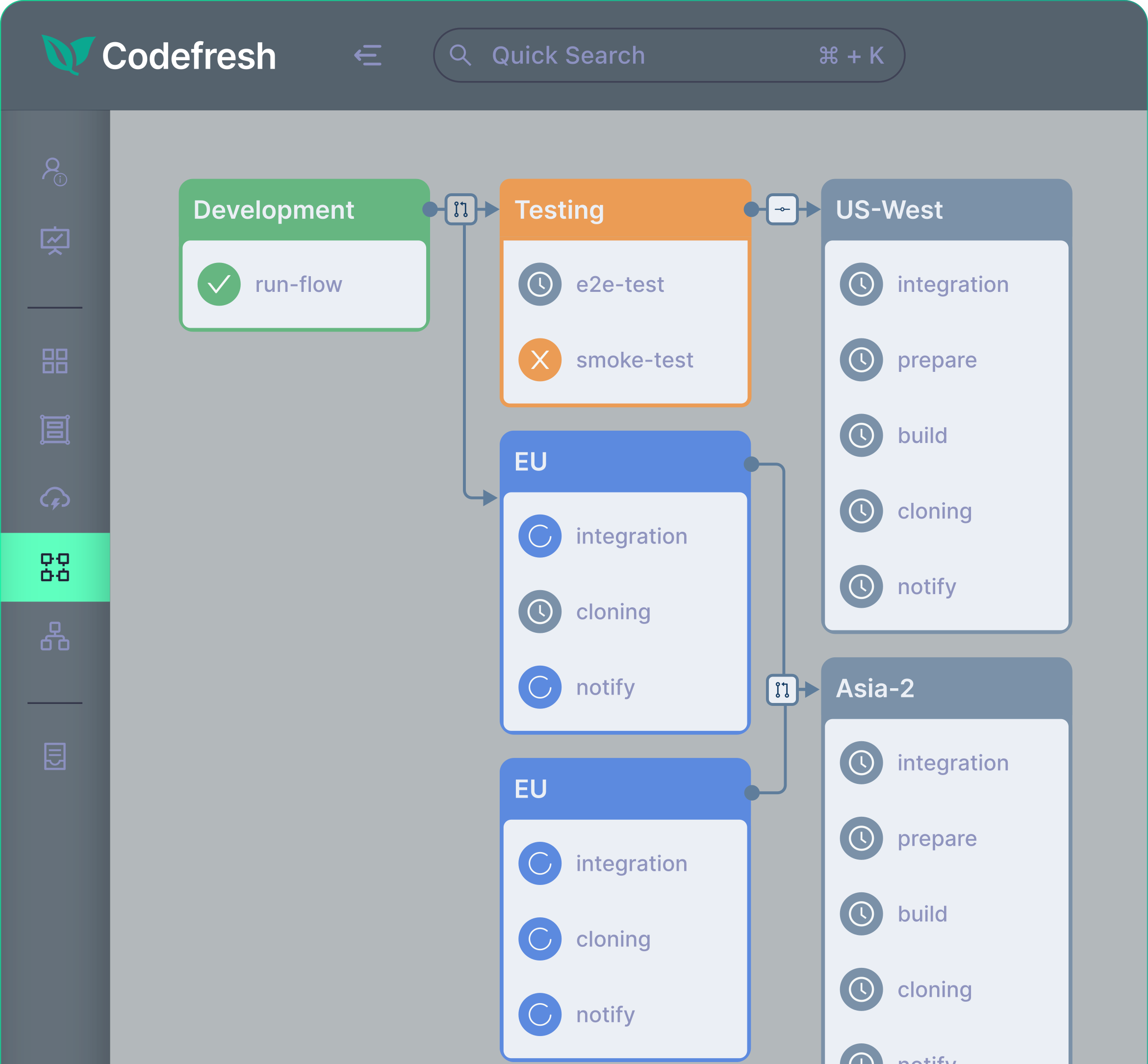
Codefresh is a modern CI/CD platform built specifically for cloud-native applications and Kubernetes environments. It combines Continuous Integration, Continuous Delivery, and GitOps workflows in a single unified system. The platform uses Argo to enable advanced deployment strategies and provides complete visibility from code commit to production.
General features:
- Fast build performance: Optimized with parallelization and build caching for quicker pipeline execution.
- Progressive delivery support: Enables canary, blue/green, and GitOps deployments for reduced deployment risk.
- Developer-centric UX: Interface with instant feedback, environment state visibility, and real-time logs.
- Reusable pipelines: Support for DRY (Don’t Repeat Yourself) principles through pipeline templates and inheritance.
- Deep integrations: Includes hundreds of ready-to-use steps and strong compatibility with popular DevOps tools.
Enterprise features:
- Unified CI/CD visibility: Insights from build to deployment simplifies debugging and production monitoring.
- Automated rollbacks: Instantly reverts to previous versions in case of failure.
- DORA metrics integration: Automatically collects and reports on deployment frequency, lead time, failure rate, and recovery time.
- Scalable GitOps workflows: Powered by Argo for managing complex, multi-cluster GitOps deployments.
- Extensible pipeline architecture: Shared triggers and templates promote consistency and reduce engineering overhead.
3. GitHub Actions
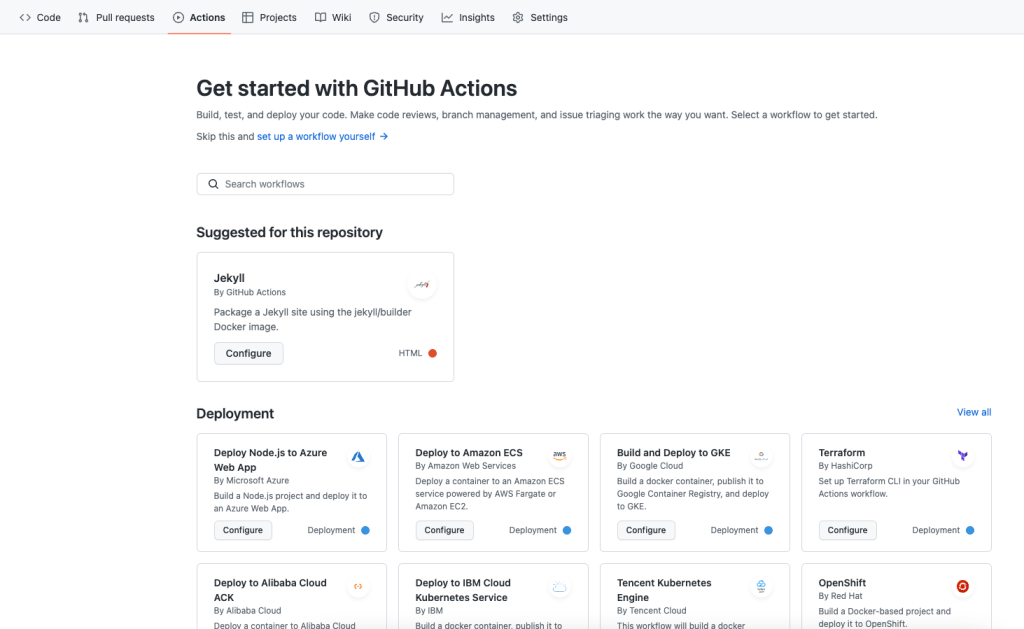
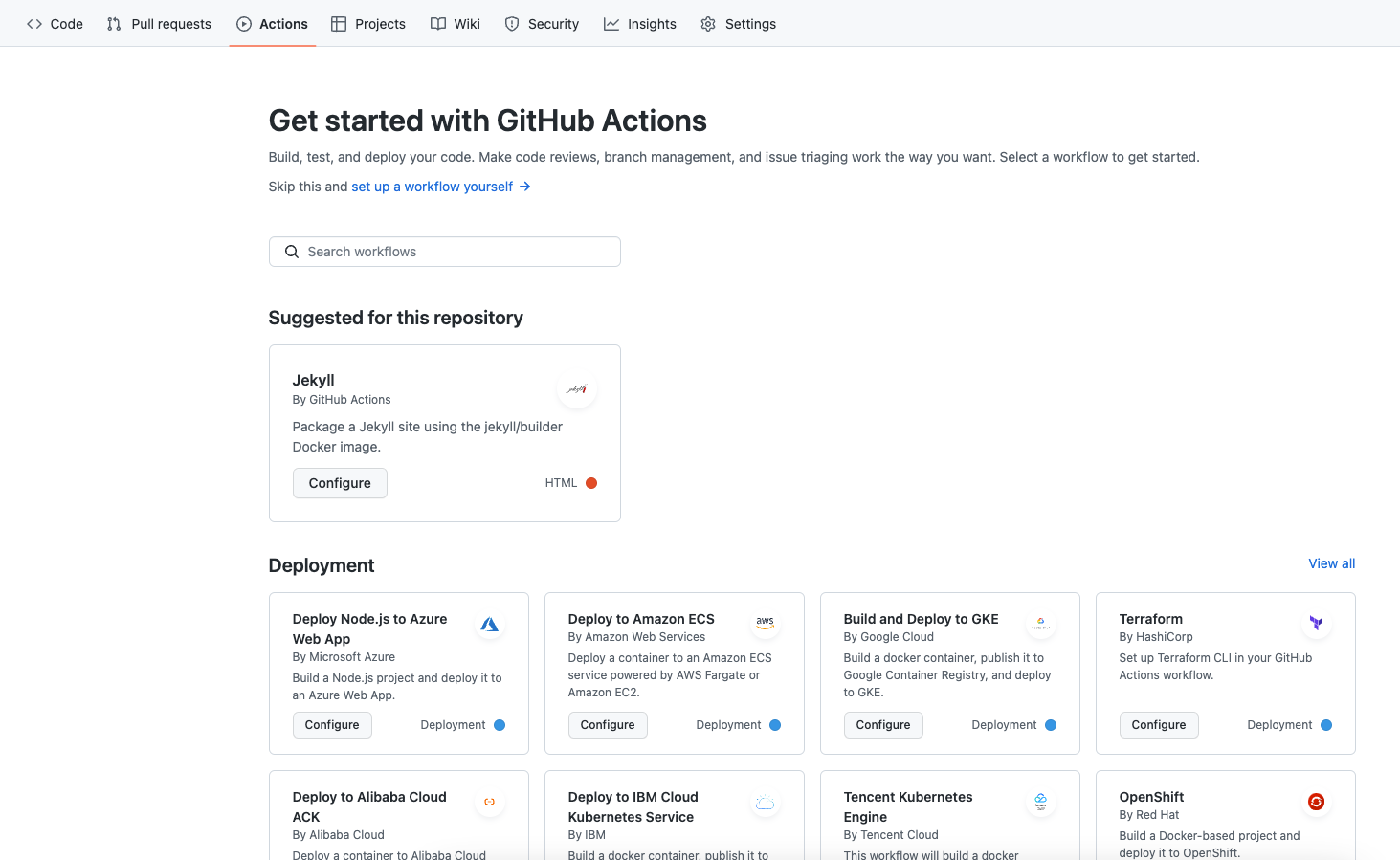
GitHub Actions is a workflow automation platform integrated directly into GitHub repositories. It allows development teams to automate build, test, and deployment processes based on repository events such as commits or pull requests. Workflows are defined using configuration files and executed by runners that perform jobs across different environments.
General features:
- Event-driven workflow automation: Automates software workflows triggered by repository events such as commits, pull requests, scheduled tasks, or manual execution.
- Cross-platform runner environments: Supports Linux, Windows, macOS, ARM, GPU, and container-based environments through hosted or self-hosted runners.
- Matrix build testing: Executes builds and tests across multiple operating systems and runtime versions simultaneously.
- Marketplace integrations: Provides reusable actions from a marketplace to integrate external tools and services into workflows.
- Real-time workflow logging: Displays workflow execution logs and status updates during build and deployment processes.
Enterprise features:
- Self-hosted runner support: Allows organizations to run workflows on their own infrastructure in cloud or on-premises environments.
- Secure secrets management: Stores and manages credentials used by workflows through encrypted secrets integrated into the platform.
- Package and artifact integration: Supports package management and artifact distribution through integrated registries and APIs.
- Repository-based automation governance: Enables organizations to standardize automation through workflow configuration stored alongside application code.
- Extensible API integrations: Allows custom workflow actions and integrations through APIs and container-based actions.

Source: GitHub Actions
4. CircleCI
CircleCI is a CI/CD platform that automates the process of building, testing, and deploying software applications. It supports development teams working with a wide range of programming languages and deployment environments while providing infrastructure that scales to support large and complex pipelines.
General features:
- Automated build and test pipelines: Runs automated build and testing workflows triggered by changes in version control repositories.
- Flexible execution environments: Supports multiple runtime environments and technologies including containers, virtual machines, and various programming languages.
- Pipeline automation workflows: Enables teams to automate the entire process from code commit to deployment using configurable workflows.
- Integration with development tools: Connects with repositories and cloud services including GitHub, GitLab, AWS, GCP, Azure, and Kubernetes.
- Continuous delivery support: Helps automate application delivery pipelines to deploy software updates across environments.
Enterprise features:
- Scalable pipeline infrastructure: Supports large-scale pipelines that can handle growing workloads and development teams.
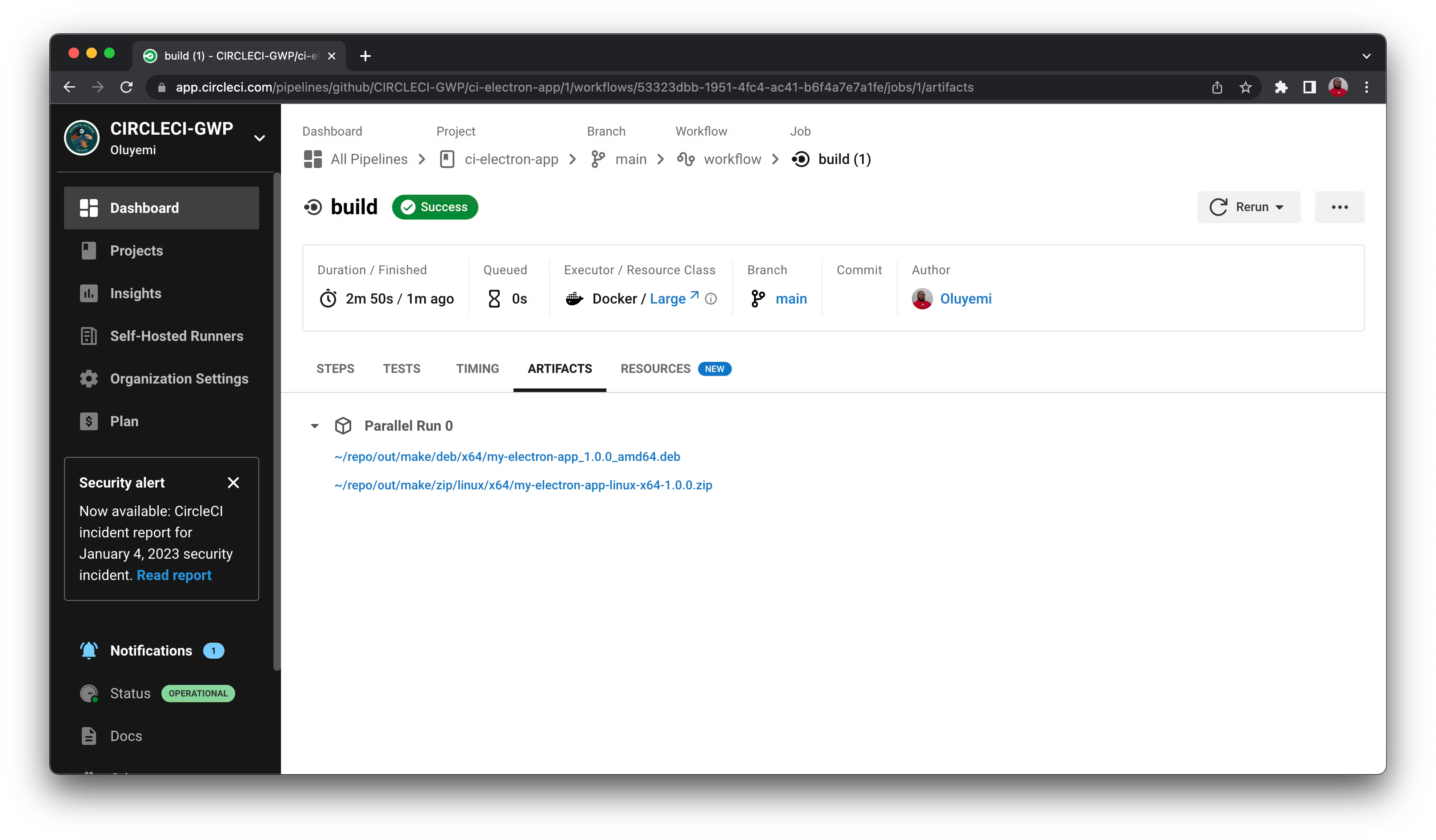
- Centralized workflow visibility: Provides insight into build status, deployment activity, and pipeline performance.
- Integration with enterprise environments: Works across multiple platforms, applications, and cloud infrastructures.
- Developer collaboration support: Enables teams across engineering roles to contribute to and maintain CI/CD pipelines.
- Automation for reliable releases: Helps ensure consistent testing and deployment processes through automated pipelines.

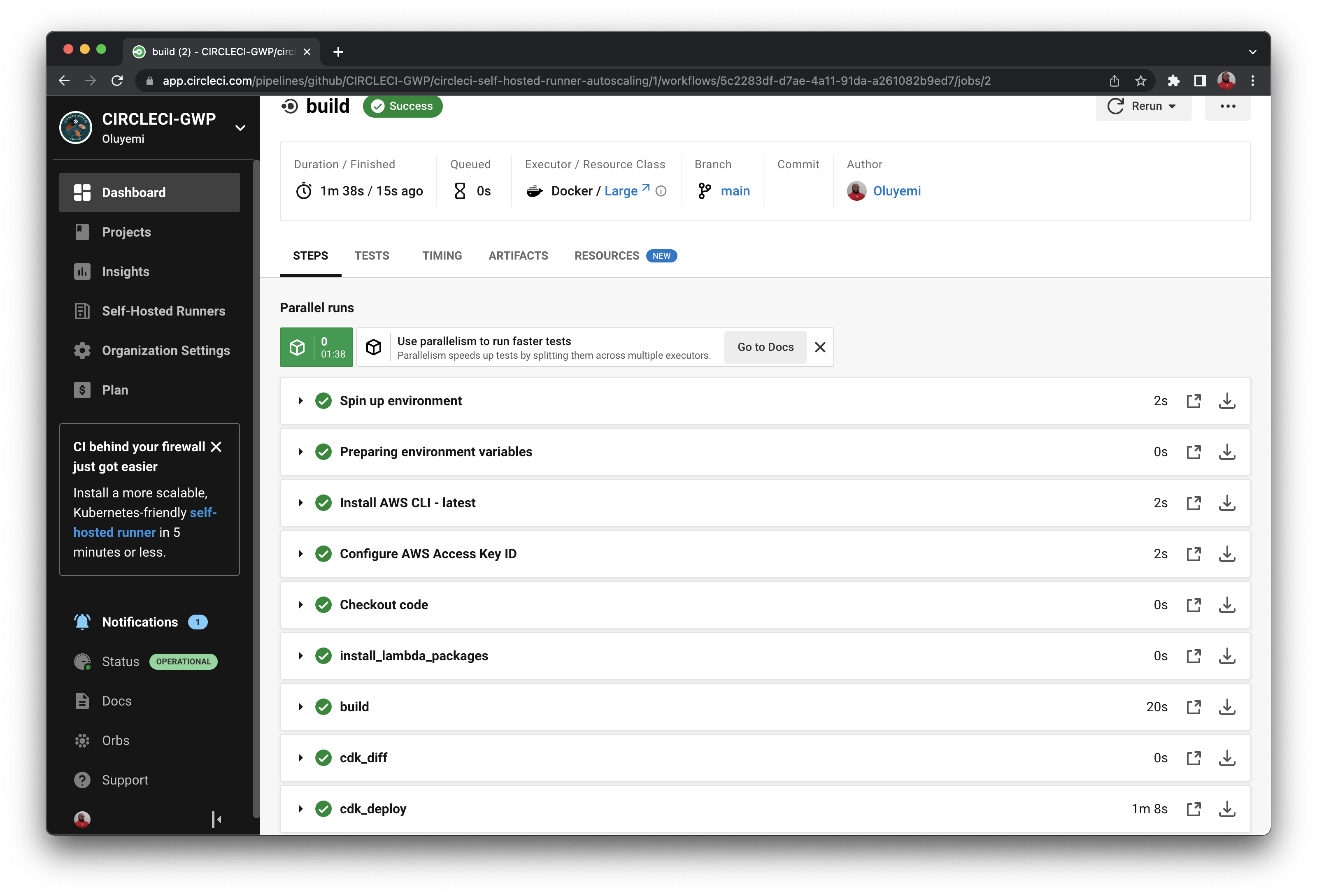
Source: CircleCI
End-to-end DevOps platforms
5. GitLab CI/CD
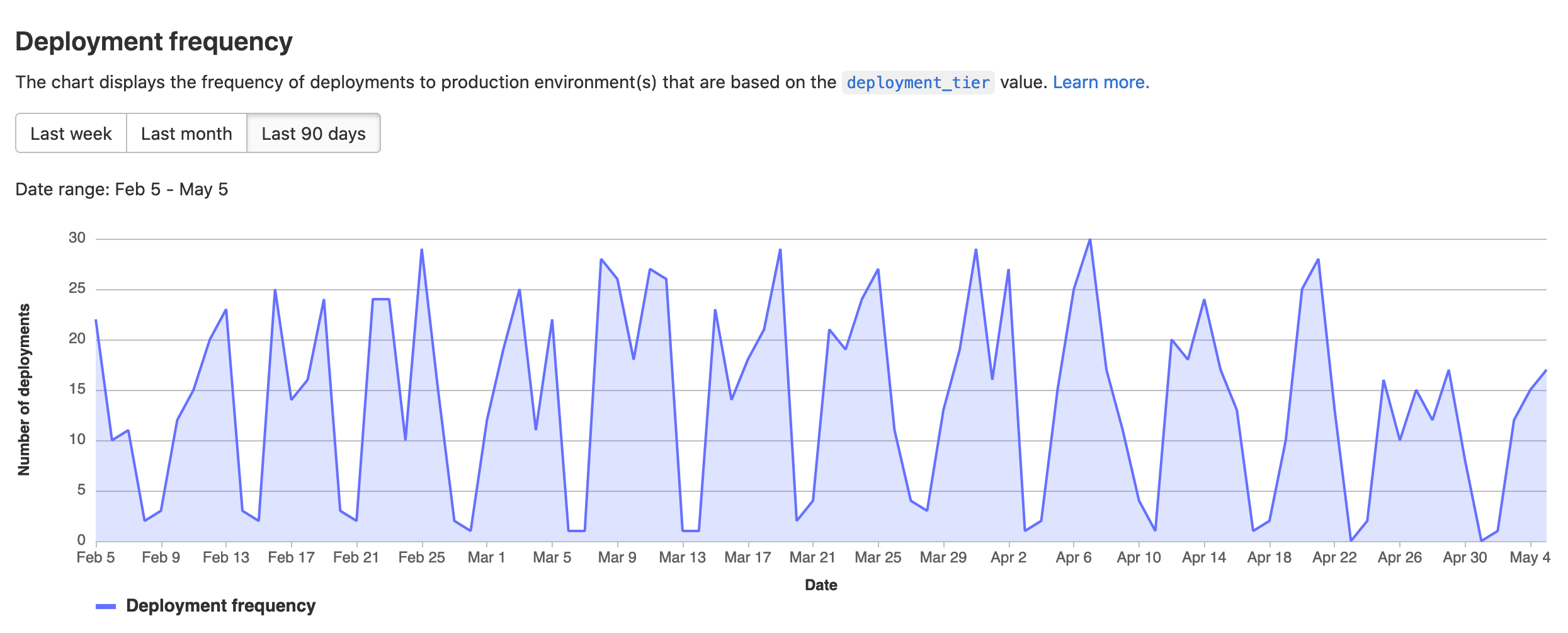
GitLab CI/CD is a continuous integration and continuous delivery system integrated into the GitLab DevSecOps platform. It automates building, testing, and deploying applications through pipelines defined in configuration files stored within the project repository.
General features:
- Pipeline configuration with YAML: Defines CI/CD pipelines using
.gitlab-ci.ymlfiles that describe stages, jobs, and scripts. - Event-triggered pipelines: Automatically runs pipelines when code changes occur, such as commits, merges, or scheduled tasks.
- Runner-based job execution: Uses runners to execute pipeline jobs on physical machines, virtual machines, or containers.
- Pipeline stages and jobs: Organizes workflows into stages such as build, test, and deploy, with jobs defining the tasks performed.
- Reusable pipeline components: Allows teams to reuse pipeline configurations across multiple projects through CI/CD components.
Enterprise features:
- Secure variable management: Stores sensitive information such as API keys and credentials using protected and masked variables.
- Custom and predefined variables: Supports configurable environment variables to manage settings across pipelines and environments.
- Pipeline customization with expressions: Enables dynamic configuration of pipelines using contextual expressions.
- Self-managed runner infrastructure: Allows organizations to host runners within their own infrastructure for greater control.
- Reusable pipeline catalogs: Supports sharing reusable CI/CD components across projects to standardize workflows.
Source: GitLab
6. CloudBees
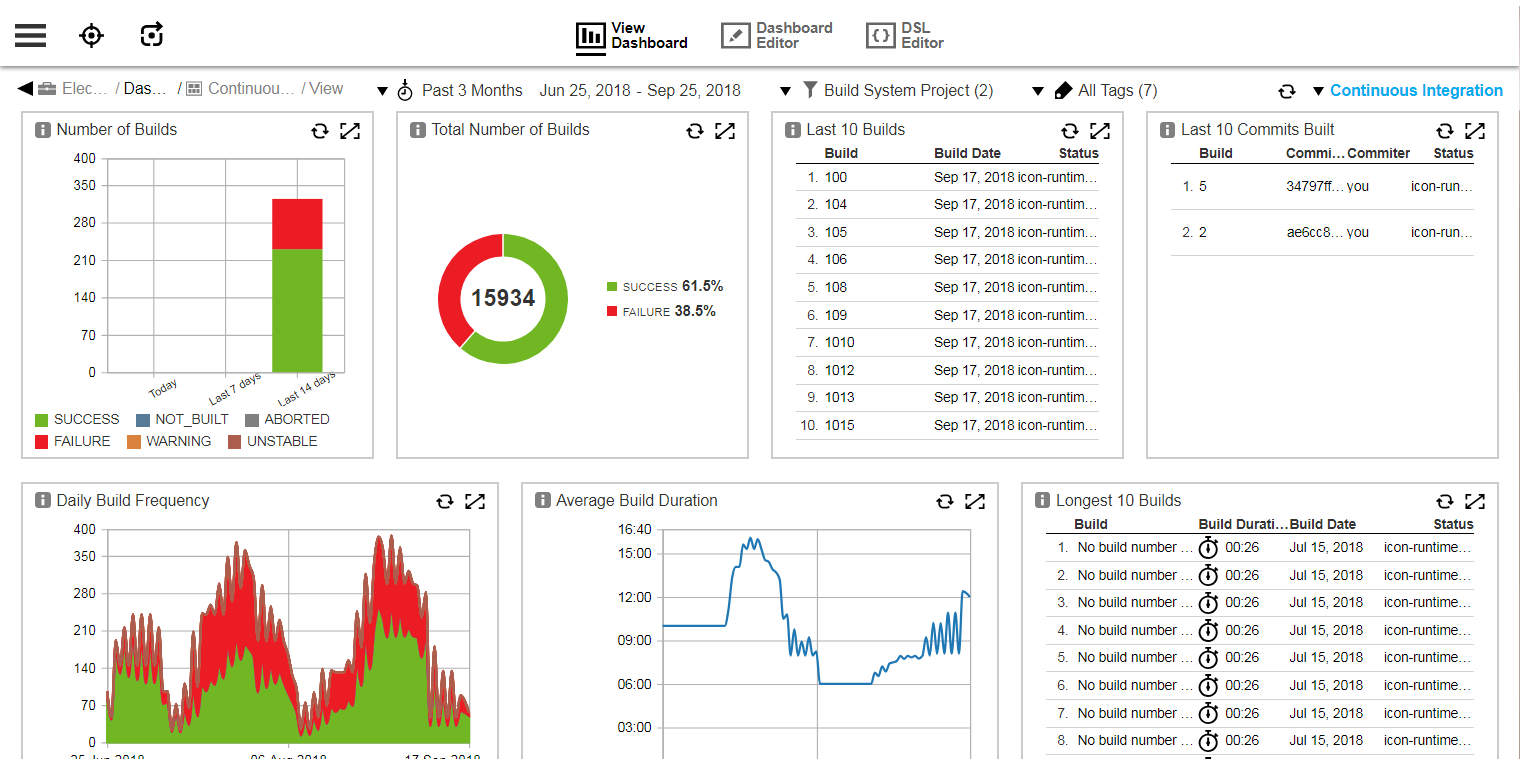
CloudBees is a DevOps platform to manage and orchestrate software delivery workflows across enterprise environments. It provides tools for automating CI/CD pipelines while enabling organizations to integrate existing development tools and infrastructure.
General features:
- Unified software delivery platform: Manages CI/CD pipelines and delivery workflows across development environments.
- Pipeline automation: Automates build, testing, and release workflows across distributed systems.
- Toolchain integration: Supports integration with existing DevOps tools and environments rather than replacing them.
- Centralized workflow orchestration: Coordinates software delivery processes across multiple teams and systems.
- Continuous security integration: Integrates security monitoring and governance into the software delivery lifecycle.
Enterprise features:
- Policy-driven governance: Provides centralized policy enforcement for CI/CD pipelines and software delivery workflows.
- Security and compliance monitoring: Improves visibility across development pipelines to identify risks and compliance issues.
- Enterprise Jenkins integration: Supports large-scale management and orchestration of Jenkins environments.
- Hybrid and multi-cloud support: Manages delivery pipelines across hybrid infrastructure and multi-cloud environments.
- Operational visibility: Provides insights into delivery pipelines to improve governance and reduce operational complexity.
Source: CloudBees
7. Azure DevOps
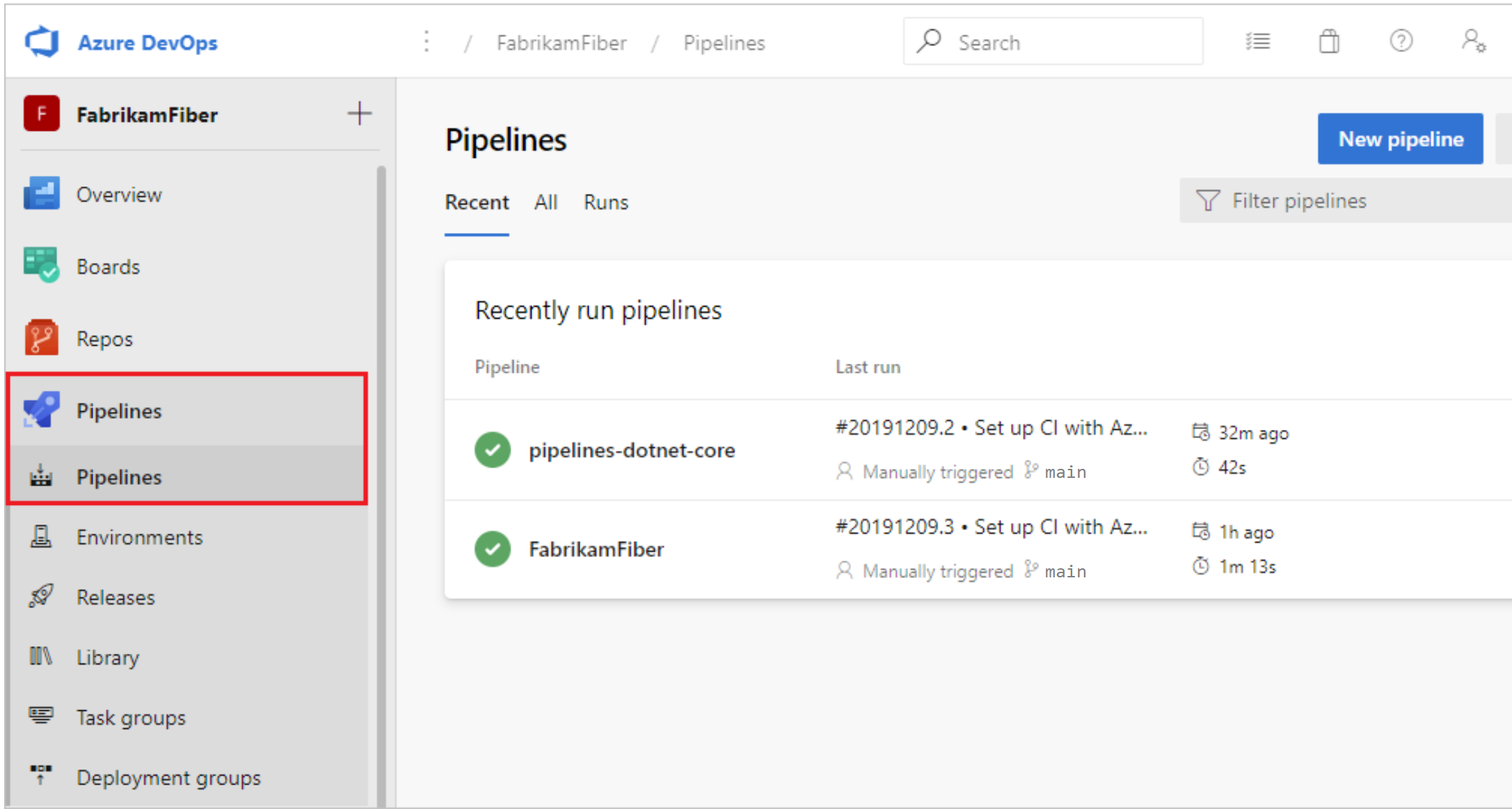
Azure DevOps is a development platform from Microsoft that provides tools for planning, building, testing, and deploying software. It includes services such as Azure Pipelines, Azure Repos, Azure Boards, and Azure Test Plans that support collaborative development and automated delivery workflows.
General features:
- Integrated DevOps toolchain: Combines planning, coding, testing, and deployment capabilities in a single platform.
- Azure Pipelines automation: Automates build, test, and deployment processes across multiple platforms and programming languages.
- Version control management: Provides Git-based repositories and version control tools for managing source code.
- Work item tracking: Supports project management using agile boards, backlogs, and sprint planning tools.
- Testing and quality management: Provides tools for managing manual and automated testing workflows.
Enterprise features:
- Hybrid deployment options: Available as both a cloud-hosted service and an on-premises deployment.
- Enterprise security and compliance: Includes built-in security capabilities and compliance certifications.
- Access control and governance: Supports granular permissions and policy controls across teams and projects.
- Analytics and reporting: Provides dashboards and integration with analytics tools such as Power BI.
- Extensible integrations: Supports integrations with external development tools and services through APIs and service hooks.

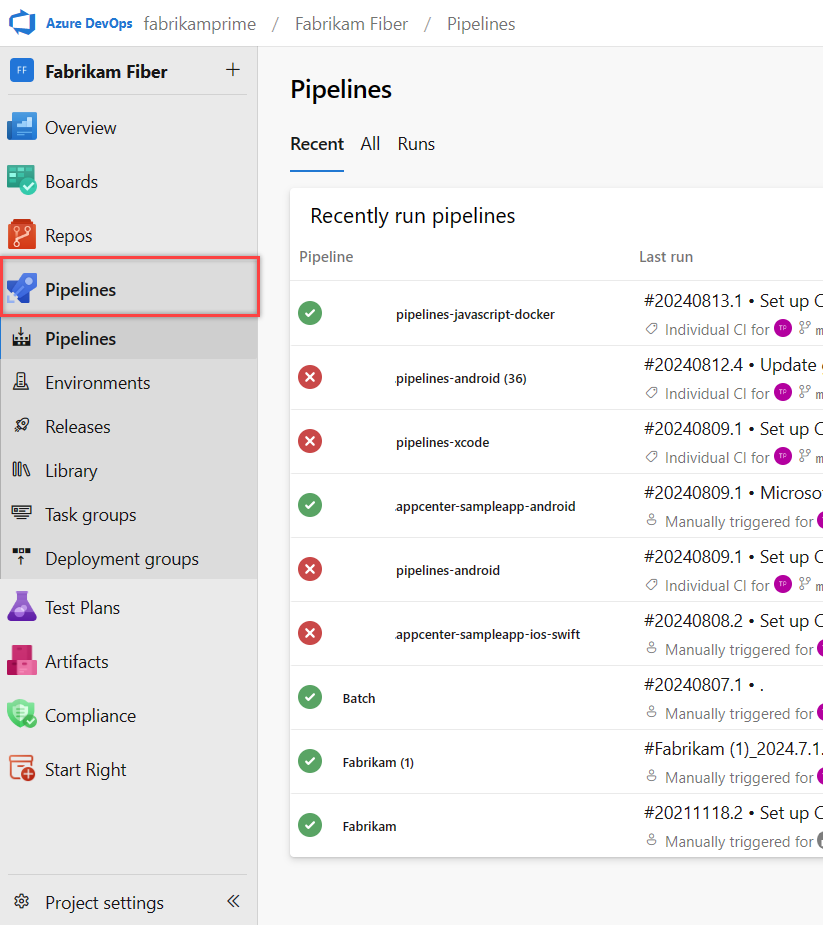
Source: Azure DevOps
8. Harness
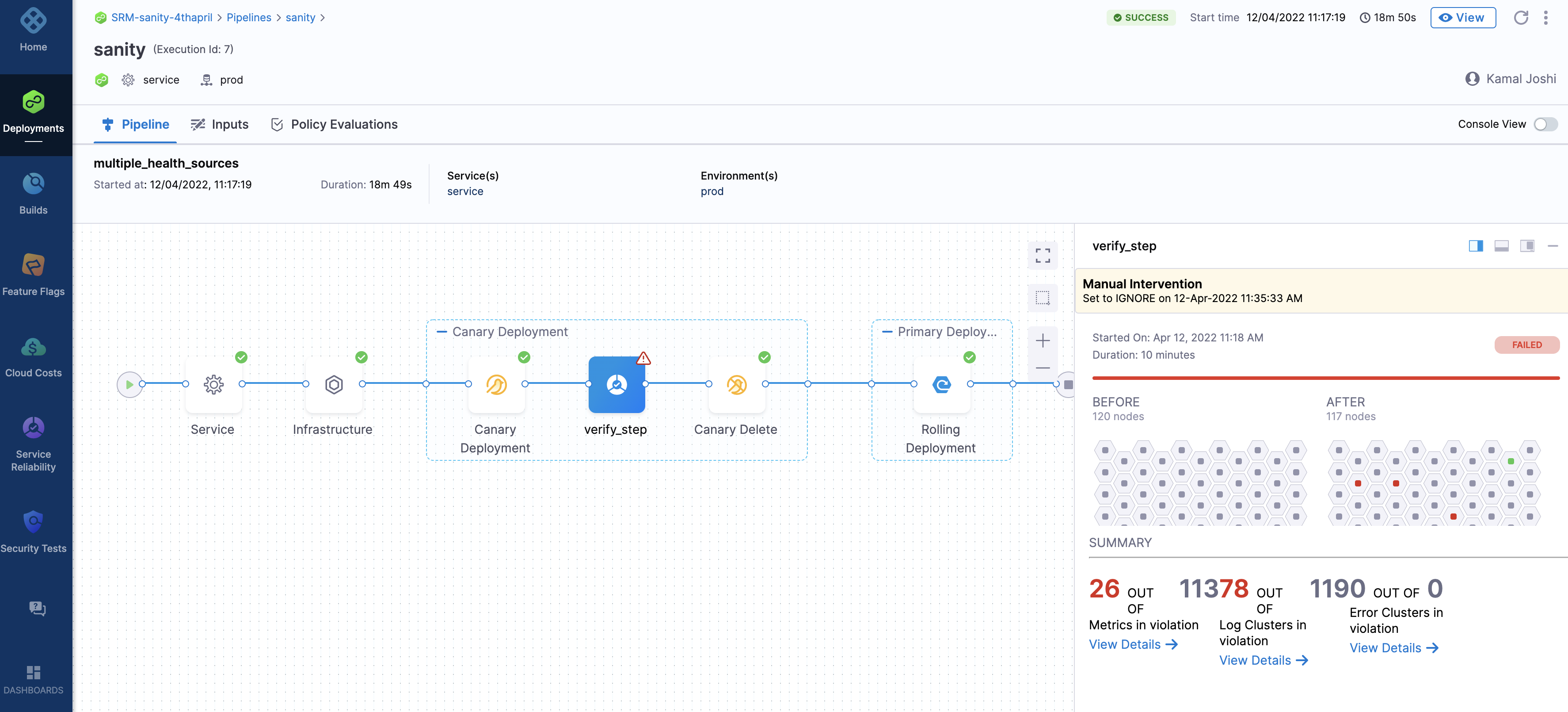
Harness is a software delivery platform that automates CI/CD pipelines and DevOps workflows using integrated automation and analytics. It combines deployment automation, infrastructure management, testing, and security capabilities into a unified platform.
General features:
- Automated CI/CD pipelines: Automates application build, test, and deployment workflows across environments.
- Multi-cloud deployment support: Enables software delivery across different cloud providers and infrastructure environments.
- Infrastructure automation: Supports infrastructure-as-code management and automated environment provisioning.
- Integrated testing capabilities: Provides testing and resilience validation as part of delivery pipelines.
- Extensive tool integrations: Integrates with cloud platforms, container services, and development tools.
Enterprise features:
- AI-driven automation insights: Uses analytics to monitor delivery pipelines and improve operational efficiency.
- Security testing integration: Incorporates application security testing within CI/CD pipelines.
- Supply chain security management: Provides mechanisms for managing software artifacts and dependencies securely.
- Developer self-service environments: Supports internal developer platforms that streamline development workflows.
- Engineering performance insights: Provides metrics and analytics to evaluate pipeline performance and engineering productivity.

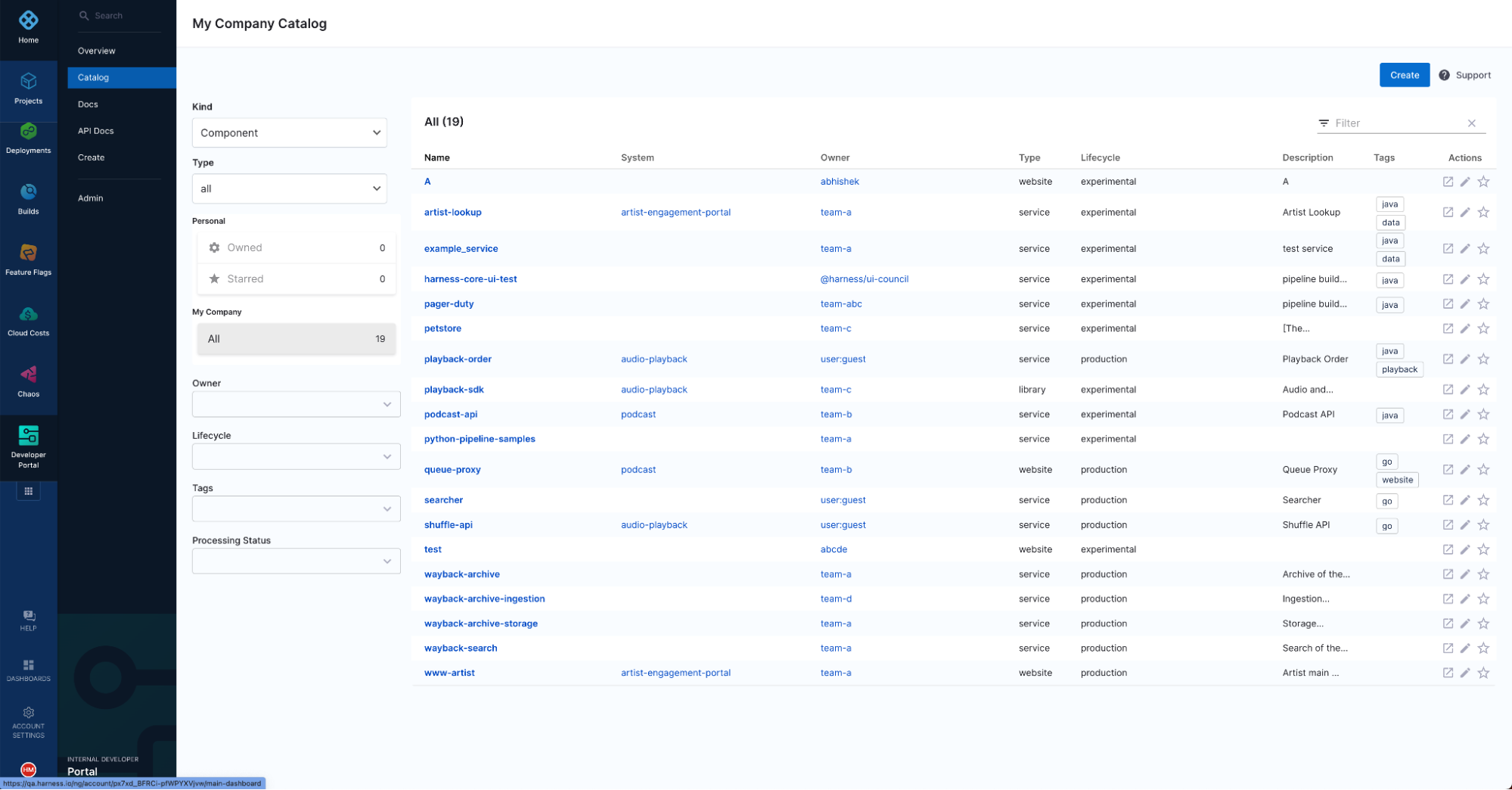
Source: Harness
Conclusion
Enterprise CI/CD platforms are critical enablers for modern software delivery. They bring structure, speed, and reliability to complex deployment workflows, helping organizations move faster while reducing risk. By standardizing processes, improving traceability, and promoting automation, these platforms support scalable engineering practices and allow teams to focus on delivering value to users instead of managing infrastructure or firefighting deployment issues.
Help us continuously improve
Please let us know if you have any feedback about this page.