What are Kubernetes CI/CD services?
Kubernetes CI/CD services, typically offered in a cloud-provisioned or Software as a Service (SaaS) model, automate the Continuous Integration and Delivery of applications within Kubernetes clusters. These services build, test, and deploy applications efficiently, using Kubernetes’ orchestration capabilities.
This process involves integrating changes into the main branch frequently and automatically deploying them to various environments, ensuring rapid iteration and quick feedback loops. The automation of these steps reduces errors and speeds up the development lifecycle.
By managing deployments within Kubernetes, these services help maintain application consistency and reliability. Given Kubernetes’ inherent scalability, CI/CD services tailored for it can handle a large number of applications simultaneously. This is vital for modern development environments, where microservices and containerized architectures are prevalent.
Understanding the Kubernetes market and recent trends
Rapid market growth
The Kubernetes market is projected to grow from USD 2.57 billion to USD 8.41 billion by 2031. This represents a 21.85% compound annual growth rate (CAGR).
Microservices driving Kubernetes adoption
One of the strongest drivers of Kubernetes adoption is the move from monolithic applications to microservices architectures. Instead of deploying a single large application, organizations split systems into smaller services that can be developed and deployed independently.
Kubernetes provides the orchestration capabilities needed to run and manage these services at scale. As a result, it has become a core platform for modern application delivery. Around 80% of enterprises plan to build most new applications on cloud-native stacks within the next five years.
Growth of AI and machine learning workloads
AI and machine learning workloads are also increasing Kubernetes usage. These workloads require large amounts of compute power and often run across distributed infrastructure.
Kubernetes supports these requirements through features such as node autoscaling, GPU scheduling, and high availability. More than half of surveyed enterprises already run AI or ML workloads in Kubernetes clusters. Tools like Kubeflow help manage model training and deployment within these environments.
Increasing demand for managed Kubernetes services
Many organizations find Kubernetes difficult to operate internally because it requires specialized expertise. As a result, managed Kubernetes services have become the most common deployment model.
Managed offerings handle tasks such as upgrades, security hardening, and cluster operations. They also improve reliability and reduce operational costs. Managed Kubernetes account for 62.3% of market spending, and providers report improvements such as up to 40% cost savings and 35% higher uptime for adopters.
Hybrid and multi-cloud strategies
Enterprises are increasingly running applications across multiple cloud providers and on-premises infrastructure. Kubernetes plays a key role in this strategy because it provides a consistent platform for running containers across environments.
Platforms like Google Anthos, AWS EKS Anywhere, and Azure Arc allow organizations to manage clusters across hybrid and multi-cloud environments. This portability helps companies optimize cost, comply with regional regulations, and reduce dependence on a single cloud provider.
Benefits of running Kubernetes CI/CD in the cloud
Running Kubernetes CI/CD in the cloud provides flexibility, scalability, and efficiency for software delivery. Cloud-based CI/CD services eliminate the need for on-premises infrastructure, reducing operational overhead and enabling teams to focus on development rather than maintenance.
Kubernetes CI/CD services integrate with cloud-native tools, improving automation and reliability. Key benefits include:
- Scalability: Cloud CI/CD platforms scale resources dynamically based on workload demands, ensuring efficient builds and deployments.
- High availability: Cloud providers offer distributed infrastructure, reducing downtime risks and ensuring reliable CI/CD pipelines.
- Faster build and deployment times: Using cloud computing resources accelerates build, test, and deployment cycles.
- Cost efficiency: Pay-as-you-go pricing models eliminate the need for upfront hardware investments and reduce infrastructure costs.
- Security and compliance: Cloud CI/CD services provide built-in security features, automated compliance checks, and encrypted data transfers.
- Integration: Native support for cloud services, Kubernetes clusters, and third-party DevOps tools simplifies the development process.
Related content: Read our guide to Kubernetes CI/CD tools
Popular Kubernetes CI/CD services
1. Octopus
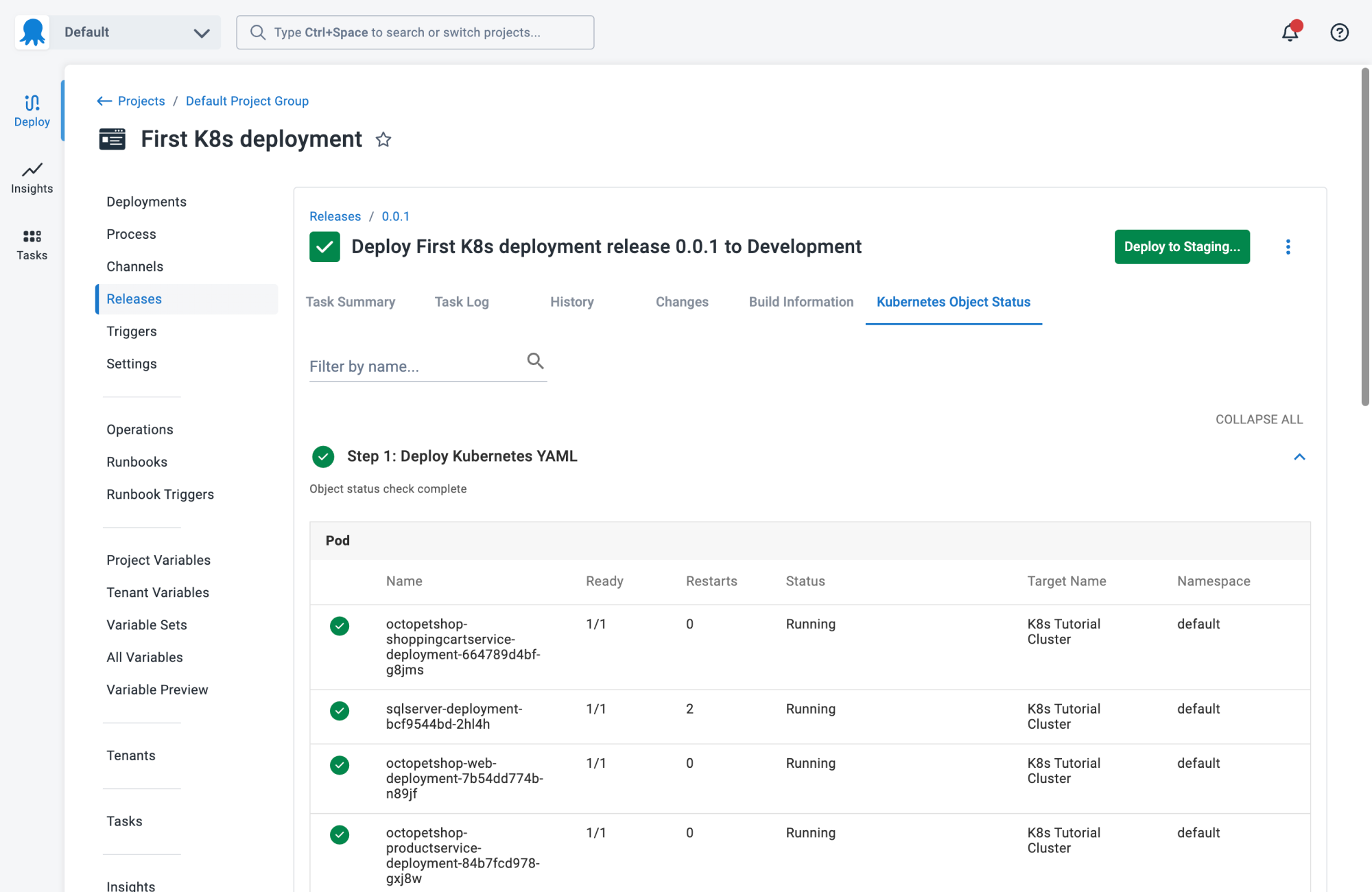
Octopus Deploy is a Continuous Delivery (CD) solution built to handle complex software delivery scenarios. It combines robust release management, automated deployment pipelines, and operational runbook execution to address the sophisticated scaling, architectural complexity, and regulatory governance demands of global enterprises with challenging deployment requirements.
Key Octopus features:
- Deployment consistency and safety: Octopus standardizes deployment workflows across all environments, delivering production releases with the same reliability and predictability as lower-environment deployments. Native rollback functionality ensures rapid restoration to stable application states.
- Scalable multi-customer deployments: Uniquely offering built-in multi-tenancy capabilities, Octopus manages deployment distribution from small customer bases to enterprise-scale tenant networks without requiring duplicated processes or administrative overhead.
- Comprehensive operations automation: Runbook functionality streamlines both routine operational tasks and critical incident response workflows, empowering development teams to concentrate on core development while enabling controlled self-service access for operations teams.
- Regulatory and audit readiness: Comprehensive activity logging, fine-grained access controls, and enterprise SSO support create seamless compliance workflows that satisfy audit requirements while establishing clear accountability and organizational confidence.

2. Codefresh
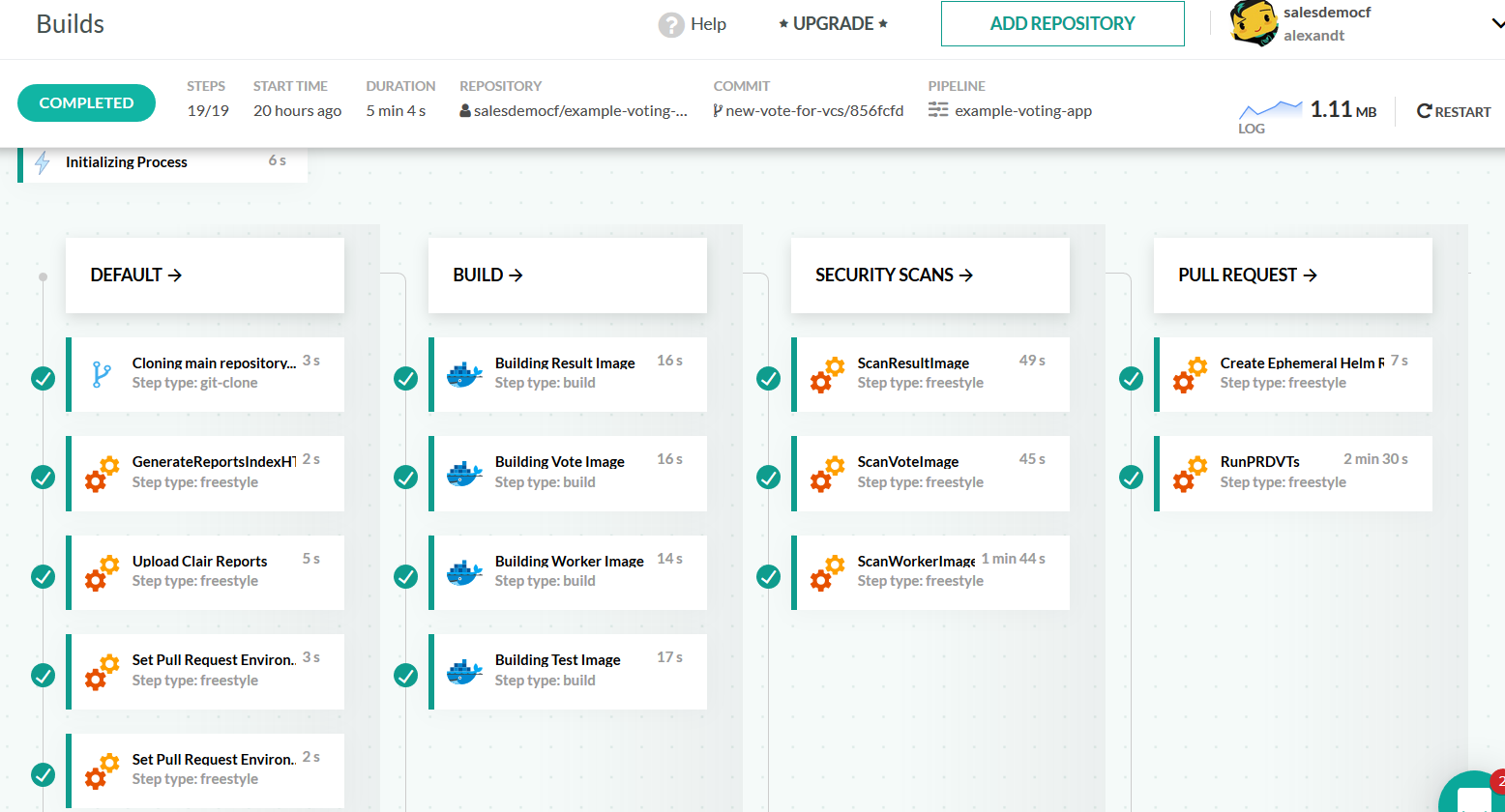
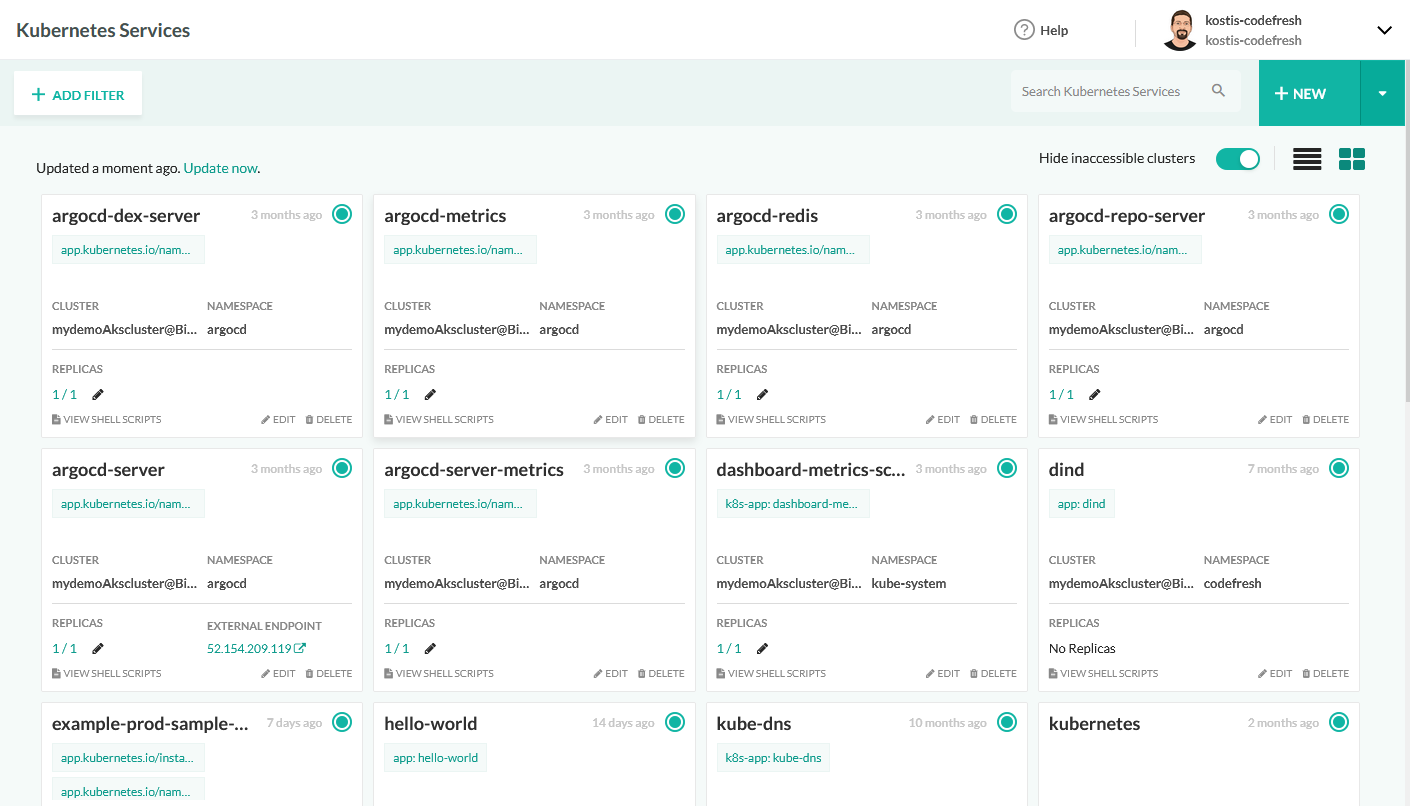
Codefresh is a CI/CD platform for Kubernetes, offering automation and optimization for software delivery. Built on Argo, it enables GitOps workflows for consistent and automated deployments. The platform emphasizes high performance with caching, parallel execution, and pipeline visibility.
Key features include:
- Optimized build performance: Implements caching and parallel execution to speed up CI/CD processes.
- Automated rollbacks & progressive deployment: Provides rollback capabilities and supports deployment strategies like canary and blue-green rollouts.
- GitOps-centric workflows: Uses Argo to enable declarative, automated deployments, ensuring reliability and traceability.
- Comprehensive observability: Delivers full visibility from build to deployment, aiding in monitoring and troubleshooting.
- Scalable & reusable pipelines: Supports pipeline inheritance, templates, and reusable triggers, promoting the DRY (don’t repeat yourself) principle.
Source: Codefresh
3. GitLab CI/CD
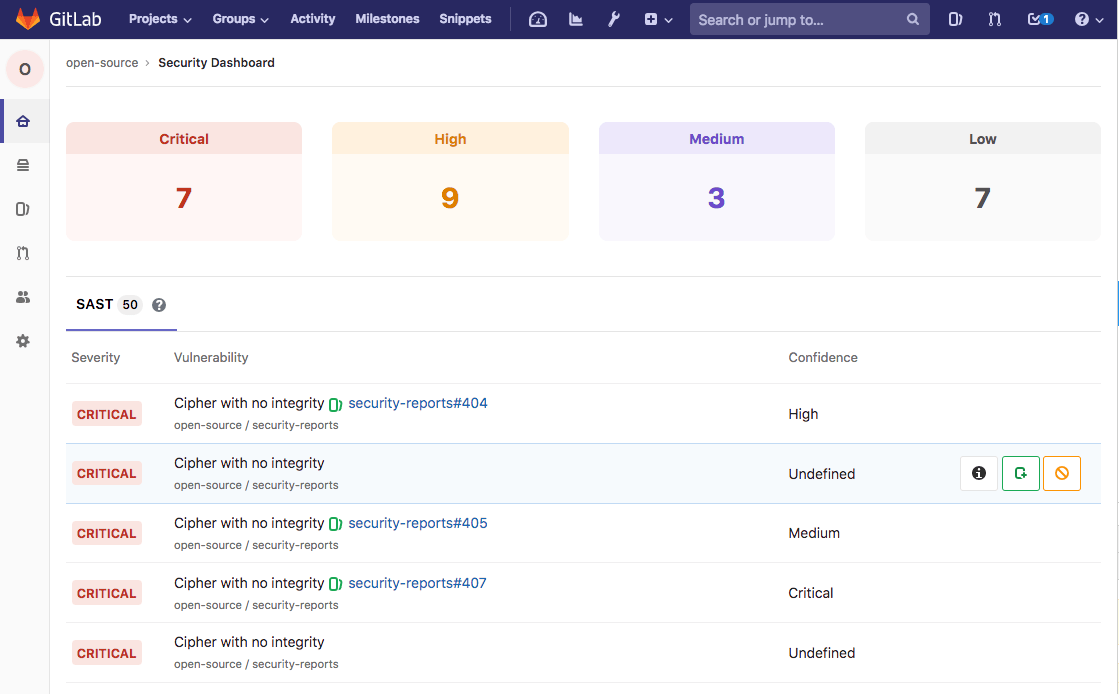
GitLab CI/CD is a continuous integration and delivery system that builds, tests, and deploys code changes through pipeline configuration stored in a .gitlab-ci.yml file. Pipelines run on runners, use stages and jobs to define execution order, and can be triggered by commits, merges, or schedules.
Key features include:
- Pipeline configuration: Uses a
.gitlab-ci.ymlfile to define stages, jobs, scripts, variables, dependencies, and execution rules for each pipeline in a project. - Stages and jobs: Organizes pipelines into ordered stages such as build, test, and deploy, with jobs defining the specific tasks performed at each step.
- Runner execution: Runs jobs on runners that can operate on physical machines or virtual instances, and can use specified container images.
- Pipeline triggers: Starts pipelines from events such as commits, merges, and schedules, and supports integration with external tools and platforms.
- Variables and secrets: Stores configuration values and sensitive data as CI/CD variables, including custom and predefined variables with masking and protection controls.
- Dynamic expressions: Uses
$[[ ]]expressions to inject typed inputs and matrix values into pipeline configuration and validate them when a pipeline is created. - Reusable components: Supports CI/CD components that can be included in pipelines to reuse configuration, reduce duplication, and share common pipeline logic across projects.

Source: Gitlab
4. CloudBees CI
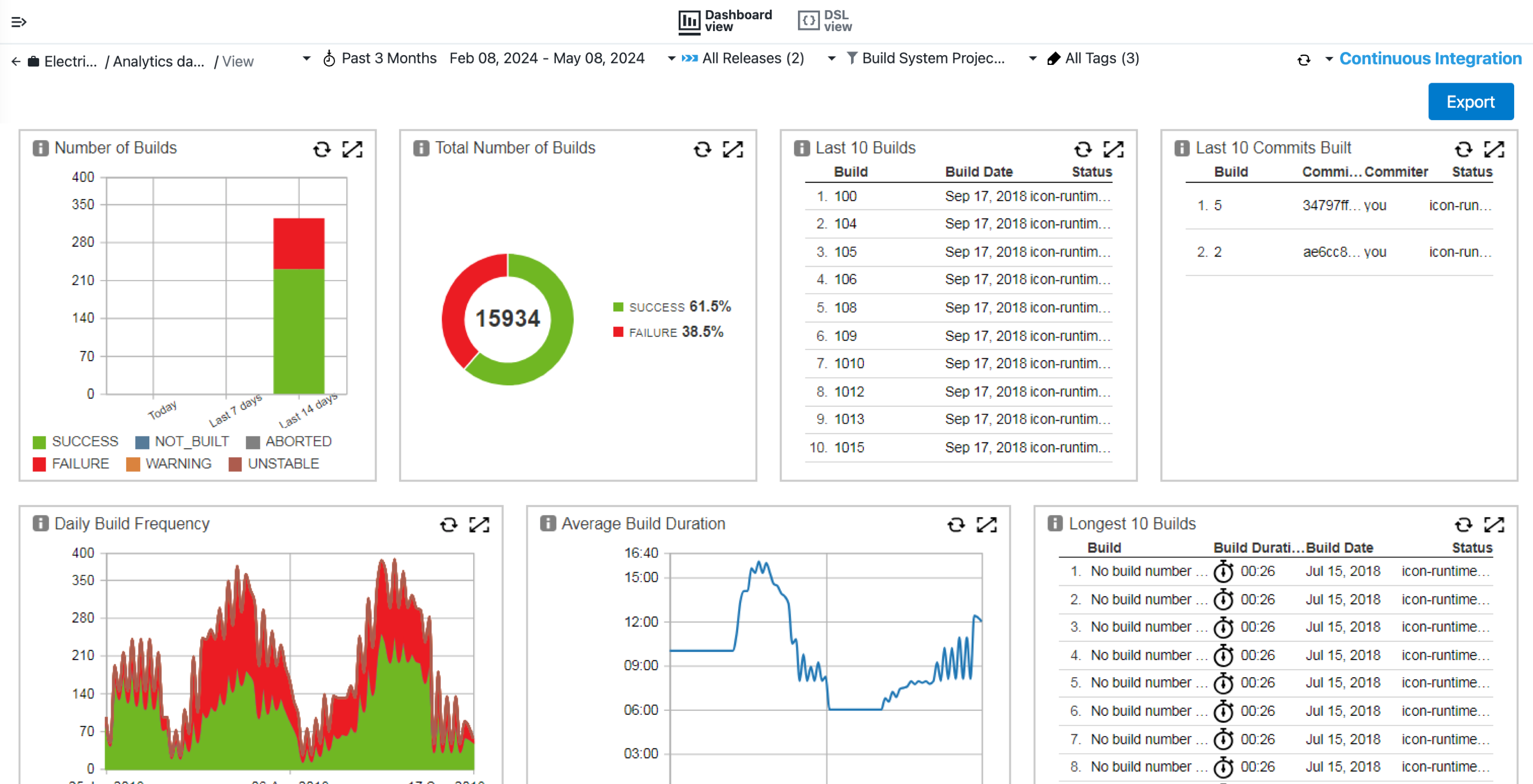
CloudBees CI is a Continuous Integration platform built on Jenkins for teams that need centralized management of Jenkins-based pipelines across cloud, on-premises, and hybrid environments. It adds governance, controller management, configuration as code, plugin controls, and security features for larger CI deployments.
Key features include:
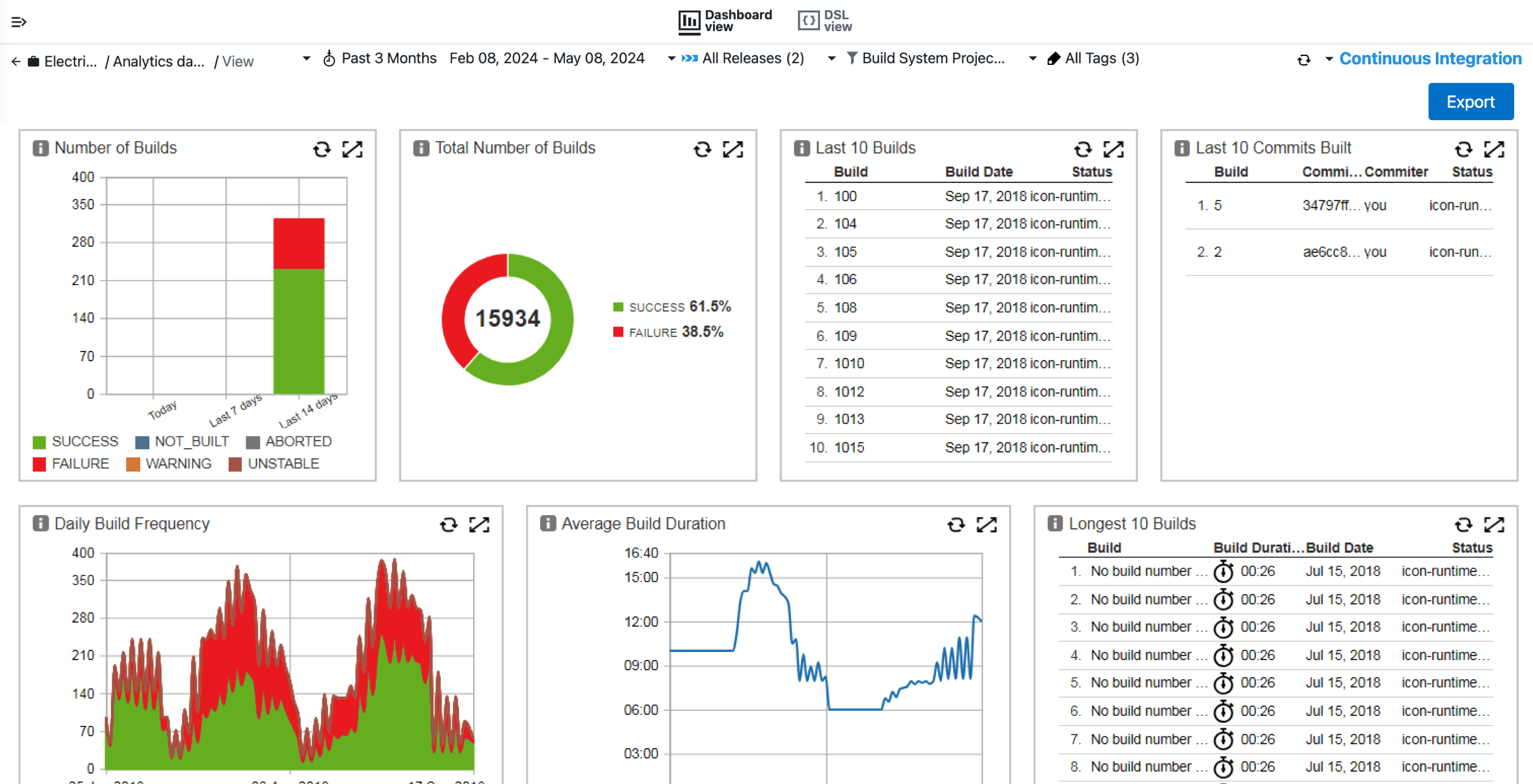
- Centralized governance: Manages multiple Jenkins controllers from one dashboard with shared access controls, policy enforcement, plugin governance, and environment-wide monitoring data.
- High availability and scaling: Supports high availability and horizontal scaling so controllers can balance workloads, remove single points of failure, and adjust capacity across environments.
- Configuration as code: Defines Jenkins controller settings in YAML so credentials, templates, and other configuration can be versioned, reviewed, and reproduced from source control.
- Plugin management: Uses managed plugins, verified update programs, and upgrade assistance to control plugin changes and reduce reliance on unvetted community plugin combinations.
- Access control: Provides role-based access control and centralized credential management so teams and users receive granular permissions across Jenkins controllers from a central system.
- Hybrid deployment: Runs on-premises, in cloud environments, or in hybrid setups, with Kubernetes and container orchestration support for operating Jenkins infrastructure at scale.
- Pipeline standardization: Supports pipeline templates, custom marker files, declarative pipeline syntax, and migration tools to make Jenkins pipelines more consistent, structured, and easier to manage.

Source: CloudBees
5. Travis CI
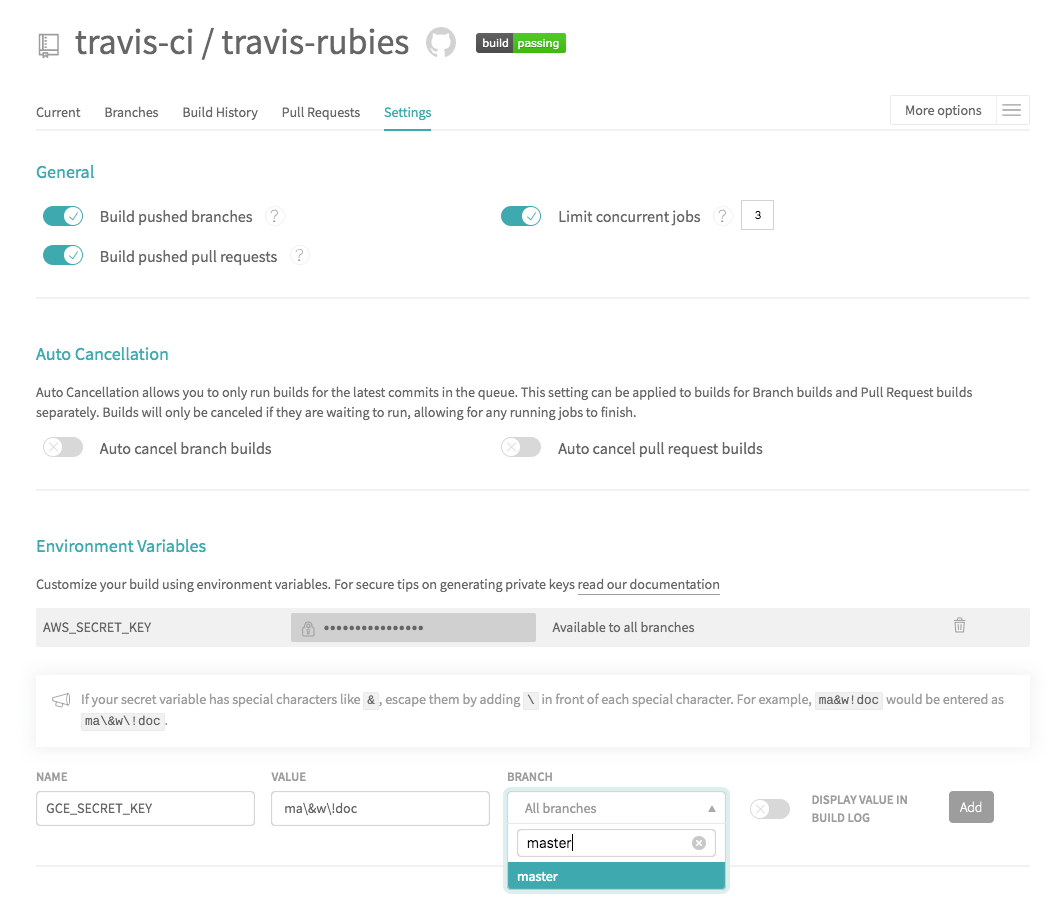
Travis CI is a CI/CD platform that defines build, test, and deployment workflows in a single configuration file. It supports multiple programming languages, parallel jobs, build matrices, and multi-environment automation, with integrations and security features for pipeline execution.
Key features include:
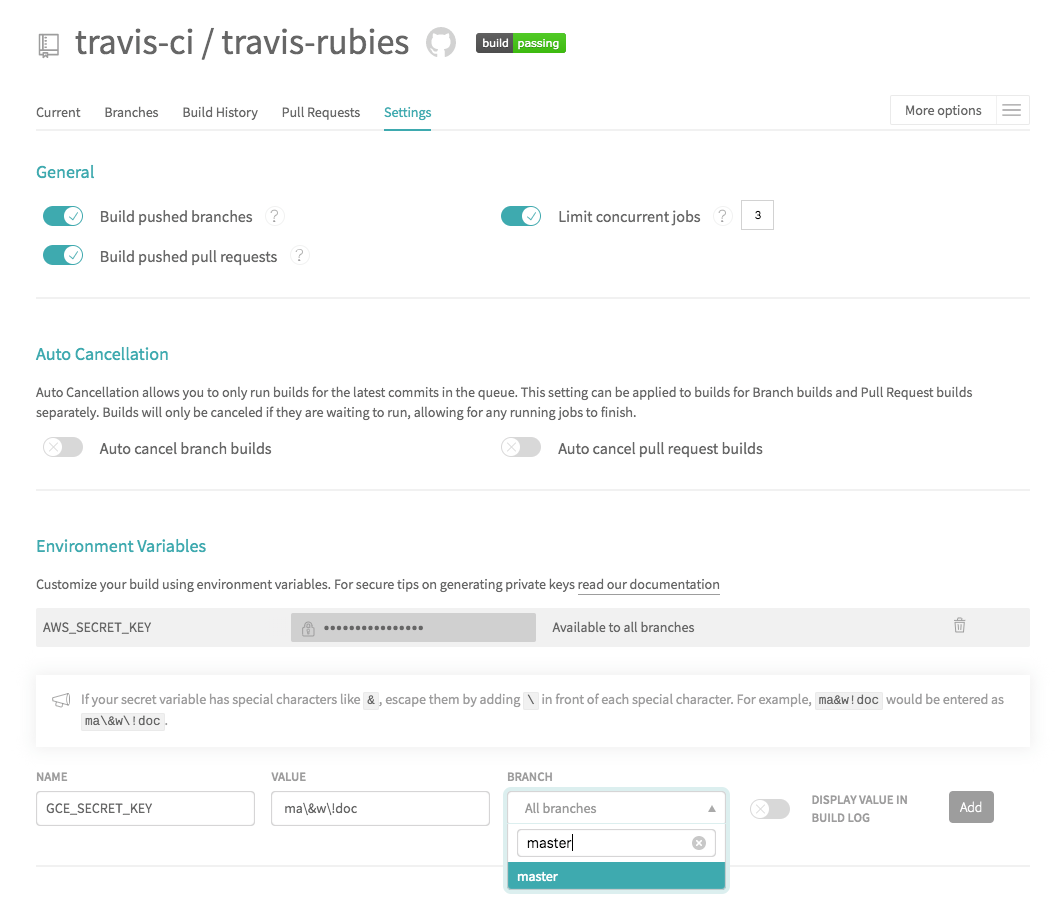
- Configuration as code: Defines testing and deployment automation in one configuration file, using a compact syntax to manage pipeline behavior and job settings.
- Language environments: Provides preconfigured environments for languages such as Python, JavaScript, Java, C/C++, PHP, Rust, Go, C#, and Ruby.
- Build matrix support: Runs tests across multiple runtime versions, dependency versions, or language combinations through matrix configuration for broader automated coverage.
- Parallel builds: Executes jobs in parallel and supports multi-environment builds, helping teams run separate tasks such as linting, testing, and documentation generation together.
- Pipeline controls: Supports build stages, conditional execution, notifications, integrations, and multiple operating systems and architectures within the same CI/CD workflow definition.
- Security features: Includes build isolation, HashiCorp Vault integration, secure artifact signing, and scoped credentials for controlling secrets and protecting pipeline execution.
Source: Travis CI
Conclusion
Kubernetes CI/CD services simplify software delivery by automating build, test, and deployment processes within Kubernetes environments. By using cloud-native technologies and GitOps principles, these solutions improve scalability, reliability, and operational efficiency. Automating CI/CD pipelines in Kubernetes enables faster iterations, reduces human errors, and ensures consistent deployments across multiple environments.
Help us continuously improve
Please let us know if you have any feedback about this page.