Books can help expand your understanding of a topic in your field. With so many books and topics, the choice can be overwhelming. Even if you narrow your choices, time is precious, and you want to make the most of it by reading books that matter.
Book recommendations
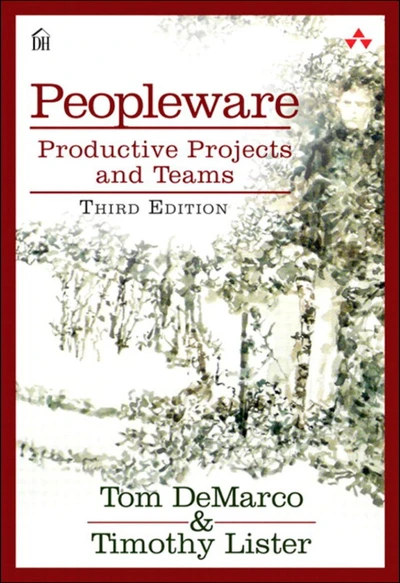
Peopleware
By Tom DeMarco, Tim ListerWith talk about how excellent technological skills, tools, and methodologies can produce great software, the authors of Peopleware suggest the most crucial part of software development is human, not technical.
If software engineering managers think they work in ‘software development’, they’re wrong. They work in the field of ‘human communication.’
Peopleware has tips on how to address the human element of software engineering, such as:
- Loosen up formal methodologies
- Fight corporate entropy
- Make it acceptable to be uninterruptible
Peopleware advocates for a shift in management thinking from a technical to human focus. This shift allows managers to understand their purpose towards their team and their role in a software company. Peopleware talks about ‘management style’ as the main reason software projects fail. By managing for the long term, focusing on quality, and improving productivity through worker happiness, managers can set their teams up for ongoing success.
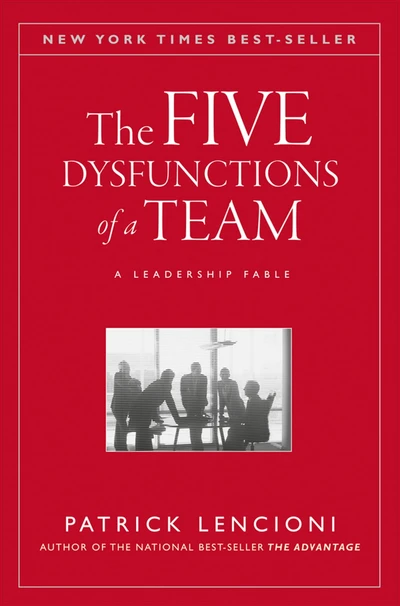
The Five Dysfunctions of a Team
By Patrick LencioniThe Five Dysfunctions of a Team is a leadership fable that teaches why teams struggle.
Kathryn Peterson, Decision Tech’s CEO, must unite the senior leadership team, but they’re a dysfunctional mess. Throughout the book, the five dysfunctions of a team are:
- Absence of trust
- Fear of conflict
- Lack of commitment
- Avoidance of accountability
- Inattention to results
The book’s final section includes a framework Kathryn uses to create an effective team. This section includes practical steps you can use to identify and cut the five dysfunctions of a team.
The Five Dysfunctions of a Team applies to any team, not just a software engineering team. Team members and managers can read this to reflect on their teams and involvement.
The Collaboration Equation
By Jim BensonThe Collaboration Equation looks at systems that encourage healthy workplaces where team members deliver value. Resilient companies result from skilled professionals who have the confidence to make decisions.
This book challenges the work cultures starving professionals of information, direction, psychological safety, and purpose. A resilient workplace uses visual systems to communicate and the right environment to create a generative culture.
The case studies in this book use practical examples to illustrate its ideas across many industries.

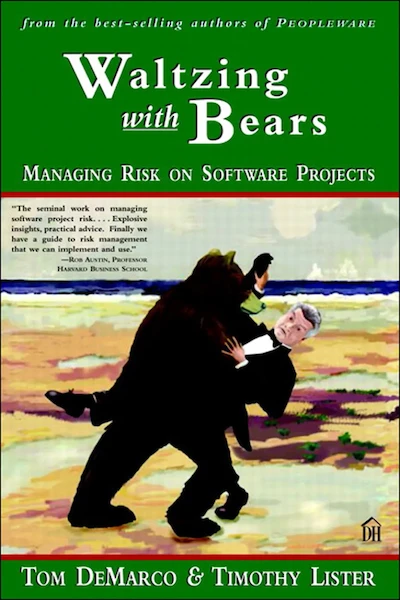
Waltzing With Bears
By Tom DeMarco, Timothy ListerThis Jolt Award winner explains risk in the context of software delivery. It describes how to surface risks and embrace worthwhile ones to gain a competitive advantage.
The book includes strategies for dealing with common software development risks, such as:
- Schedule flaws
- Requirements inflation
- Turnover
- Specification breakdown
- Under-performance
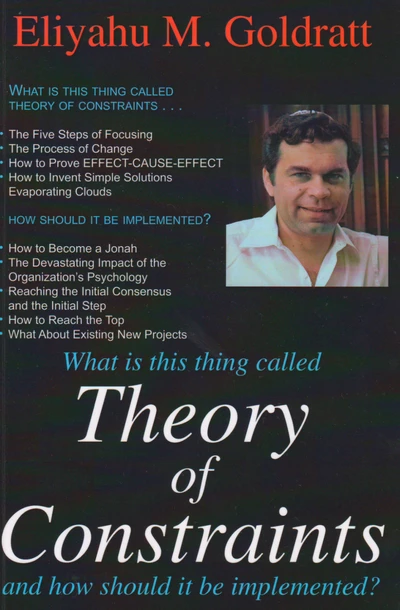
Theory of Constraints
By Eli GoldrattThe Theory of Constraints is the idea that every system has a limiting factor or constraint. Focusing efforts to address the constraint is usually the quickest and most effective way to improve profitability.
The Theory of Constraints introduces the stages of a continuous program:
- The five steps of focusing
- The process of change
- How to prove effect-cause-effect
- How to invent simple solutions to complex problems
The Theory of Constraints is like the weakest link chain analogy. In a chain, there will only ever be one weakest link. Strengthening any other link beside the weakest will not improve the overall strength of the chain.
This book guides readers in finding and addressing the most limiting constraints in their system and offers practical steps to get started.
The Mythical Man Month
By Frederick P. Brooks, Jr.Though written in 1975, a great deal of Fred Brooks’ classic is still relevant to software delivery 50 years later. The book tackles many subjects that reveal the fundamental laws that apply to system development.
Alongside Brooks’ law about adding people to a late project (it makes the project even later), The Mythical Man Month was also the origin of ‘no silver bullet’ and the group intercommunication formula.
Developers in the 21st century will find themselves nodding to many of this book’s insights.

Help us continuously improve
Please let us know if you have any feedback about this page.