Books can help expand your understanding of a topic in your field. With so many books and topics, the choice can be overwhelming. Even if you narrow your choices, time is precious, and you want to make the most of it by reading books that matter.
Book recommendations
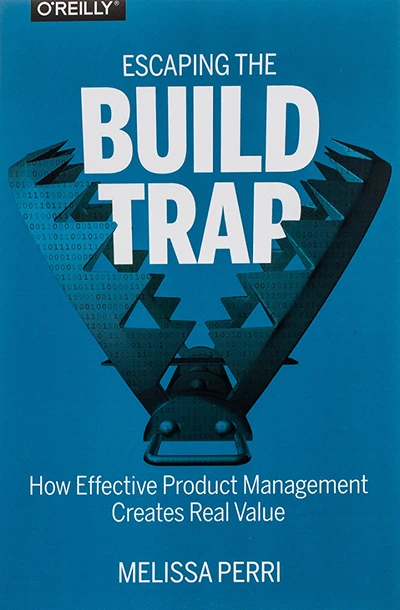
Escaping the Build Trap
By Melissa PerriThe Build trap is an anti-pattern where companies focus on the outputs of a system rather than the outcomes. Companies only concerned with meeting quotas and not satisfying customers find themselves trapped. That’s because they are building without understanding the customer’s needs.
Escaping the Build Trap is about breaking free to solve real customer problems while achieving business goals. The book gives guidelines on establishing clear communication lines within the company to meet customer and business needs.
Escaping the Build Trap has five parts:
- Why organizations ship features rather than cultivate the value those features represent
- How to set up a product organization that scales
- How product strategy connects a company’s vision and economic outcomes back to the product activities
- How to identify and pursue the right opportunities for producing value through an iterative product framework
- How to build a culture focused on successful outcomes over outputs
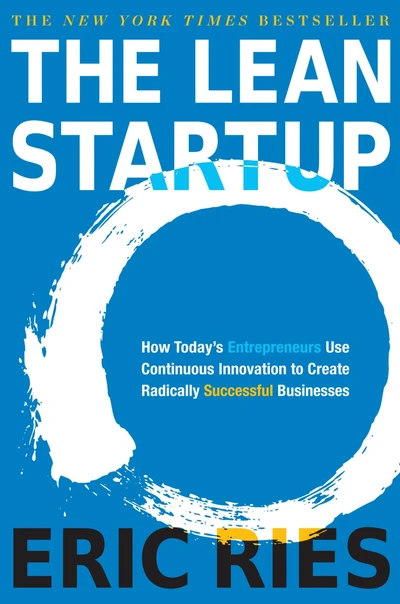
The Lean Startup
By Eric RiesWhile most startups fail, The Lean Startup argues that many failures are preventable. Startups are organizations dedicated to creating something new under conditions of extreme uncertainty. To succeed, startups need to test ideas early to ensure market viability.
Many of the requirements for a startup to test their product are in lean manufacturing principles. These include:
- Short development cycles
- Measurement of progress with the right metrics
- Understanding customer needs
- Validation through experimentation
The Lean Startup is a scientific approach to applying lean principles for startup success. The book allows entrepreneurs to test their vision through a lean manufacturing lens and adapt before it’s too late.
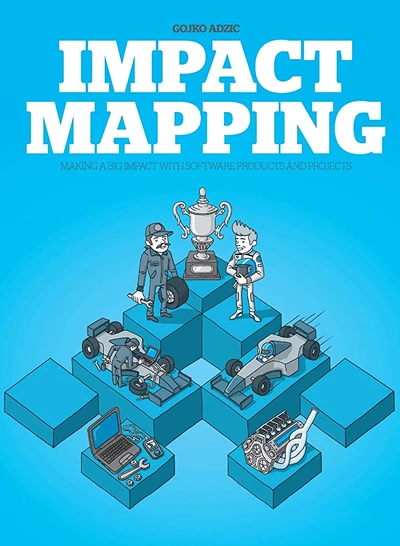
Impact Mapping
By Gojko AdzicMany teams successfully design and deliver well-intentioned software projects that never make an impact. That could be because:
- No one uses the application
- It solves a problem no one has
- It doesn’t align with customer or business needs
Even with proper software delivery methods, you can waste effort if you don’t understand the impact of the software. The most valuable software projects are the ones that have the highest impact.
Impact Mapping is about understanding how to map software to business outcomes. This mapping includes:
- Goal-oriented requirements engineering
- Frequent iterative delivery
- Agile and lean software methods
- Lean startup product development cycles
- Design thinking
This book is a practical guide to impact mapping. It teaches readers how to adapt strategy over time to align with business needs.
Project to Product
By Mik KerstenIn the 20th century, mass production through manufacturing changed how organizations did business. Similarly, digital transformation changed the economic landscape of the 21st century. Software is now the new means of production.
The problem is many organizations use management frameworks and infrastructure models from past technological revolutions.
Project to Product presents the solution to this problem through the flow framework. The framework connects enterprise IT and business to create an advanced manufacturing line.
Project to Product outlines how to find the business metrics you want to track per product value stream and map your IT work to those product value streams.
By connecting IT to the value stream, you can create the advanced manufacturing line that’s catapulted cutting-edge technology companies into extreme success.

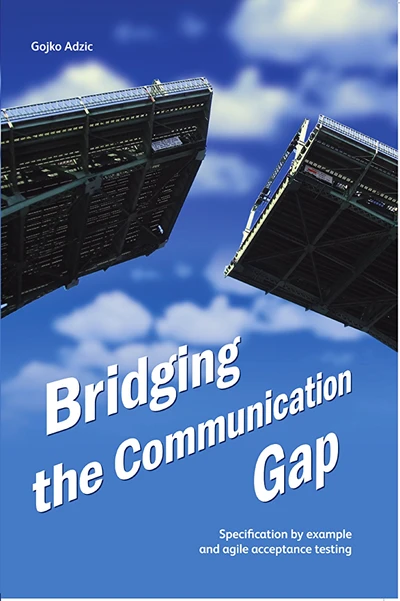
Bridging the Communication Gap
By Gojko AdzicBridging the Communication gap is about improving communication between customers, business analysts, developers, and testers on software projects. The method uses specification by example and agile acceptance testing.
When delivering a project, all stakeholders must be on the same page and speak the same language. Cross-functional teams need a shared understanding of the project and its problems. By having a shared context, teams can make better specifications and reduce miscommunication issues throughout the project.
Improved team communication leads to better software outcomes that meet customer requirements.
This book helps you:
- Learn how to improve communication between business people and software implementation teams
- Find out how to build a shared and consistent understanding of the domain in your team
- Learn how to apply agile acceptance testing to produce software genuinely fit for purpose
- Discover how agile acceptance testing affects your work whether you are a programmer, business analyst, or a tester
- Learn how to build quality into software projects from the start rather than control it later
This book is for product owners and stakeholders wanting to improve team communication.
The Principles of Product Development Flow
By Don ReinertsenThe Principles of Product Development Flow challenges the dominant model for managing product development. The author lists 12 problems with product development methods:
- Failure to correctly quantify economics
- Blindness to queues
- Worship of efficiency
- Hostility to variability
- Worship of conformance
- Institutionalization of large batch sizes
- Underutilization of cadence
- Managing timelines instead of queues
- Absence of WiP constraints
- Inflexibility
- Noneconomic flow control
- Centralized control
Eight themes address the twelve problems:
- Economics
- Queues
- Variability
- Batch Size
- WIP Constraints
- Cadence, synchronization, and flow control
- Fast Feedback
- Decentralized Control
The author discusses these problems and solutions in the context of:
- Successful lean manufacturing systems (Toyota Product Development System)
- Military strategy
- Control engineering
- Telecommunications management practices
The author explains why invisible and unmanaged queues are the underlying cause of poor product development performance. He shows why these queues form and how they undermine product development’s speed, quality, and efficiency.
Managing the Design Factory
By Don ReinertsenManaging the Design Factory suggests thinking about design similarly to manufacturing. In the opening chapters, the author argues that there are differences between manufacturing and design, but there are similarities like:
| Similarities | Differences |
|---|---|
| Optimizing for profit | Design has an expensive cost of change |
| Input resources to create outputs | Design has less information at the start |
| Both inventories | Design has higher variability |
| Tasks are expandable |
The book aims to take the lessons from the manufacturing factory and apply relevant lessons to the design factory.
Managing the Design Factory theorizes on how to optimize:
- Queues
- Flow of information
- Feedback loops
- Organizational structure
- Design process
- Product architecture
- Product specifications
- Tooling
- Metrics
- Uncertainty and Risk
The book includes practical techniques, concrete examples, and solid principles to benefit product developers.
Help us continuously improve
Please let us know if you have any feedback about this page.