What is Kubernetes observability?
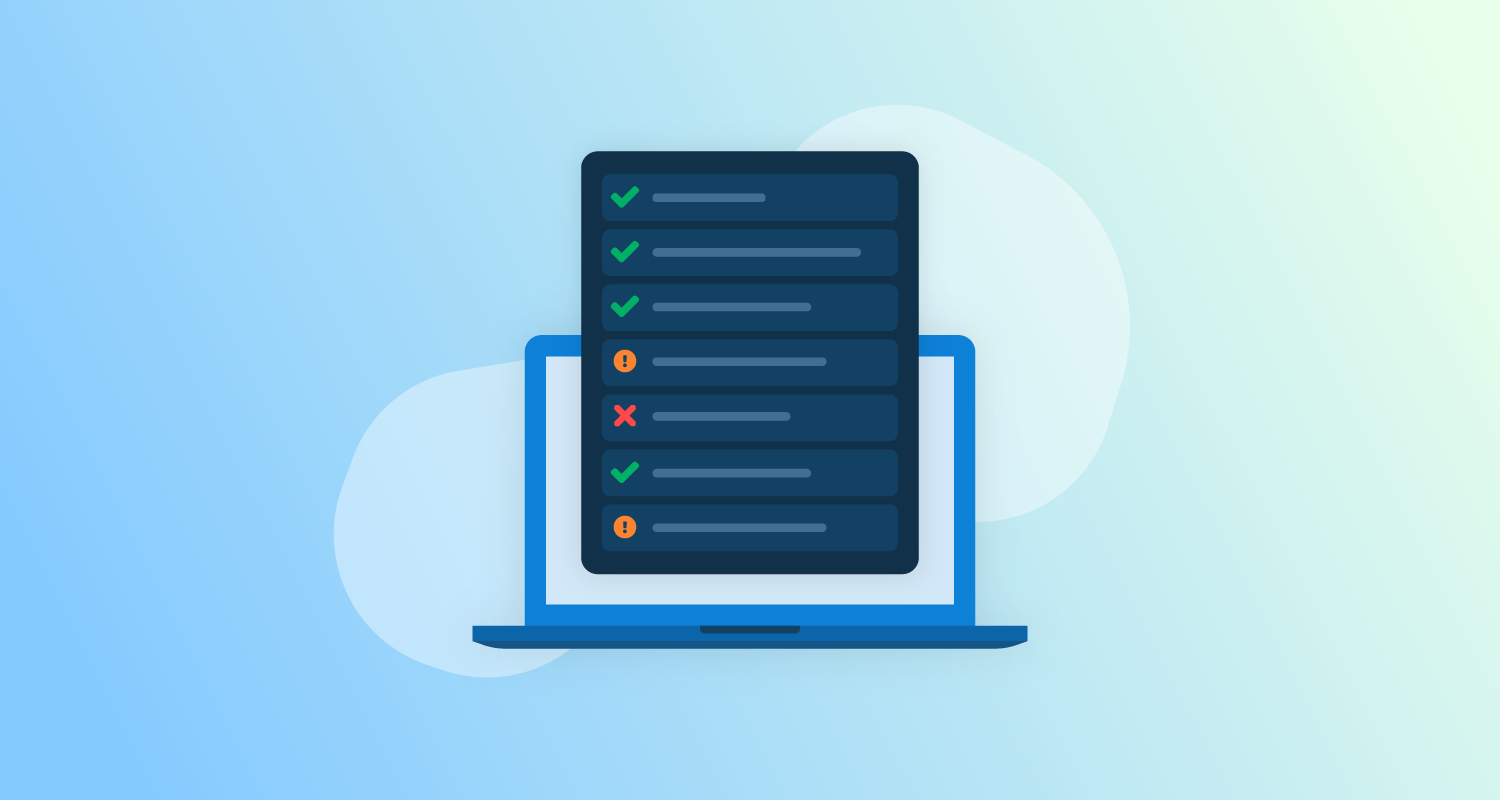
Kubernetes observability involves collecting, aggregating, and analyzing data about a Kubernetes cluster’s performance and behavior. It enables operators to gain insights into the system’s state, helping them diagnose and troubleshoot issues quickly. It requires gathering data from various layers, including the application’s runtime and infrastructure components, to create a holistic view of the system.
Kubernetes observability processes transform raw data into actionable insights, which are crucial for maintaining the desired application states. Teams use various data sources, such as logs, metrics, and traces, to provide an understanding of a system’s health and performance. Observability requires smart data processing and visualization tools to decipher complex systems.
This is part of a series of articles about Kubernetes management
The importance of Kubernetes observability
Kubernetes observability is critical for ensuring system resilience and reliability, especially in dynamic environments characterized by microservices and frequent deployments. Observability allows teams to detect anomalies, perform root cause analysis, and optimize resource usage.
Observability strategies enable early detection of potential issues, minimizing application downtime and improving the user experience. They also help in maintaining compliance with service-level agreements by ensuring continuous performance monitoring.
In addition to improving service quality, Kubernetes observability helps in resource optimization by offering insights into system usage patterns and identifying wastage or bottlenecks. This insight allows for better resource allocation and cost management, crucial for cloud-native applications. Having a unified view also supports collaboration among development, operations, and security teams.
Kubernetes observability vs monitoring
Kubernetes observability and monitoring, while related, have distinct roles. Monitoring involves collecting and displaying predefined metrics to understand the system’s ongoing state. It is an essential part of observability, focusing on alerting and examining past behaviors. Monitoring allows teams to track system health and response times, enabling threshold-based alerting for immediate incidents.
Observability extends beyond monitoring by providing the ability to interrogate the system and develop a nuanced understanding of why problems occurred. Observability relies on metrics, but also on logs and distributed traces, offering context and insight into system behavior. It helps teams to discern complex interdependencies and interactions, supporting proactive detection.

Tony Kelly is a DevOps marketing leader who drives innovation and awareness of the latest trends in Continuous Delivery.
The three pillars of Kubernetes observability
Observability is often seen as a group of pillars, but the core of observability is seeing your application from the outside. It’s being able to collate the information you need in a balanced way. This is supported by the three pillars below:
Logs
Logs in Kubernetes are detailed records of events within a system, crucial for understanding system behavior and diagnosing issues. They capture the sequence of operations and errors, offering insights into what transpired in both normal and failure scenarios. Effective log management involves parsing, indexing, and visualizing logs to find hidden patterns and issues.
Logs are critical during incidents, offering developers and operators detailed narratives of system activity. They help in isolating issues to a particular service characteristic or infrastructure component, allowing for targeted troubleshooting. Additionally, logs support compliance audits by providing a verifiable record of system events, actions, and changes.
Metrics
Metrics provide quantitative measurements of a system’s performance, offering insights into resource use and application health. These measurements, such as CPU usage, memory consumption, and request rates, are essential for understanding the performance trends and operational status of Kubernetes clusters.
Metrics can be collected and aggregated over time to identify and predict system stability or issues. They are fundamental to performance monitoring and capacity planning in Kubernetes environments, enabling the establishment of baselines and alert thresholds. By integrating with visualization tools, metrics can be used to create dashboards that display system health.
Traces
Traces follow the path of requests as they traverse through various services in a distributed system, providing granular insights into their execution. Tracing helps identify latency and performance issues by revealing how different services interact and where bottlenecks or failures occur. It enables developers to understand end-to-end transaction flows.
This comprehensive view of application behavior is especially critical for microservices architectures prevalent in Kubernetes deployments. Traces aid in understanding the intricate interdependencies in cloud-native systems. They allow operators to pinpoint performance degradations and unexpected behaviors at every service level.
Key challenges in Kubernetes observability
There are several aspects of Kubernetes environments that can make it challenging to achieve observability:
- Dynamic and ephemeral environments: Kubernetes environments are inherently dynamic and ephemeral, making observability challenging. Containers are frequently deployed, terminated, and scaled in a way that traditional monitoring tools weren’t designed to handle efficiently. The transient nature of these components means that observability tools must identify and track resources in real time.
- High volume and variety of data: Kubernetes systems generate massive volumes of diverse data types, including logs capturing detailed events, metrics showing performance statistics, and traces outlining service interactions. Processing and making sense of this data in real time is difficult, requiring high-performance data storage and processing systems capable of handling high-throughput workloads without latency.
- Complex microservices architectures: Microservices architectures introduce complexity in observability due to the many services involved and their interactions. Identifying and monitoring dependencies between services is challenging, as each service can influence the performance of others. Issues like cascading failures are common, where a failure in one service can impact others, complicating root cause analysis.
- Lack of standardization: Diverse tools often produce inconsistent data outputs, forcing teams to spend considerable time normalizing this data into a unified format for analysis. This fragmentation can hinder observability and make correlation across different data sources challenging.
Best practices for effective Kubernetes observability
Here are some of the ways that organizations can overcome the challenges associated with observability in Kubernetes environments.
1. Implement contextual logging
Contextual logging improves traditional log data with additional information about processes or transactions. By providing context, logs become more meaningful and easier to interpret, which is crucial for debugging and understanding system behavior in Kubernetes environments.
Implementing contextual logging involves attaching metadata to log entries, such as request identifiers or user session information, enabling quick correlation of events and simplifying root cause analysis. Using contextual logs ensures that developers and operators can easily trace the journey of a request through a system, improving visibility into complex operations.
2. Use distributed tracing
Distributed tracing is vital for understanding interdependencies in Kubernetes applications, revealing bottlenecks and inefficiencies in service interactions. By attaching identifiers to traces, operators can follow transactions throughout their journey across multiple microservices.
Distributed tracing helps pinpoint latency sources and performance issues that are not evident with metrics alone, enabling quick identification and resolution of complex issues in a distributed system. Implementing distributed tracing involves using tools that can automatically instrument applications, capturing data on request propagation and response times.
3. Leverage metrics for resource optimization
Metrics aid in optimizing resource using by providing insight into system performance over time. By analyzing metrics, organizations can identify patterns and trends that indicate resource inefficiency or potential bottlenecks. This data is crucial for making informed decisions about resource allocation, scaling, and optimization in Kubernetes environments.
Resource optimization using metrics involves monitoring against predefined baselines and thresholds to detect anomalies. By leveraging analytics and visualization tools, organizations can translate raw metric data into actionable insights. This approach aids in adjusting resource allocations dynamically, ensuring efficient use of resources and cost savings.
4. Automate observability in CI/CD pipelines
Integrating observability into CI/CD pipelines ensures that monitoring and performance checks are part of the development lifecycle. Automation allows organizations to detect and address issues before deployment, improving software quality and reliability. Incorporating observability tools into CI/CD enables automated testing of scalability, performance, and load distribution.
Automation accelerates the feedback loop, providing developers with immediate insights into how code changes impact system performance. This proactive approach reduces the risk of deploying unstable updates, supporting rapid iteration and improving overall software quality.
5. Adopt open standards
Adopting open standards like OpenTelemetry ensures consistent observability practices across different tools and platforms. OpenTelemetry provides a unified framework for collecting, processing, and exporting telemetry data such as logs, metrics, and traces. This standardization helps achieve interoperability between observability tools, reducing data silos and improving the analysis.
Using OpenTelemetry simplifies the integration of observability solutions, future-proofing the observability architecture against changes in toolsets. It supports data correlation across various data sources, improving the comprehensiveness of the insights developed.
6. Optimize observability costs
As data volumes grow, the costs associated with storage, processing, and visualization can escalate, necessitating strategies to manage them effectively. Organizations should focus on prioritizing data that delivers meaningful insights while minimizing the collection of redundant or low-value data.
Implementing threshold-based data sampling, efficient data storage solutions, and cloud-native cost management tools help mitigate excessive observability expenses. By focusing on the most critical aspects of system performance, teams can reduce the strain on resources and achieve a cost-effective observability strategy.
Related content: Read our guide to Kubernetes management tools
Advanced techniques in Kubernetes observability
There are also some more advanced techniques that can be used to improve observability in Kubernetes.
1. Using eBPF for low-overhead monitoring
eBPF (Extended Berkeley Packet Filter) enables deep visibility into kernel and user-space activities with minimal performance impact, ideal for high-volume environments. It provides dynamic instrumentation without the need for application modification, capturing essential metrics and logs for real-time analysis.
By using eBPF, organizations can enforce fine-grained observability across networks and applications, ensuring efficient resource management and quick detection of anomalies. eBPF addresses challenges associated with traditional monitoring and offers a flexible, scalable solution for cloud-native applications.
2. Implementing service mesh observability
Service mesh observability focuses on managing and monitoring complex network communication between microservices within Kubernetes clusters. A service mesh provides built-in observability features such as traffic management, security, and failure recovery. These tools enable operators to observe, control, and secure communication paths between services.
The integration of service mesh observability allows for monitoring of interservice communications, simplifying the task of identifying performance bottlenecks and security vulnerabilities. By using service meshes, operators gain actionable insights into service interactions and optimizations.
3. Applying AI and machine learning for anomaly detection
AI and machine learning offer predictive insights and more sophisticated analysis of observability data in Kubernetes. Machine learning algorithms can analyze large datasets to detect patterns or deviations indicative of potential problems. They enable proactive identification of performance issues, security threats, and inefficiencies.
Incorporating AI into Kubernetes observability allows for automating the correlation of complex data points, enabling faster recognition and resolution of anomalies. It supports adaptive learning, allowing systems to improve detection accuracy over time. This approach empowers teams to preemptively address issues.
4. Ensure observability in multi-cluster and hybrid environments
Ensuring consistent visibility across various clusters and cloud providers requires integrated observability solutions that can manage data from multiple sources. Such solutions should support unified data collection, aggregation, and analysis to maintain comprehensive insights.
Effective observability in these environments involves centralizing logs, metrics, and traces, ensuring they are accessible and analyzable from a single interface. This integration provides a unified view of the entire system, improving operators’ ability to detect and resolve issues quickly.
Automating Kubernetes deployments in Octopus
Automating Kubernetes deployments with Octopus transforms the complexity of container orchestration into a streamlined, manageable process that development teams can confidently control. Octopus provides native Kubernetes support that simplifies deployment workflows across multiple clusters and namespaces, whether you’re running on-premises, in the cloud, or in hybrid environments.
Help us continuously improve
Please let us know if you have any feedback about this page.